Lush Food & Drink

Buying Guide ·Baking

Best Pizza Stones for a Weekend of Pizzas

The deciding figures are surface and thickness, because a run of pizzas depends on how fast the stone is hot again.

By the Lush Editorial Team·Researched & Compared

  • Researched & ComparedSpecs pulled from the manufacturer listing
  • Like-for-LikeSame measures across every model
  • No Paid PlacementsNobody pays to appear here

Five pizza stones compared on published surfaces, thicknesses, heat claims, included tools and cleaning instructions.

Our shortlist

Five products, one set of published numbers.
  1. Old Stone Pizza Kitchen Rectangular Pizza Stone for ...
    Best for back to back bakes

    Old Stone Pizza Kitchen Rectangular Pizza Stone for ...

    Publishes 14 by 16 inches and 0.75 inch of cordierite, with an engineered heat core.

    • Old Stone
    • 14x16 inch
    • 10 lb
  2. 16-Inch Pizza Stone Set for Oven and Grill with Peel
    Best set of tools with the stone

    16-Inch Pizza Stone Set for Oven and Grill with Peel

    A 16 inch stone with an acacia peel, a rocker cutter with a cover and a scraper brush.

    • KitchenStar
    • 16 Inch
    • 13.7 lb
  3. Gyreuni 13 Pizza Stone for Oven and Grill with Pizza...
    Best kit for a smaller oven

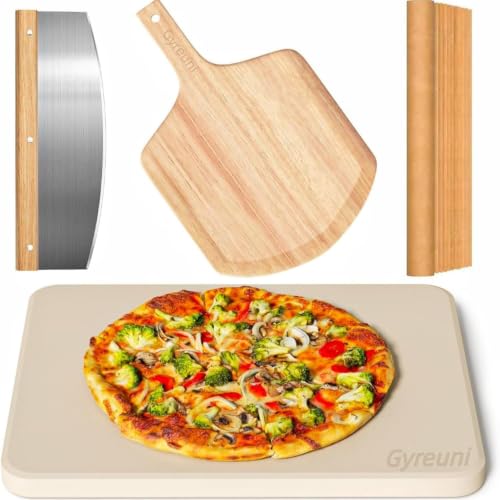
    Gyreuni 13 Pizza Stone for Oven and Grill with Pizza...

    A 13 inch stone at 0.6 inch thick with an oak peel, a serving rack, a cutter and parchment.

    • Gyreuni
    • 13 inch
    • 6.46 lb
  4. Gyreuni 15''Pizza Stone for Oven and Grill with Pizz...
    Best for long flatbreads

    Gyreuni 15''Pizza Stone for Oven and Grill with Pizz...

    Publishes 15 by 12 inches with an oak peel, and the only first use and cleaning routine here.

    • Gyreuni
    • 15 x 12 inch
    • 7.1 lb
  5. Pizza Baking Stone
    Best light stone for one pizza

    Pizza Baking Stone

    A 13 inch ceramic stone at 0.38 inch and 2.7 pounds, the least weight of the five.

    • American Metalcraft
    • ['13 Inches']
    • 2.7 lb

Side by side

Blank means the maker does not publish it.
ModelBrandSize (capacity)WeightBest for
Old Stone Pizza Kitchen Rectangular Pizza Stone for ... Old Stone 14x16 inch 10 lb Best for back to back bakes
16-Inch Pizza Stone Set for Oven and Grill with Peel KitchenStar 16 Inch 13.7 lb Best set of tools with the stone
Gyreuni 13 Pizza Stone for Oven and Grill with Pizza... Gyreuni 13 inch 6.46 lb Best kit for a smaller oven
Gyreuni 15''Pizza Stone for Oven and Grill with Pizz... Gyreuni 15 x 12 inch 7.1 lb Best for long flatbreads
Pizza Baking Stone American Metalcraft ['13 Inches'] 2.7 lb Best light stone for one pizza

Each pick in detail

What the listing says for it, and against it.
1 Best for back to back bakes

Old Stone Pizza Kitchen Rectangular Pizza Stone for ...

Publishes 14 by 16 inches and 0.75 inch of cordierite, with an engineered heat core.

  • For it
  • Publishes 0.75 inch, the greatest thickness of the five
  • Publishes 14 by 16 inches, the largest surface here
  • Engineered heat core stated to eliminate soggy centers
  • Cordierite with a 1450 F resistance claim, cleaned by rinsing and air drying
  • Against it
  • No peel, cutter or accessory included
  • Publishes 10 pounds with nothing to hold it by
  • No thermal shock or first use guidance published
2 Best set of tools with the stone

16-Inch Pizza Stone Set for Oven and Grill with Peel

A 16 inch stone with an acacia peel, a rocker cutter with a cover and a scraper brush.

  • For it
  • Includes an acacia wood peel for flipping, turning and serving
  • Includes a rocker cutter with a safety cover
  • Includes a metal brush with a stainless scraper and a beech handle
  • Publishes a 16 inch stone and a resistance claim of 1000 C
  • Against it
  • Publishes no thickness at all
  • Publishes 13.7 pounds, the most weight here
  • Names no stone material beyond a porous structure

Who should skip this: Skip this if weight matters: at 13.7 lb it is the heaviest of the five published weights.

3 Best kit for a smaller oven

Gyreuni 13 Pizza Stone for Oven and Grill with Pizza...

A 13 inch stone at 0.6 inch thick with an oak peel, a serving rack, a cutter and parchment.

  • For it
  • Five pieces: stone, oak peel at 12 by 17 inches, serving rack, cutter and parchment
  • Publishes 0.6 inch thickness on a 13 inch round stone
  • Serving rack published as a way to set the hot stone down safely
  • Cordierite stated FDA safe with good thermal shock resistance
  • Against it
  • A 13 inch round stone is the smallest surface here
  • No cleaning routine published, unlike its rectangular sibling
  • The cutter's steel is named but its size is not
4 Best for long flatbreads

Gyreuni 15''Pizza Stone for Oven and Grill with Pizz...

Publishes 15 by 12 inches with an oak peel, and the only first use and cleaning routine here.

  • For it
  • Publishes 15 by 12 inches, useful for long bases and flatbreads
  • Includes the same 12 by 17 inch oak peel, a cutter and parchment
  • Publishes a first use routine: 30 minutes at 400 F or above
  • Publishes the fullest cleaning instruction in this group, including never using soap
  • Against it
  • Publishes 0.4 inch, thin for repeated bakes
  • No serving rack, unlike the round set
  • Stains are stated to be normal and permanent
5 Best light stone for one pizza

Pizza Baking Stone

A 13 inch ceramic stone at 0.38 inch and 2.7 pounds, the least weight of the five.

  • For it
  • Publishes 2.7 pounds, the least weight of the five
  • Publishes 0.38 inch thickness on a 13 inch round stone
  • Ceramic stated to resist cracking and warping at oven temperatures
  • Aimed at commercial kitchens as well as home ovens
  • Against it
  • Its title says dishwasher safe while its care bullet says avoid soap and submerging
  • Publishes no temperature figure
  • No accessories included, and the thinnest stone here

Our verdict

Old Stone publishes 14 by 16 inches and 0.75 inch of cordierite, the greatest thickness here, with no tools included. KitchenStar publishes a 16 inch stone with an acacia peel, a rocker cutter and a scraper brush. Gyreuni's round set adds a serving rack and ten parchment sheets to a 13 inch stone, and its rectangle set publishes the only cleaning and first use routine. American Metalcraft is the lightest at 2.7 pounds.

“Across a weekend, recovery time matters more than size.”

Lush Editorial Team

What separates these five

Thickness sets the recovery Published thicknesses run 0.38, 0.4, 0.6 and 0.75 inch, with one stone publishing none. Across several pizzas that figure decides the wait between them.
Three arrive with tools Two Gyreuni sets include an oak peel and a cutter, and KitchenStar adds an acacia peel, a rocker and a scraper brush. Two stones arrive bare.
Heat claims nobody reaches 1000 C, 1472 F and 1450 F are material limits, not cooking temperatures. A home oven stops around 500 F, so these figures say the stone will survive rather than perform.
One cleaning routine in full Scrape, warm water, a brush, never soap, and stains are normal. One listing publishes all of that; another supplies a scraper instead; one contradicts itself.
One first use instruction Gyreuni publishes a 30 minute preheat at 400 F or above before the first bake. No other listing here publishes any first use guidance.

How we chose

Priorities, not a computed score. The inputs are published specifications, so we rank by what matters most and say how much.

  1. 30% Published thicknessAcross a weekend the stone has to reheat between bakes, and the five here range from 0.38 to 0.75 inch.
  2. 25% Tools includedA peel is not optional on a hot stone, and only three of these five include one.
  3. 20% Published surfaceFrom a 13 inch round to a 14 by 16 inch rectangle, area decides whether a second base can go on at all.
  4. 15% Cleaning and first useOnly one listing publishes a preheat routine and only one a full cleaning method, on a product where both matter.
  5. 10% Heat claimsAll four figures published here exceed any home oven, so they separate the listings less than they appear to.

How the Five Compare on the Numbers

A weekend of pizzas is a different job from one pizza. You need surface, you need a peel, and you need the stone to be hot again by the time the next base is stretched. Two of these five arrive with a peel and a cutter, one arrives with a peel, a cutter and a brush, and two arrive as a bare stone.

The published heat claims are the widest spread of any figure here. KitchenStar states 1000 C, given as 1800 F. Both Gyreuni stones state 1472 F, given as 800 C. Old Stone states 1450 F. American Metalcraft publishes no temperature at all. None of those is a figure a home oven will ever reach, which is the point worth making about all of them.

Specification Old Stone KitchenStar Gyreuni round Gyreuni rectangle American Metalcraft
Surface published 14 x 16 in 16 in 13 in round 15 x 12 in 13 in round
Thickness published 0.75 in not published 0.6 in 0.4 in 0.38 in
Published weight 10 lb 13.7 lb 6.46 lb 7.1 lb 2.7 lb
Heat claim 1450 F 1000 C, given as 1800 F 1472 F, given as 800 C 1472 F, given as 800 C not published
Peel included No Yes, acacia wood Yes, oak, 12 x 17 in Yes, oak, 12 x 17 in No
Cutter included No Yes, a rocker with a cover Yes, 304 steel with an oak handle Yes, steel No
Other items in the box not published Metal brush with a steel scraper Serving rack and ten parchment sheets Ten parchment sheets not published
Material stated Cordierite Porous stone, type not named Cordierite, stated FDA safe Cordierite, stated FDA safe Ceramic
Cleaning stated Rinse and air dry A brush and scraper are supplied not published Scrape, warm water, brush, never soap Damp cloth, avoid soap and submerging
First use guidance not published not published not published Preheat 30 minutes at 400 F or above not published

One listing contradicts itself on the single most practical point. The American Metalcraft title says dishwasher safe, and its own care bullet says to wipe the stone with a damp cloth and to avoid soap or submerging it in water, to preserve the baking surface. Those two statements cannot both be followed, and this page treats the care bullet as the one to obey.

Surface and Thickness for a Run of Pizzas

Area first

Old Stone publishes 14 by 16 inches, the largest area of the five, and KitchenStar publishes a 16 inch stone. The two Gyreuni stones publish 13 inches round and 15 by 12 inches, and American Metalcraft 13 inches round. For a weekend where pizzas follow each other, a larger stone is not about bigger pizzas so much as about the cold spot the last base left behind.

Shape matters alongside it. A 13 inch round stone takes one 12 inch pizza and nothing else; a 15 by 12 inch rectangle takes a long flatbread or two small bases side by side. None of these listings publishes a maximum pizza diameter, so the surface figure is all you get to work from.

Thickness and recovery

Old Stone publishes 0.75 inch, roughly double the 0.38 and 0.4 inch figures at the other end of this group, which is the figure that decides how quickly the stone is ready again. Gyreuni’s round stone publishes 0.6 inch and its rectangle 0.4 inch, from the same brand, so even within one maker the two products behave differently.

KitchenStar publishes no thickness at all, only 13.7 pounds and a 16 inch surface, which together suggest a substantial slab. American Metalcraft publishes 0.38 inch and 2.7 pounds, the lightest stone here, which is a thin stone that heats quickly and gives its heat up just as fast. For one pizza that is fine. For six it is the wrong tool.

What Comes With the Stone

The three kits

Gyreuni’s round set publishes five pieces: the 13 inch stone, an oak peel at 12 by 17 inches, a 13 inch serving rack, a large steel cutter and ten sheets of parchment. The serving rack is the unusual item, published as a way to set a hot stone down without scalding a surface, and reversible into a stand.

Gyreuni’s rectangle set publishes four pieces, the same oak peel and steel cutter with parchment but no rack. KitchenStar publishes three tools with its 16 inch stone: an acacia wood peel for flipping, turning and serving, a rocker cutter with a safety cover, and a metal brush with a stainless scraper and a beech handle for cleaning the stone.

The two bare stones

Old Stone and American Metalcraft publish no accessories at all. On a weekend that means buying a peel separately, and a peel is not optional: a 14 by 16 inch stone at 1450 F cannot be loaded by hand. Old Stone’s own listing describes baking bread, pastries and vegetables as well as pizza, all of which want a peel or a tray.

What the bare stones offer instead is thickness and provenance. Old Stone publishes 0.75 inch of cordierite with an engineered heat core it says eliminates soggy centers. American Metalcraft publishes a ceramic stone and seventy years of foodservice history, aimed at commercial kitchens as much as home ones.

Reading the Temperature Claims

Numbers no oven reaches

KitchenStar’s 1000 C and 1800 F, the Gyreuni pair’s 1472 F and 800 C, and Old Stone’s 1450 F are all material limits rather than cooking temperatures. A home oven stops around 500 F and a wood fired oven around 900 F, so these figures tell you the stone will not fail, not that it will perform.

The more useful number is buried in the same brand’s other listing. Old Stone’s round stone elsewhere in this category advises up to 500 degrees in a standard home oven, while this rectangular one claims heat resistance up to 1450 F. Same maker, same material, two completely different kinds of statement, which is a reminder that a ceiling and a recommendation are not the same thing.

Thermal shock, which is the real risk

Gyreuni is the only maker here that addresses it, stating excellent thermal shock resistance for its cordierite and publishing a first use instruction: clean and dry the stone, then preheat it for 30 minutes at 400 degrees F or above. That is the only preheating guidance published by anyone in this group.

It matters on a weekend more than on a weeknight, because the failure mode is a cold stone meeting a hot oven or a wet stone meeting heat. American Metalcraft claims its ceramic withstands high temperatures without cracking or warping without naming one. Old Stone and KitchenStar publish no thermal shock statement at all.

Cleaning Between Bakes

What each listing tells you to do

Gyreuni’s rectangle set publishes the fullest routine: scrape off excess food with a spatula, then run the cooled stone under warm water while scrubbing with a brush, never using soap or detergent, and it adds that stains are normal and come from the oils and cheese of previous bakes. That is the most honest sentence about stone ownership in this pool.

KitchenStar supplies the tool instead of the instruction, publishing a metal brush with a stainless steel scraper and a long beech handle for removing tough residue without damaging surfaces. Old Stone says rinse and air dry and that the stone naturally seasons over time. American Metalcraft says a damp cloth and no soap, in contradiction of its own title.

Why it matters across a weekend

A stone that is used three times in two days never gets properly cold, and the residue from the first bake is what smokes during the third. The listings that publish a scraper or a scraping instruction are the ones that have thought about that, and they are also the two that publish the cheapest possible answer: a metal edge and warm water.

None of the five publishes anything about storage between weekends, which for a porous stone is the question that follows. A stone that goes into a cupboard damp holds that moisture until the next preheat, and no listing here tells you how long to air dry before putting it away.

Which One Fits Your Kitchen

The baker running pizzas back to back. Old Stone publishes 14 by 16 inches and 0.75 inch of cordierite, the greatest thickness of the five, with an engineered heat core and a 1450 F resistance claim, at 10 pounds. Buy a peel at the same time, because none is included.

The baker who wants every tool at once. KitchenStar publishes a 16 inch stone with an acacia peel, a rocker cutter with a safety cover and a metal brush with a scraper, at 13.7 pounds. It publishes no thickness and claims resistance to 1000 C.

The baker with a small oven and guests. Gyreuni’s round set publishes a 13 inch stone at 0.6 inch thick, an oak peel at 12 by 17 inches, a serving rack for putting the hot stone on the table, a steel cutter and ten parchment sheets, at 6.46 pounds.

The baker making flatbreads and long bases. Gyreuni’s rectangle set publishes 15 by 12 inches at 0.4 inch thick with the same oak peel and cutter, plus the only first use and cleaning instructions in this group, at 7.1 pounds.

The baker who wants the lightest stone. American Metalcraft publishes a 13 inch ceramic stone at 0.38 inch and 2.7 pounds. It publishes no temperature figure, no accessories, and a care instruction that contradicts its own title, so read the bullet rather than the name.

What We Could Not Verify

All the figures above come from these makers’ published text. These are the gaps.

  • No thickness from one of the five, on the heaviest stone here.
  • No temperature figure at all from one of the five.
  • No maximum pizza diameter from any of the five.
  • No resolution of a title that says dishwasher safe against a bullet that says avoid soap and submerging.
  • No thermal shock statement from three of the five.
  • No storage or drying guidance from any of the five, on a porous stone.

Frequently asked questions

How thick should a pizza stone be for several bakes?+

Thicker than most of these. Old Stone publishes 0.75 inch, roughly double the 0.38 inch of the American Metalcraft stone and the 0.4 inch of Gyreuni's rectangle. A thick stone stores more heat, so the second and third pizza go onto a surface that is still hot. A thin stone gives its heat to the first base and then needs time. KitchenStar publishes no thickness, only 13.7 pounds across 16 inches.

Do I need a peel?+

On a hot stone, yes. Three of these five include one: both Gyreuni sets publish an oak peel at 12 by 17 inches, and KitchenStar publishes an acacia peel for flipping, turning and serving. Old Stone and American Metalcraft include nothing, so a peel is a separate purchase. Loading a 14 by 16 inch stone at oven temperature by hand is not something any of these listings suggests.

Are the 1800 F heat claims meaningful?+

Only as a guarantee that the stone will not fail. KitchenStar publishes 1000 C, given as 1800 F, both Gyreuni stones publish 1472 F or 800 C, and Old Stone publishes 1450 F. A domestic oven stops around 500 F and a wood fired oven around 900 F. What actually breaks a stone is thermal shock, and only Gyreuni addresses that, claiming good shock resistance and publishing a first use preheat.

How should a pizza stone be cleaned?+

Gyreuni's rectangle set publishes the clearest answer: scrape off excess food with a spatula, then run the cooled stone under warm water while scrubbing with a brush, and never use soap or detergent. It adds that stains are normal and come from previous bakes. KitchenStar supplies a metal brush with a stainless scraper instead. Old Stone says rinse and air dry. American Metalcraft says a damp cloth and no soap.

Is one of these actually dishwasher safe?+

The American Metalcraft listing says so in its title and then says the opposite in its own care bullet, which asks you to wipe the cooled stone with a damp cloth and to avoid soap or submerging it in water in order to preserve the baking surface. Both statements cannot be true. Treat the care bullet as the instruction, and treat every stone in this group as hand cleaned without detergent.

Round or rectangular for a weekend of pizzas?+

Rectangular, if you are baking anything other than round pizzas. Gyreuni publishes a 15 by 12 inch rectangle and Old Stone a 14 by 16 inch one, both of which take a long flatbread or two small bases. The 13 inch round stones from Gyreuni and American Metalcraft take one 12 inch pizza and nothing beside it. No listing here publishes a maximum pizza diameter, so compare the surface figures directly.

Specifications come from the manufacturers' own published listings. Lush Food & Drink may earn a commission if you buy through a link on this page, at no extra cost to you. How we research.