How the Five Compare on the Numbers
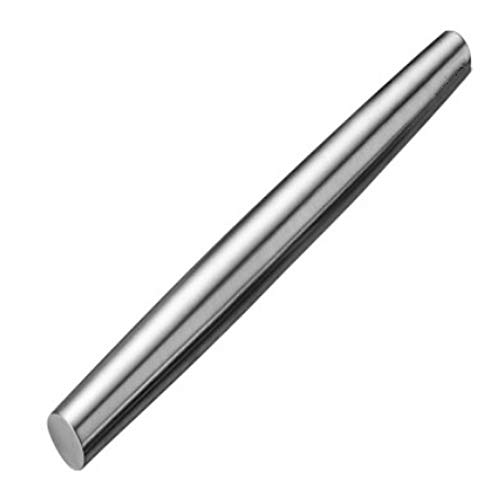
Three of these five have handles and two are built without them on purpose. Ultra Cuisine states plainly that its tapered design makes it easier to handle than rollers with handles. Rainspire calls itself handle-free and French-style in its first line. So the handle question is not settled by the category, and two makers here take the opposite side of it in writing.
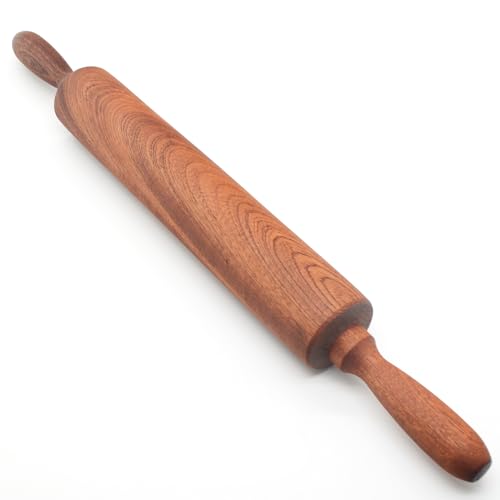
Weight is where the difference becomes physical. LorisArm publishes 0.22 pounds, Rainspire 0.61, Ultra Cuisine 0.62 and TUSIWIT 0.64. ELSHIL publishes 2.3 pounds, which is more than three of the others put together, and the only listing here that explains where the weight sits: a 10 inch barrel 3 inches thick with 3.9 inch handles on each side.
What the table will not tell you is how any of these feels after twenty minutes of pastry. No listing publishes a barrel diameter and a handle diameter together, nobody publishes the rolling resistance of a bearing against a fixed axle, and only one publishes a bearing at all. What can be compared is weight, the length you push, and whether the maker gives the barrel figure separately from the whole tool.
A Handle, or a Taper Instead
The Two Makers Who Argue Against Handles
Ultra Cuisine makes the case directly. Its listing states the tapered French design is easier to handle than rollers with handles, that it is built for maneuverability, and that it lets you gauge how much pressure you are applying and sense the thickness of the dough through the barrel. That last point is the real argument: handles put your hands at the ends, away from the dough.
Rainspire opens with the same claim in fewer words, describing effortless control from a handle-free French-style pin with a smooth balanced stainless steel body. Both publish a weight in the low six tenths of a pound, so neither is asking you to press hard. Between them they are the counterargument this page needs, and they are the two lightest full length pins here.
What ELSHIL Publishes That Nobody Else Does
ELSHIL is the only listing in this pool of seventeen that breaks its length into parts. It states an 18 inch pin made up of a 10 inch rolling barrel with 3.9 inch handles on each side, and a barrel thickness of 3 inches. That means the usable rolling width is 10 inches, not 18, which is smaller than the barrel on either steel pin here.
It is also the only one that publishes a mechanism: durable ball bearings stated to give smooth consistent rolling with less effort. On a handled pin the bearing is the difference between rolling the barrel and dragging it, and four of these five say nothing about whether the barrel turns independently of the handles at all.
Weight Is the Other Half of Handling
From 0.22 Pounds to 2.3
LorisArm publishes 0.22 pounds, the lightest of these five, on a small T-shaped beech pin with a single handle above the barrel. Its listing states the T-shape gives better control and feel of the dough and that the shorter length makes it easier to reach a chosen thickness than a large pin. It is a tool for one pie crust rather than a batch.
ELSHIL publishes 2.3 pounds, the heaviest of these five, and the weight is the point of the design rather than a penalty: a 3 inch hardwood barrel on bearings does much of the pressing for you. The three in between, at 0.61, 0.62 and 0.64 pounds, all ask the baker to supply the downward force themselves.
Where the Weight Comes From
The two steel pins are hollow enough to land near six tenths of a pound at full length, and Ultra Cuisine names the benefit: the stainless construction gives cooling properties like marble stone without the heaviness. That is an explicit trade against a heavy pin, and it comes with an instruction, because a light pin that sticks needs chilling rather than flour.
The two hardwood pins sit at opposite ends. TUSIWIT publishes 0.64 pounds on sapele and describes a balanced weight from end to end, which is a claim about distribution rather than mass. ELSHIL’s 2.3 pounds is mass, in a 3 inch barrel. LorisArm’s 0.22 pounds is a short beech barrel with one handle, and its own listing calls it small.
Care, Chilling and the Figures That Do Not Work
Wood Wants Oil, Steel Wants a Freezer
All three wooden pins here state a damp cloth and nothing wetter. ELSHIL states do not soak and do not use a dishwasher, and to treat the wood occasionally with food grade mineral oil. TUSIWIT states the same routine on sapele. LorisArm states a damp or wet rag or a quick rinse, and then rules out both the dishwasher and soaking.
Both steel pins state the dishwasher is fine, and both add the instruction that makes a light pin work. Ultra Cuisine states it can be chilled in a freezer or fridge to keep dough even. Rainspire is more specific and gives a time: 20 to 30 minutes in the fridge before use, to stop sticking and keep butter-based dough cold.
Duplicated Fields and a Tenth of an Inch
Rainspire publishes 16.5 inches twice in its dimension fields, as both the first and second figure, while its own text gives 16.5 inches as the length. A pin cannot be as wide as it is long, so one of those two numbers is a copy of the other and the stated length is the one to use. The same duplication appears elsewhere in this pool at 24 inches.
ELSHIL and LorisArm both publish 0.1 inches as their third figure, which is thinner than the dough either one rolls. ELSHIL’s own bullet gives a barrel thickness of 3 inches, so the field is meaningless. LorisArm publishes no length in words at all, leaving 8 inches in the field as the only figure, and that field sits beside an impossible 0.1.
Which One Fits Your Kitchen
You want the pin to do the pressing. ELSHIL publishes 2.3 pounds with a 10 inch barrel 3 inches thick, 3.9 inch handles each side and ball bearings. The usable rolling width is 10 inches rather than the 18 in the title, and it is a damp cloth and mineral oil only.
You want handles and a wood you can keep. TUSIWIT states 17 inches by 1.77 and publishes 0.64 pounds in sapele, with integrated grip handles and a balanced weight claim. Care is a damp cloth and occasional food grade mineral oil, with no dishwasher statement either way.
You roll one crust at a time. LorisArm publishes 0.22 pounds on a T-shaped beech pin with a single handle, and states the short length makes the thickness easier to control than a large pin. It publishes no overall length in words and rules out soaking and the dishwasher.
You want markings and a freezer trick. Ultra Cuisine publishes 15.75 by 1.5 inches and 0.62 pounds in stainless steel, etched with measurements, dishwasher safe, and states it can be chilled in a freezer or fridge. Its listing argues a taper handles better than handles do.
You roll large sheets and hate flour. Rainspire publishes 0.61 pounds on a handle-free 16.5 inch stainless pin with a seamless one piece body, dishwasher safe, and states 20 to 30 minutes in the fridge before use. Read its 16.5 inch width field as a duplicate of the length.
What We Could Not Verify
These are the figures the five listings do not publish, and nothing above has been inferred in their place.
- Only ELSHIL publishes a barrel length, so the usable rolling width of the other four is unknown.
- Only ELSHIL publishes a bearing, so whether any other barrel turns independently is unstated.
- LorisArm publishes no overall length in words, only an 8 inch field beside an impossible 0.1.
- Rainspire publishes 16.5 inches as both its first and second field figure.
- Neither steel pin publishes a wall thickness, so how hollow either one is cannot be checked.
- No listing publishes a handle diameter, which is what a hand actually closes around.