How the Five Compare on the Numbers
Thirty seven listings sit on this pool and the word absorbent appears on nearly all of them. The interesting part is that the fibers underneath are not remotely the same. Cellulose, cotton, bamboo, polyester blends, coral fleece, non-woven sheet and one cloth built around stainless steel mesh all sell themselves with the same adjective and behave nothing alike in a sink.
So this page ranks by the fiber each maker names. Five picks, five materials, and each one publishes a size. What none of them publishes is an absorbency figure: other listings in this pool claim eight, fifteen and twenty times their own weight, and all five of these describe absorbency in words alone. That gap shapes the page as much as the materials do.
The table cannot tell you how any of these feel after a week in a wet sink, because that is exactly where the listings stop. It also cannot tell you how much water any of them holds, and it cannot settle the odd claim on the INFICRIME, which calls a cloth containing stainless steel mesh non-scratch without naming a single surface it should be kept away from.
The Five Materials Side by Side
Cellulose, Cotton and Bamboo
Casabella publishes five short lines and the clearest material claim on this page: three all purpose sponge cloths of 100 percent natural cellulose, 8 by 7 in, top rack dishwasher safe, made in Germany. Cellulose is the fiber that behaves like a sponge when wet and stiffens as it dries, and the listing leans on exactly that, describing a thin design that works as both a cloth and a sponge.
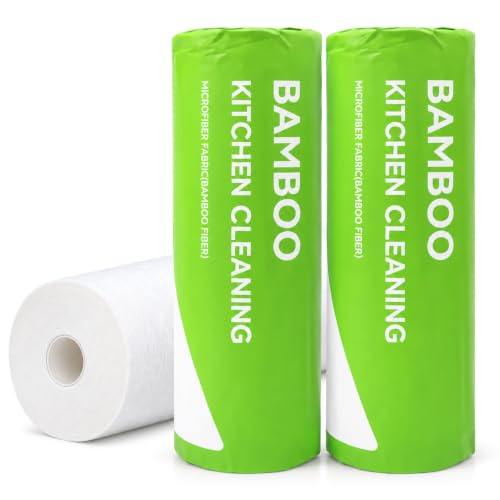
Full Circle is certified organic cotton with non-toxic dyes at 12 by 12 in, the largest cloth on this page, and vimohome is extra thick bamboo fiber at 28 by 28 cm. Cotton stays soft wet or dry and takes a machine wash. Bamboo, as vimohome presents it, is thick enough not to tear when soaked and comes perforated on a roll for tearing off.
A Polyester Blend and a Steel Mesh
JOYMOOP publishes the only exact synthetic blend here, 85 percent polyester with 15 percent polyamide, across eighteen cloths at 10 by 10 in in three colors. That is standard microfiber, and the listing uses it for the job microfiber is good at: glass, mirrors, dishes and counters wiped without streaks or lint, washed and reused hundreds of times.
INFICRIME is the one that does not belong to the same family at all. It publishes a three layer construction of advanced chemical fiber and high grade stainless steel mesh, twenty cloths at 7.87 by 7.87 in, aimed at grease on stovetops, tiles, sinks and oven racks. The fiber that is bonded to that mesh is never named, which is the one gap in an otherwise specific listing.
What the Material Asks of You
Dishwasher, Machine or Bin
Casabella is alone in publishing a dishwasher instruction, and top rack is the right qualifier for cellulose. Full Circle and JOYMOOP both send you to the washing machine, with Full Circle saying the cloths hold up wash after wash and JOYMOOP going further with hundreds of washes and no twisting or bleaching. INFICRIME says multiple wash cycles without committing to a figure.
vimohome answers the same question by not reusing at all. Its hygiene bullet describes a weekly disposable design: use a sheet for a week of chores, then throw it away, which the listing presents as a balance rather than a compromise. On a page about reusable cloths that is worth stating plainly, because forty sheets is forty weeks rather than forty washes.
Two Faces or One
Only Full Circle publishes two distinct working surfaces on one cloth, and it makes the argument well: a looped texture for scrubbing on one side, a smooth soft surface for wiping and absorbing on the other, described as two tools in one 12 by 12 in cloth. For a basic kitchen set that is the most useful shape here, because it covers both halves of a wipe down.
The other four are single purpose by construction. Casabella is one cellulose sheet doing cloth and sponge duty at once. JOYMOOP is one soft face. vimohome is a textured sheet for wet or dry work. INFICRIME is three bonded layers with a fine porous surface, which is a scrubbing cloth rather than a wiping one however it is described.
Where the Listings Stop
The Absorbency Nobody Publishes
This is the striking thing about these five. Every listing uses absorbent as a selling word and not one of them attaches a figure to it. Elsewhere in the same pool the figures exist: a Swedish dishcloth claims twenty times its own weight, a pack of wipes claims fifteen, a coral fleece cloth claims eight. Those numbers belong to those products and cannot be borrowed for these.
That makes the material the only guide, and material is a decent guide. Cellulose and bamboo hold water in their structure, cotton holds it in the weave, microfiber lifts and spreads it, and steel mesh is not trying to hold water at all. But that reasoning is not a published specification, so this page treats the absorbency column as missing rather than inferred.
Lives Counted and Uncounted
Two listings publish a life and they are opposites. JOYMOOP states hundreds of washes and adds that the cloth will not twist or bleach, with replacement left to how often you use it. vimohome publishes one week per sheet across forty sheets, which is a schedule rather than a lifespan. Between the two lies every other cloth in this pool.
Casabella, Full Circle and INFICRIME publish nothing. For the three cloth packs that is a real gap, because a three cloth pack from Casabella or Full Circle is a small purchase whose value depends entirely on how long each cloth survives. The materials suggest cellulose and cotton both last well with drying between uses, and neither listing says so.
Which One Fits Your Kitchen
A sponge you can sanitize. Casabella, three 100 percent natural cellulose cloths at 8 by 7 in, made in Germany and cleared for the top rack of a dishwasher, at 0.13 lb. It publishes no wash count and no absorbency figure.
One cloth for scrubbing and wiping. Full Circle, three certified organic cotton cloths at 12 by 12 in with a looped face and a smooth face, machine washable and dyed without harsh chemicals. It publishes no weight at all.
Grease on a stovetop. INFICRIME, twenty three layer cloths at 7.87 by 7.87 in built around stainless steel mesh, quick drying and odor resistant, at 0.31 lb. Its non-scratch claim names no excluded surfaces.
A holder instead of a drawer. vimohome, forty extra thick bamboo sheets in two perforated rolls at 28 by 28 cm that fit a standard paper towel holder, at 0.5 lb. Each sheet is meant to last a week and then go.
Glass, mirrors and dish drying. JOYMOOP, eighteen microfiber cloths of 85 percent polyester and 15 percent polyamide at 10 by 10 in in three colors, lint free and washable hundreds of times, at 0.75 lb.
What We Could Not Verify
Each of these is a question the five listings do not answer.
- How much liquid any of these five holds, since none publishes an absorbency figure of any kind.
- Which fiber INFICRIME bonds to its stainless steel mesh, described only as advanced chemical fiber.
- Whether a vimohome bamboo sheet can be washed and reused rather than replaced weekly.
- How many washes the Casabella cellulose and Full Circle cotton cloths are expected to survive.
- What the Full Circle pack weighs, the one figure that listing does not publish.
- Which surfaces the non-scratch claims exclude, on a page where one cloth contains steel mesh.