How the Five Compare on the Numbers
A glass water bottle is a cylinder with a lid, and its size is two numbers. Across the sixteen listings on this fact sheet those two numbers arrive five different ways, and on most of them the figure sitting in the specification block describes something other than the bottle. This page ranks on that question alone: not which bottle takes the least shelf, but which maker will state a size and then stand behind it.
Three of these five leave all three dimension fields empty and publish a package figure instead, and only one of those three names the bottle in a sentence as well. The other two fill the fields, one with figures that suit a gallon jug and one with figures a 16 ounce bottle will not fit inside. Two of the five state a size in their own words. One of those two matches its package figure exactly and the other does not.
What the table cannot tell you is which object each figure describes. A package field holding 2.5 by 2.5 by 8.7 inches has the shape of one bottle and not of a box of three. A package field holding 8.3 by 8.3 by 8.7 inches has the shape of a box and not of a bottle. The field label is identical in both cases. Only the maker’s own sentence separates them, and three of these five never write one.
What Each Listing Will Commit to in Writing
One Size, Published Twice, Unchanged
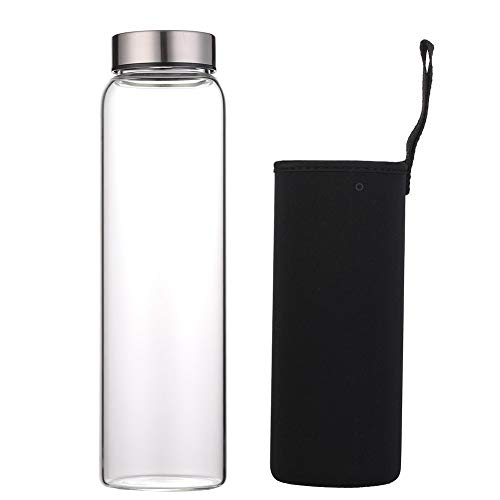
Duocesica is the only pick here that states its size in a sentence and then repeats it without altering it. The bullet reads that individual water bottles measure 8.7 inches in height and 2.5 inches in diameter with a capacity of 17 oz, and the size slot carries the same two figures labeled as height and diameter. That agreement is the whole reason it leads this page.
It matters because the sentence identifies the object. The listing is a set of three bottles, and a reader looking only at a specification block would have no way to know whether a figure covers one bottle or the carton the three arrive in. Duocesica writes the words individual water bottles in front of its numbers, which is the one piece of information every other listing on this page withholds.
Three Figures for One Set of Bottles
JoyJolt publishes more numbers than anyone here and they do not settle on one answer. Its bullet states that the bottles measure 2.75 inches wide and 10 inches tall and weigh 10 ounces empty. Its own fields were moved into a package entry reading 3.0 by 3.0 by 9.8 inches, and its size slot holds the word Large rather than a figure of any kind.
The package entry cannot be a box. Six bottles the same listing calls 2.75 inches wide will not go inside a 3.0 inch square footprint, so that figure is one bottle, and read that way it disagrees with the maker’s own sentence in both directions, 3.0 inches against 2.75 inches across and 9.8 inches against 10 inches tall. The weight field is worse: 0.12 lb against a stated 10 ounces empty, for a set of six.
When the Only Figure Is the Box
A Carton, and Nothing Else
Zubebe publishes no product dimension at all. Its three dimension fields are empty, its size slot is empty, and not one of its five bullets contains a length. The only figure of that kind on the listing is a package entry of 8.3 by 8.3 by 8.7 inches, which for a purchase of six bottles is the carton rather than a bottle, and the listing never says so.
That leaves a reader with the capacity and nothing else. Each bottle holds 16 oz, given again as 480 ml, and the glass is named as borosilicate rated from minus 20 to 150 degrees Celsius, which is the only temperature range any pick on this page publishes. For a fridge shelf the carton figure is still worth having, because 8.3 by 8.3 by 8.7 inches is what arrives, but it answers a different question.
Fields a 16 Ounce Bottle Will Not Fit
Brajttt fills all three dimension fields, 2.0 by 2.0 by 3.0 inches, and publishes 16 Ounces in its size slot. Those two statements cannot both describe the same object. A bottle 2.0 inches across and 3.0 inches high does not hold 16 oz of anything, and the listing supplies two of them, so the figure is not the carton either unless the bottles are packed lying down.
No bullet gives a dimension to settle it, and the fields survived the checks this fact sheet applies to multipacks because the three numbers are neither identical nor near zero. This page therefore ranks Brajttt last and uses none of its figures to compare against anything. What the bullets do commit to is the contents: two bottles with airtight stainless caps lined with a rubber ring, a cleaning brush for hand washing, a funnel, an ice stick tray, a sticker and a pen.
What the Figures Are Worth on a Shelf
The Single Jug With Every Field Filled
FastRack is the only pick here that is one vessel, and it is the only one whose dimension fields can be taken at face value. It publishes 7.0 by 7.0 by 11.0 inches at 3.0 lb, with a size slot reading one count at 128 oz per bottle. A gallon of liquid behind a handle is about that size, so nothing here contradicts anything else.
What it will not do is write the figure down. No bullet gives a dimension for the jug itself, and the only measurement anywhere in its prose is the 38 mm cap. One bullet also calls the product a half gallon jug while the title, the size slot and another bullet all say 1 gallon and 128 oz, which is the single internal contradiction on an otherwise clean listing. It publishes no washing method.
Why the Pack Count Changes Every Figure
Four of these five purchases are more than one bottle, and that is what makes the dimension question hard rather than tedious. A weight field on a set of six is the set, not the bottle. Zubebe publishes 3.95 lb, the heaviest purchase on this page, and that figure tells you what the box weighs rather than what goes in a bag.
The same split runs through the capacities. FastRack holds 128 oz in one vessel, the largest single capacity here, while Zubebe and JoyJolt reach their totals six bottles at a time and Brajttt uses two. For a shelf the number that matters is the one that repeats: how tall one bottle stands and how wide it is at the base. Only Duocesica and JoyJolt answer it in words, and only Duocesica answers it consistently.
Which One Fits Your Kitchen
A reader measuring a fridge door shelf. Duocesica. It is the only pick that states a height and a diameter for one bottle, 8.7 inches and 2.5 inches, in a sentence rather than a form field, and the slot and the sentence match. Three bottles arrive, each holding 17 oz.
A household buying in bulk for lunches. JoyJolt. Six bottles of 18 oz with twist on stainless caps, dishwasher safe and stated as freezer and fridge safe, in a gift box. Treat 2.75 inches wide and 10 inches tall as the size and ignore the 0.12 lb weight field.
A kitchen that needs one large vessel rather than several. FastRack. One jug at 128 oz with a 38 mm cap, a handle and a non slip base, and a complete field set of 7.0 by 7.0 by 11.0 inches that is consistent with a gallon. No dimension appears in its prose.
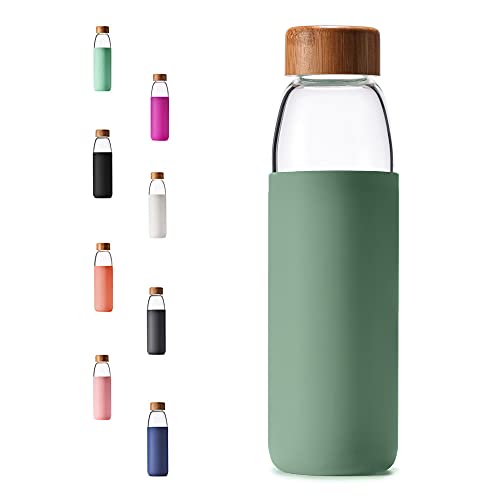
A reader stocking a fridge with batch drinks. Zubebe. Six bottles of 16 oz under bamboo lids with a silicone seal, borosilicate glass rated from minus 20 to 150 degrees Celsius, and a package figure of 8.3 by 8.3 by 8.7 inches that tells you what has to go on the shelf on delivery day.
A reader who wants the accessories more than the figures. Brajttt. Two bottles of 16 oz with a brush, a funnel, an ice stick tray, a sticker and a pen. Its published 2.0 by 2.0 by 3.0 inch field set cannot describe that bottle, so buy it for the kit and measure it yourself.
What We Could Not Verify
Every figure on this page comes from the five listings themselves. These are the things they do not say.
- Any width, depth or height figure from Zubebe for one bottle rather than for the box of six.
- Whether the 3.0 by 3.0 by 9.8 inch figure on the JoyJolt listing is one bottle, as its shape suggests, or the gift box it ships in.
- Which object the Brajttt fields of 2.0 by 2.0 by 3.0 inches describe, given that the same listing states 16 Ounces.
- Any dimension sentence from FastRack, whose only published measurement in prose is a 38 mm cap.
- Whether the 1.83 lb on the Duocesica listing covers all three bottles or one of them, since no bullet states a weight.
- Any washing instruction from Duocesica or FastRack, neither of which names a method anywhere in its text.