How the Five Compare on the Numbers
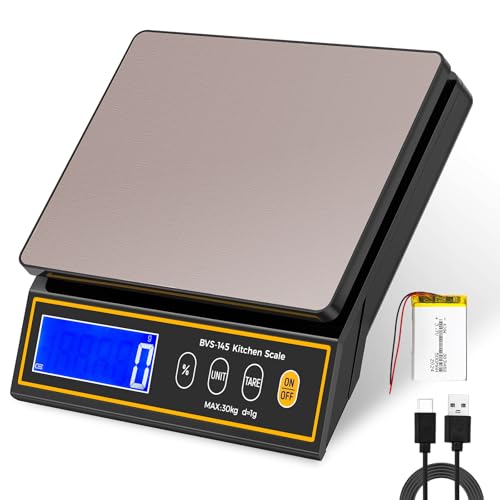
Batch pizza preparation changes the choice because the amounts are large. A single dough batch can call for several pounds of flour, so the published maximum capacity is the first figure to check. The Bonvoisin publishes 66 lb, the largest here. The ApeWeghr publishes 33 lb on its large platform. The Yamato publishes 12 lb 8 oz, the smallest of the five. Readability runs the other way: the ooni publishes 0.1 g, while the Bonvoisin publishes 1 g.
The second figure is readability, because yeast and salt are weighed in tiny amounts even in a large batch. The ooni publishes a tenth of a gram. The ApeWeghr and KKZ each pair a large platform with a small one, so one device covers both ends of the range. The Yamato publishes a 1 inch character display and a 12 lb 8 oz capacity, with no small platform stated.
The table does not tell you how any scale performs in use. It records what each maker publishes. Several cells read not published, and those gaps are real: Bonvoisin states no dimensions, ApeWeghr states no height, KKZ states no weight, and Yamato states no readability figure. A missing figure is not a zero.
Capacity and Readability in Batch Dough
What the largest published capacity covers
The Bonvoisin publishes 66 lb, the largest capacity of the five. That figure sets the upper bound on how much dough one weighing session can cover. It also publishes a minimum weighing capacity of 5 g and a readability of 1 g. For a batch that runs to many pounds of flour, the maximum matters more than the minimum.
The ApeWeghr publishes 33 lb on its large platform, half the Bonvoisin figure. Its small platform handles the yeast and salt. The KKZ publishes 15 kg on its large platform, which is close to the ApeWeghr figure. The Yamato publishes 12 lb 8 oz, the smallest maximum here, and the ooni does not publish a capacity figure at all.
Why the smallest increment matters too
A batch recipe still calls for small amounts of yeast and salt. The ooni publishes 0.1 g readability, the finest figure stated here. It also publishes a custom fit measuring dish for yeast or herbs. The ApeWeghr publishes 0.1 oz accuracy on its large platform and a small platform for finer work.
The KKZ publishes 0.03 oz accuracy on its large platform and a small gram scale from 0.01 g to 500 g. The Bonvoisin publishes 1 g readability, which is coarser than the dual platform models for small additions. The Yamato publishes no readability figure, so that comparison cannot be made.
Functions That Help When Scaling Up
Percentage weighing and unit switching
The Bonvoisin publishes a percentage weighing function, which lets you work from ratios rather than calculating gram weights for each ingredient. The BOMATA also publishes a percentage function. Neither the ApeWeghr, the KKZ, the ooni nor the Yamato publishes this function.
Unit switching matters when a recipe mixes grams and ounces. The Bonvoisin publishes 9 units. The ApeWeghr and KKZ each publish 7 units, including milk milliliters. The ooni and Yamato do not publish a unit list. More published units mean less mental conversion during prep.
Tare, totalize and display
Tare subtracts the weight of a bowl so only the ingredients count. The Bonvoisin, ApeWeghr, KKZ and BOMATA all publish a tare function. The Yamato publishes a quick disconnect foot tare. The ApeWeghr and KKZ also publish a totalize or accumulation function, which sums successive additions.
Display design affects use with large bowls. The Bonvoisin publishes a slightly tilted display so readings stay visible. The KKZ publishes a display set off to the side so the readout is not blocked. The Yamato publishes a 1 inch character display. The ooni publishes two LCD displays that read both platforms at once.
Which One Fits Your Kitchen
Large batch baker. The Bonvoisin publishes 66 lb capacity with 1 g readability and a percentage function. It suits mixing several dough balls at once where the total weight of flour and water is high.
Baker weighing bulk and yeast on one device. The ApeWeghr publishes a 33 lb platform and a small platform, with tare and totalize. It covers both ends of a batch recipe without a second scale.
Baker who wants unit flexibility. The KKZ publishes 7 units and two platforms with independent tare. Its 1.1 inch profile and 9.45 by 6.3 inch footprint suit a counter with limited space.
Baker weighing tiny amounts. The ooni publishes 0.1 g readability and a custom fit measuring dish for yeast. It suits recipes where salt and yeast are weighed to a tenth of a gram.
Baker who wants a hands free readout. The Yamato publishes a 12 lb 8 oz capacity, a 1 inch character display and a quick disconnect foot tare. It suits a fixed station where the display is read at a distance.
What We Could Not Verify
Several figures are absent from the listings. These are the gaps.
- Bonvoisin does not publish width, depth or height.
- ApeWeghr does not publish height, and the small platform capacity is cut off in the listing text.
- KKZ does not publish weight, and states only a 1.1 inch profile for height.
- Yamato does not publish a readability figure for the PB-200.
- ooni does not publish a capacity figure for either platform.
- No maker publishes a dough capacity in servings or loaves, so batch size cannot be stated that way.