How the Five Compare on the Numbers
Capacity spreads wider here than in most categories. The Ehugos holds 1500 ml, published as 50 oz and six cups. The DOPUDO is 40 oz. The HIWARE is 1000 ml, or 33 oz. The Teabloom One-Touch is 800 ml, or 27 oz. The PARACITY is 550 ml, or 18.6 oz, which is a pot for one person. That is nearly a factor of three between the ends of this shortlist.
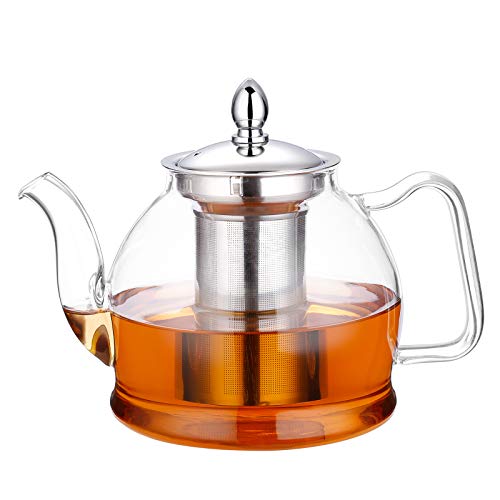
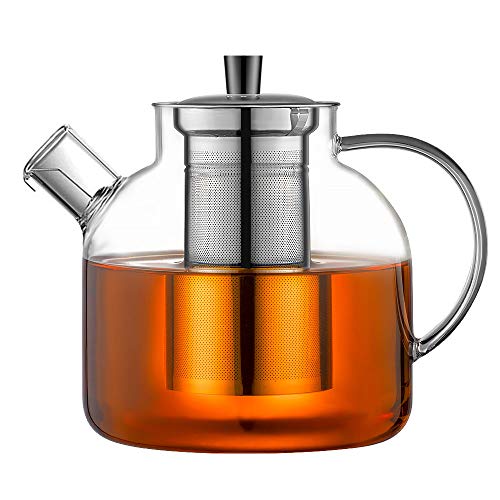
Published sizes and weights follow. The HIWARE is 5 by 5.3 by 9 inches and the heaviest of the four that publish a weight at 1.21 pounds, the DOPUDO 5.1 by 9.1 by 5.5 inches at 1.07 pounds, the Teabloom 4.5 by 4.5 by 5.5 inches at 1.04 pounds, and the PARACITY 4.9 by 4.5 by 4.6 inches and the lightest of the five at 0.49 pounds. Ehugos publishes 5.12 by 8.27 by 7.87 inches and no weight.
The table cannot tell you the one figure a loose leaf drinker wants, which is the mesh aperture of the infuser. PARACITY and HIWARE both describe fine mesh, and neither publishes a hole size, so whether rooibos or broken gunpowder passes through is unknown for all five. Nor does any maker state the glass thickness in millimeters, although HIWARE says its body has been optimized to be thicker without saying thicker than what.
Capacity, and How Many Cups That Really Is
From 18.6 Ounces to 50
The PARACITY at 550 ml is a single serving pot, and its listing is honest about the use case, naming camping and travel alongside one handed pouring. At 0.49 pounds empty it is the lightest of the five by a wide margin, which matters if it goes in a bag. The Ehugos at 1500 ml is the other extreme, a pot you fill once for a morning at a desk or for two people through a long afternoon.
Between them the HIWARE at 1000 ml and the Teabloom at 800 ml cover the usual household range, and the DOPUDO’s 40 oz sits close to the Ehugos. Capacity is also a brewing decision, not just a volume one: the same quantity of leaf in 550 ml and in 1500 ml gives two completely different strengths, and none of these listings publishes a leaf quantity to go with its capacity.
The Only One That Counts Cups
Ehugos is alone in translating its capacity into servings, stating six standard cups from 1500 ml. Every other listing leaves you to divide, and the division is not obvious because a teacup and a mug differ by a factor of two. For a pot bought to serve guests rather than to brew a mug, that single sentence is more useful than the milliliter figure beside it.
HIWARE adds a different kind of honesty about volume, warning not to fill beyond 1000 ml when boiling tea. That is a real limit on a glass pot on a stovetop, where boiling water needs headroom, and it means the nominal capacity and the working capacity are not the same number. None of the other four states a maximum fill line for stovetop use.
Basket, Lid or Neither: Three Ways to Hold the Leaves
The Steel Grades That Are Published
Two makers name the alloy in the infuser. HIWARE states 18/10 stainless steel mesh and PARACITY states 18/8. Both of those are meaningful numbers describing chromium and nickel content, and the nickel is what resists the tannic acid and staining that tea inflicts on cheap mesh. DOPUDO, Teabloom and Ehugos say stainless steel with no grade at all, which is the same gap seen across most tea gear.
The baskets also differ in how far they reach. HIWARE makes a point that its lid fits whether the basket is in or out, which is the detail that decides whether you can pull the leaves at the right moment and still keep the pot covered. PARACITY calls its mesh ultra fine and says it filters most teas, a claim that hedges in the right direction.
A Filter Lid Instead of a Basket
The Teabloom One-Touch takes a different approach: no basket at all, with a stainless steel filter built into the lid and a silicone ring to hold the lid secure while pouring. The leaves go loose in the pot, which gives them the whole volume to expand in, and the listing makes exactly that argument about a high water to leaf surface ratio developing fuller flavor.
That design has a trade nobody advertises. With no basket to lift out, the leaves keep steeping until the pot is empty, so a delicate green tea will go bitter in the second cup. A basket pot can be interrupted; a filter lid pot cannot. Teabloom’s own framing as a two in one heat and steep vessel is accurate: it is a kettle you brew in, not a steeper you control.
Heat, and the Limits Nobody Agrees On
Two Temperature Ranges That Do Not Match
Only two of the five publish a temperature range and they do not line up. PARACITY states minus 68 F to 302 F. Ehugos states minus 20 C to 150 C. The upper figures are the same limit expressed two ways, so both makers agree on the hot end. The cold ends are far apart, and since the cold end only matters if you put a hot pot in a freezer or cold water in a hot pot, the hot figure is the one to plan around.
It is also the figure that should slow anyone down. Water boils well below either limit, so brewing is safe, but a gas flame under an empty or nearly empty pot goes far past 302 F within seconds. HIWARE addresses that in a different way, advising a medium heat source, and Teabloom, DOPUDO and the rest publish no limit at all while still calling themselves stovetop safe.
Induction, and the One Listing That Says No
Ehugos is the only listing here that names a stove type it will not work on, stating gas or electric but not induction. That is not a defect, it is physics: borosilicate glass is not magnetic and no glass teapot will heat on an induction hob. The other four describe gas and electric stovetops without ever ruling induction out, which leaves a buyer with an induction kitchen to work it out alone.
Microwave and dishwasher support are more consistent. HIWARE, PARACITY, DOPUDO and Ehugos all state microwave use, and HIWARE limits the dishwasher to the top rack, which is the sensible instruction for thin glass. The Teabloom One-Touch listing does not mention a microwave or a dishwasher, so on published data it is stovetop and hand washing only.
Which One Fits Your Kitchen
The drinker brewing one cup at a time. The PARACITY holds 550 ml, or 18.6 oz, weighs 0.49 pounds, states a range of minus 68 F to 302 F, names 18/8 steel in its mesh and arrives in a gift box with a one year refund or replacement promise. Its listing names travel and camping outright.
The household brewing a pot for two. The HIWARE is 1000 ml with an 18/10 stainless mesh basket, a lid that fits with the basket in or out, microwave use and top rack dishwashing. It tells you not to fill past 1000 ml when boiling and to use medium heat, which is the most careful guidance here.
The drinker who wants leaves loose in the pot. The Teabloom One-Touch puts a stainless filter in the lid instead of a basket, with a silicone ring for pouring, in an 800 ml body at 1.04 pounds. Remember that the leaves cannot be lifted out, so drink it before it oversteeps.
The cook who wants water hot quickly. The DOPUDO holds 40 oz in a wide based, narrow topped body its listing credits with faster heating, with a removable basket, a non drip spout, microwave use and dishwasher safety. It names no steel grade and publishes no temperature limit.
The person brewing for a table or a whole morning. The Ehugos holds 1500 ml and is the only pick that counts its servings, at six cups, states minus 20 C to 150 C, names an 18 month warranty and is the only listing to say plainly that it will not work on induction. It publishes no weight.
What We Could Not Verify
Three of these five leave out the numbers a tea drinker would check first:
- Mesh aperture on every infuser here, so whether fine leaf or rooibos passes through is unknown for all five.
- Glass thickness in millimeters, including on the pot that says its body was optimized to be thicker.
- Temperature limits for three of the five, all of which still describe themselves as stovetop safe.
- Steel grade in the DOPUDO, Teabloom and Ehugos infusers, where two rivals publish 18/10 and 18/8.
- Whether the four pots that never mention induction can be used on it, which glass cannot.
- Published dimensions worth trusting on three other pots in the same data, one of which lists a 40 ounce teapot as under 2 inches in every direction and another a 20 ounce pot at over 18 inches. Neither is picked here for that reason.