How the Five Compare on the Numbers
Under cabinet lighting splits into two products that do not compete on the same specifications. The hardwired fixtures publish light: lumens, watts, color rendering. The rechargeable battery bars publish convenience: milliamp hours, detection angles, days per charge. Across this whole pool only three listings state a lumen figure at all, and not one of the four battery lights is among them.
That matters because a light over a chopping board is a task light, and the figures that describe a task light are output and color rendering. Ansen states 666.7 lumens at 10 W with a CRI over 92. GETINLIGHT states 350 lumens at 5 W with 90 CRI. LAMPAOUS states 160 lumens per puck and 960 across six. The other two publish neither lumens nor watts.
One figure in that table is worth double checking before drilling. Lighting Labs describes a 1 1/8 inch deep steel housing in its own text while its published depth field reads 1.38 inches. Both are shallow enough to hide under a cabinet, but if you are matching an old fixture’s footprint, which is exactly what this light is sold for, the difference of a quarter inch is the kind of thing that decides whether a screw hole lines up.
Lumens, or Milliamp Hours
What the Hardwired Fixtures Publish
Ansen’s listing is the most complete in this pool by a wide margin. It states 12 inches, 10 watts, 666.7 lumens and 120 volts, then adds an anti-glare optical design with UGR under 16, a CRI over 92 and an R9 over 90. R9 is the deep red index, and it is the number that decides whether raw meat and tomatoes look like themselves under the light, which almost nobody publishes.
GETINLIGHT publishes less but publishes it clearly: 5 watts, 350 lumens, 90 CRI, three color temperatures, ETL listed, one inch thick. It also opens its feature list by stating that the fixture is hardwired only with no plug-in option, which is the single most useful sentence in this whole pool for anyone who assumed otherwise.
What the Battery Lights Publish Instead
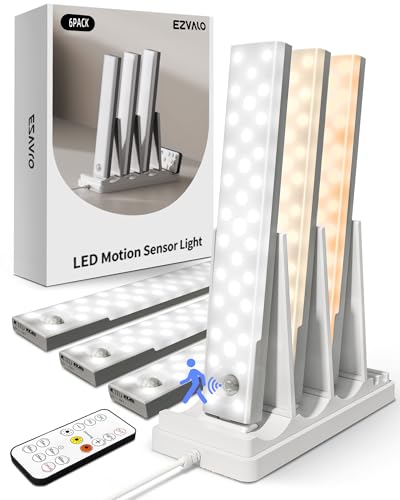
EZVALO publishes a 2000 mAh battery, 13 to 40 days in auto mode, up to 11 hours at full brightness, detection within 10 feet across a 120 degree field, auto-off after 20 seconds, a remote that works from 16 feet with 15, 30, 60, 90 and 120 minute timers, and three color temperatures at 3000K, 4500K and 6500K. It does not publish a lumen figure.
None of the four rechargeable lights in this pool does. That is not a small gap: it means you cannot know whether any of them is bright enough to chop under, and it means they cannot be compared with each other on brightness either. MCGOR counts 40 LEDs and Gritin counts 84, which are component counts rather than output, and the two figures are not comparable across different LEDs.
Three Ways to Get Light Under a Cabinet
A Bar, a Puck, or a Battery
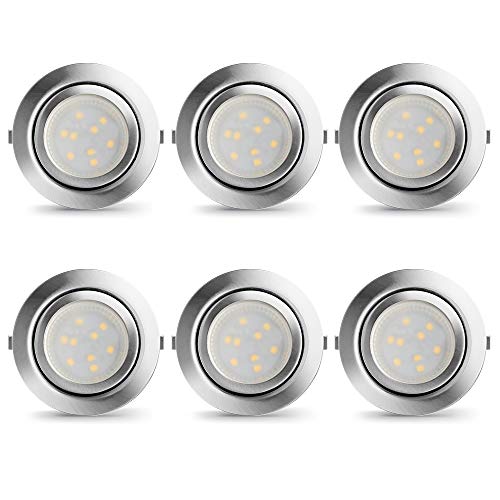
Ansen, GETINLIGHT and Lighting Labs are linear fixtures you screw to the underside of a cabinet and wire in. LAMPAOUS is a set of six recessed pucks that drop into a 60 mm hole and run from a central hub on a 12 volt supply. EZVALO is a bar that sticks on with adhesive or a magnet and charges on a dock.
Those are three different renovations. A hardwired bar means a cable route and, on GETINLIGHT, no plug-in escape hatch. A recessed puck means drilling a 60 mm hole through the cabinet base, which LAMPAOUS gives as roughly 2 and two fifths inches. A battery bar means peeling a backing off adhesive, and taking the light down to charge it.
Covering What Was There Before
Lighting Labs is built for one specific situation and says so: replacing an older, bulkier built-in fixture. Its case is the 3.5 inch wide steel body, which it argues covers the footprint and the wire openings an older fixture left behind, avoiding patch and paint work. It also claims a 50,000 hour life from steel heat dissipation rather than plastic.
That is a genuinely different reason to buy, and it explains why it publishes no lumens: it is sold on fit and finish rather than output. GETINLIGHT at 3.5 inches wide and Ansen at 3.15 inches are similar widths, so both would also cover more than a slim strip, but neither makes that argument or mentions ROMEX cable openings.
Color Temperature, Rendering, and Three Listings That Are One
Five Temperatures, Three, or One
Ansen and Lighting Labs both offer five selectable color temperatures from 2700K to 5000K, set by a switch on the fixture. GETINLIGHT offers three, 3000K, 4000K and 5000K. EZVALO offers three, 3000K, 4500K and 6500K, which reaches cooler than any hardwired option here. LAMPAOUS offers exactly one, 6000K cold white, with no option at all.
Selectable temperature matters more under a cabinet than almost anywhere else, because the light sits next to whatever your ceiling fixtures are doing and a mismatch is obvious at eye level. A single 6000K puck set is a commitment. It is also worth reading alongside color rendering: LAMPAOUS claims a high CRI without giving a number, while three fixtures here give one.
The Three Battery Bars That Read Alike
Three rechargeable listings were left off this page because they publish the same specification as each other. MCGOR, Gritin and ZioeYiue all state detection within 10 feet across a 120 degree field, auto-off after about 20 seconds, an 1800 mAh built-in battery, magnetic mounting with included adhesive metal plates, and five or stepless brightness levels.
They differ only in LED count and runtime claims: MCGOR counts 40 LEDs, Gritin counts 84 and claims 8 hours at high brightness and 7 to 45 days in sensor mode, ZioeYiue claims 8 to 10 hours and 8 to 50 days from the same 1800 mAh cell. Those runtime ranges cannot all be true of the same battery at the same brightness, and none of the three publishes lumens to anchor them.
Which One Fits Your Kitchen
The cook who works at the counter every night. Ansen, the best documented fixture here: 666.7 lumens at 10 watts, CRI over 92 with R9 over 90, UGR under 16, five color temperatures from 2700K to 5000K, dimming from 100 down to 5 percent, and linkable with cable runs.
The buyer who wants no surprises. GETINLIGHT, which states in its first line that it is hardwired only with no plug-in option, then publishes 5 watts, 350 lumens, 90 CRI, three temperatures, ETL listing and a 1 inch thickness that hides under the cabinet.
The renovator replacing an old fixture. Lighting Labs at 24 inches, with a 3.5 inch wide steel body intended to cover the footprint and wire openings an older light left behind, five temperatures from 2700K to 5000K, CRI over 90 and a claimed 50,000 hour life.
The cook lighting a display cabinet. LAMPAOUS, six recessed pucks at 160 lumens each and 960 in total, dropping into a 60 mm hole so the fixtures disappear, on a 12 volt hub with a rotary dimmer from 0 to 100 percent that remembers its last setting.
The renter who cannot wire anything. EZVALO, a 9 inch bar with a 2000 mAh battery lasting 13 to 40 days in auto mode, motion detection to 10 feet across 120 degrees, a remote with five timer lengths, and a dock that charges three lights at once.
What We Could Not Verify
These are the makers’ own published figures. These are the gaps that mattered.
- Not one of the four rechargeable lights in this pool publishes a lumen figure, so none can be compared on brightness.
- Lighting Labs publishes no lumens or wattage despite selling itself as high output task lighting.
- Only one listing publishes a glare figure, and only one publishes an R9 deep red index.
- The Lighting Labs published depth of 1.38 inches disagrees with the 1 1/8 inch housing it describes.
- LAMPAOUS claims a high CRI without giving a number, on the only fixture here with a single fixed color temperature.
- No hardwired listing publishes a weight, and the two weights that exist cover a battery bar and a six puck kit.