How the Five Compare on the Numbers
Six live pages on this pool rank by the ring set, by how many loose rings a drawer gains, by what the maker says the pin is for and by the size of the largest item in the box. None of them asks what happens when the rolling is finished. Flour and butter dry onto a pin, so that is a real question, and these five answer it five different ways.
Read that way the page sorts itself. One states dishwasher-safe and nothing else is needed. One states a rinse under the tap and never mentions a machine. One offers a dishwasher and then advises against it. One publishes no method and only a comparison. One washes its rings and leaves its pin unaddressed.
What the table cannot tell you is whether any of these pins comes apart. Rings slide on and off on the four pins that have them, but nothing here says whether a handle unscrews, whether a silicone barrel separates from a wooden handle, or whether there is a seam for dough to sit in. Not one of these five calls its pin seamless or one-piece.
Three Instructions and Two Silences
The Plain Yes and the Plain Rinse
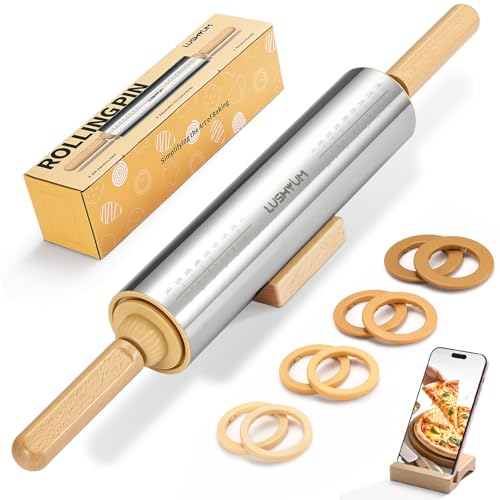
YIHONOBLE writes the cleaning claim as a whole bullet and gives reasons for it: certified food-grade 304 stainless steel, rust-proof, non-porous and odor-free, a smooth surface that resists sticking, rinses clean in seconds and is dishwasher-safe for effortless maintenance. It also states the comparison, that wood and plastic can absorb moisture and odors over time, which is the argument the rest of this page dances around.
AMUZHI arrives at nearly the same place by a different route and stops one word short. Its 430 stainless steel is stated to meet food grade hygiene standards and to clean directly under water without rusting, and it is the only listing here to say what the material will not do, which is go moldy like a wooden pin or crack like a stone one. It never says dishwasher.
An Instruction That Contradicts Itself
NASNAIOLL publishes its cleaning instruction in full and then undoes it. The bullet states a stain and odor resistant surface, hand washing with warm soapy water and prompt drying, cleaning by hand or on a dishwasher top rack, and then adds in brackets that hand washing is highly recommended. Read in order that is a permission followed by a retraction.
The reason is probably in the title rather than the bullet. This is a silicone barrel on a wooden handle, and wood is the part a dishwasher damages. The listing never connects the two, and it never says whether the handles are sealed, oiled or bare, so the buyer is left to infer the whole argument from the material name in the product title.
Two Listings That Do Not Answer At All
A Comparison Instead of a Method
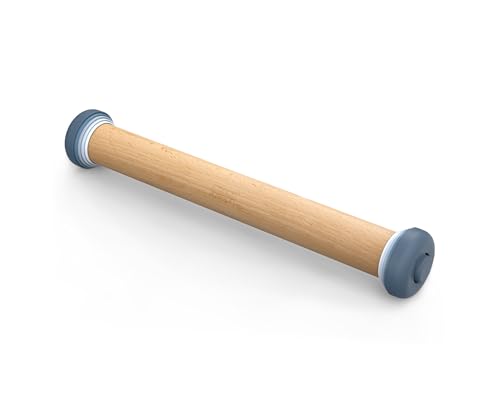
Fymlhomi makes a claim about cleaning without ever describing any. Its silicone surface bullet states that compared with traditional wooden rolling pins it is easier to clean and less likely to absorb flour or odors, and a later bullet says the pin is easy to hold, roll, clean and store. Nowhere does it say with what, at what temperature, or whether a machine is allowed.
What it does do, uniquely on this page, is include a brush. The three piece set is stated as one adjustable rolling pin, one silicone mat and one brush, so the only cleaning implement in any of these boxes arrives with the listing that publishes no cleaning instruction. At a published 0.4 pounds it is also the lightest purchase here.
Washing the Rings and Not the Pin
Geesta’s is the most specific omission. Its third bullet states that food-grade PP rings in five circumference options slide onto the pin and then clean up in the dishwasher to stand by for the next bake. That is a clear instruction about the accessories. The pin those rings sit on is teak, and the only water-related word attached to it is water-resistant.
Water-resistant teak is a claim about surviving contact, not about being cleaned. Nothing in the listing says wipe, rinse, hand wash, oil or dry, on the one pin here made of a material that three of its four rivals name as the thing to avoid. At a published 2.64 pounds it is also the heaviest of these five, with laser-etched markers that a scouring pad would take off.
What Else Is In the Box and Who Washes It
Three Mats and One Statement Between Them
Three of these purchases include a silicone mat. Only AMUZHI says anything about cleaning one, stating that the mat is silicone and glass fiber, will not wrinkle or fade, and that even if grease or dough sticks to the surface it can be easily cleaned to keep the countertop sanitary. That is the most useful accessory sentence on the page.
YIHONOBLE includes a mat and a reusable dough kneading bag, and although its 304 steel bullet clears the pin for a dishwasher, neither accessory gets a cleaning word. A kneading bag holds wet dough by design, which makes it the item across these five listings most certain to need cleaning and the one with the least said about it. Fymlhomi’s mat gets the same silence, though at least a brush comes with it.
Where the Rings Sit in the Argument
Rings are the part that gets dough in the groove, and only YIHONOBLE publishes both their thicknesses and their care. It gives 2, 3, 6 and 10 mm and folds them into a general dishwasher clearance. Geesta clears its five rings for a dishwasher but publishes no thickness for any of them. AMUZHI gives the same four thicknesses as YIHONOBLE, 2, 3, 6 and 10 mm, and folds them into the sentence that clears the pin for a rinse.
NASNAIOLL publishes no ring sizes at all, which on a page about adjustable pins is worth noting, and Fymlhomi states four removable rings without a single figure. Neither of those two has a cleaning statement covering rings either, so on both the smallest and most fiddly parts of the purchase are entirely undocumented.
Which One Fits Your Kitchen
Loading everything into the machine. YIHONOBLE, the only pick stated dishwasher-safe outright, on non-porous 304 stainless with four rings at 2, 3, 6 and 10 mm. Its mat and kneading bag have no cleaning statement, so plan to wash those by hand.
Rinsing and putting it away wet. AMUZHI, 430 stainless stated to clean directly under water without rusting and not to go moldy like wood. Seventeen inches, a published 1.34 pounds, and a mat whose cleaning is actually described.
Rolling for a long time at once. NASNAIOLL, a silicone barrel with wooden handles at a published 0.64 pounds, with a 7.9 inch rolling section. Read its cleaning bullet to the end, because the dishwasher permission is withdrawn in the same sentence.
Starting from nothing. Fymlhomi, a silicone pin, a mat and a brush at a published 0.4 pounds, about 15 inches long with a 1.2 inch diameter. The brush is the only cleaning tool in any of these boxes and no washing method is published.
Wanting five thicknesses on wood. Geesta, teak with five PP rings, laser-etched inch and centimeter markers and a holder that stops it rolling away. Its rings are cleared for a dishwasher and its pin has no cleaning instruction at all.
What We Could Not Verify
Every item below was looked for across all five listings and is not published:
- Any washing instruction for the Geesta teak pin, beyond the statement that the teak is water-resistant.
- Any washing method from Fymlhomi, which publishes a comparison against wooden pins and no method.
- Whether NASNAIOLL’s wooden handles are the reason its own bullet advises against the dishwasher it offers.
- Any cleaning statement for the YIHONOBLE silicone mat or its reusable dough kneading bag.
- Whether any pin here comes apart at a seam, which is where dough would collect.
- Ring sizes for NASNAIOLL, which publishes none, or for Fymlhomi, which states four without a figure.