How the Five Compare on the Numbers
These five are two different tools. Three of them control a temperature: a heated pad for a starter jar, a heated mat with a cover, and a heated mat inside an insulated box. The other two are unheated silicone work mats, and they are named as that throughout. A mat that cannot be set to a figure does not proof anything, and nothing here pretends otherwise.
Among the three that proof, the specification that matters is the temperature band and how tightly it is held, and only one of the three publishes a figure for the second part. sproerden states 1 F of accuracy. HEATIDEAS and Lapert publish a range and stop. Two of the three also contradict their own titles, on a timer and on a jar size.
What none of the three heated picks publishes is a wattage. One of them calls the heating low wattage and energy efficient without attaching a figure, so how fast a cold kitchen reaches a proofing temperature cannot be estimated, and neither can the running cost. Nobody publishes an ambient temperature range either, which matters because a pad rated to 110 F in a warm room is doing a different job than the same pad in a cold one.
The Three Picks That Actually Proof
A Pad Under a Jar, or a Mat Under Anything
sproerden is the most specialized tool here and the most precise about it. It heats a pad for a starter jar, publishes 65 to 110 F with a stated accuracy of 1 F, and adds a 24 hour timer with memory, overheat protection and auto shut off. Its own first bullet states that jars and bowls are not included, which is the honest way round for a product whose whole function is warming somebody else’s container.
HEATIDEAS is the larger idea: a mat measuring 10 by 20.75 inches with a cover, and an NTC sensor on a lead that you place on the proofing container so the controller reads the dough rather than the mat. That is a genuinely different design, because a heated surface and the food sitting on it are not at the same temperature, and only this listing addresses the gap.
The Box, and What It Costs in Counter Space
Lapert is a mat and an insulated box together, with the mat adjustable from 59 to 140 F and the box built from Oxford cloth over lattice insulation so it stands up rather than collapsing. It states 21 by 15.5 by 9.5 inches and that it fits a half size baking sheet pan, which is the figure that makes it usable for a tray of shaped loaves rather than a single jar.
On a compact counter that footprint is the objection. A stated 21 inches of length and 9.5 inches of height is a standing object, and at 2.84 pounds it is the heaviest pick here. The argument for it is in its own second bullet: a mat plus a closed insulated space holds a temperature better than a bare mat in open air, which is true and is the reason proofing boxes exist.
Where These Listings Contradict Themselves
HEATIDEAS Publishes Two Timers and Two Ranges
The HEATIDEAS title says 0 to 48 hours and 50 to 113 F. Its third bullet says the timer range is 0 to 12 hours, with 0 meaning always on. Its fifth bullet says the temperature range is 50 to 115 F. Those are three different figures across two specifications on one listing, and nothing in the five bullets reconciles any of them.
This page uses the bullets over the title, because a bullet is where the maker writes the detail, and treats the timer as 0 to 12 hours. The temperature gap between 113 and 115 F does not change a buying decision, since proofing happens far below either. The timer gap does: a 12 hour limit and a 48 hour limit are different products for an overnight retard.
sproerden Publishes Two Jar Ranges
The sproerden title says it fits jars of 24 to 40 ounces. Its fifth bullet says it works with 16 to 40 ounce jars. The lower figure is the one that matters, because a small starter jar is exactly what people own, and the two numbers disagree by a third. This page reports both rather than picking, since the listing gives no basis for choosing.
The dimension fields are the other thing to read carefully across these five. OXO’s read 1.75 by 4 by 20.8 inches, which corresponds to nothing in a listing that states 24.58 by 17.58 inches, so the stated size is used and the fields discarded. Lapert’s fields give a 0.1 inch height for a box its own bullet says is 9.5 inches tall.
The Two Mats, and What They Are For
Not Proofing, But Useful Anyway
OXO and Dwavele are silicone work mats. Neither heats, neither holds a temperature, and neither is a proofing tool by any reading. They are on this page as the surface dough is shaped on before it goes to rise, labeled as work mats in every row of the table above, and nothing here compares them with the three heated picks on temperature.
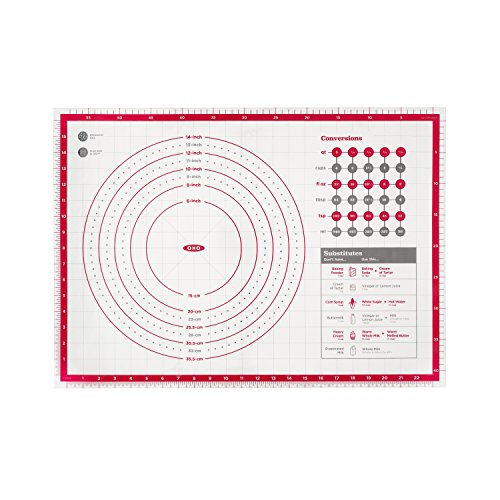
What makes OXO worth having for bread specifically is printed on it: dough diameter outlines, unit conversions, ingredient substitutions, and a border that works as a ruler in inches or centimeters. For rolling a crust or shaping a boule to a size, that is a real function, and it is the only one of these five with dough diameter guides.
Thickness, Grip, and Storage
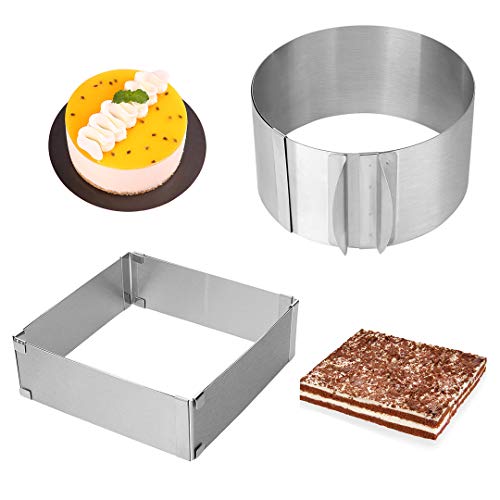
Dwavele states 0.7 mm of food grade silicone and 24 by 16 inches, which is the smaller of the two mats and the one that suits a short run of counter. It states a non-slip bottom that grips without wrinkling, built in conversion, proportioning and temperature guides, and that it can go in the dishwasher and then be folded or rolled away.
It also carries the only instruction in this pool that will ruin a first bake if missed: a transparent protective film has to be peeled off before first use, and the listing states it twice. OXO publishes no thickness, no weight and no washing instruction across eight bullets, and its stated 24.58 by 17.58 inches against Dwavele’s 24 by 16 makes it the one that takes more counter.
Which One Fits Your Kitchen
Keeping a starter alive on a small counter. sproerden heats a jar from 65 to 110 F with a stated 1 F accuracy, a 24 hour timer with memory, overheat protection and auto shut off, in a pad whose fields read 5.5 by 7 by 1.18 inches at 0.4 pounds. Jars are not included and the listing says so first.
Proofing dough rather than a jar. HEATIDEAS is a 10 by 20.75 inch heated mat with a cover and an NTC sensor you place on the container, so the controller reads the dough and not the mat. Its stated range is 50 to 113 F, with a timer its bullet gives as 0 to 12 hours.
A tray of shaped loaves at a stable temperature. Lapert pairs a mat adjustable from 59 to 140 F with an insulated Oxford cloth box stated at 21 by 15.5 by 9.5 inches that fits a half size baking sheet pan. At 2.84 pounds it is the heaviest pick and needs real counter space to stand.
Shaping a boule to a size. OXO is an unheated silicone mat stated at 24.58 by 17.58 inches, printed with dough diameter outlines, unit conversions, ingredient substitutions and a ruler border reading inches or centimeters. It does not proof anything, and it publishes no thickness and no weight.
A short run of counter to roll on. Dwavele is an unheated silicone mat at 24 by 16 inches and a stated 0.7 mm thick, with a non-slip base, measurement, proportioning and temperature guides printed on it, dishwasher tolerance, and a transparent film that has to come off before first use.
What We Could Not Verify
These are the figures that decide whether dough actually rises on schedule, and most of them are missing.
- None of the three heated picks publishes a wattage, so warm up time and running cost cannot be estimated.
- HEATIDEAS publishes a timer of 0 to 48 hours in its title and 0 to 12 hours in a bullet, and nothing reconciles the two.
- HEATIDEAS also publishes 50 to 113 F in its title and 50 to 115 F in a bullet.
- sproerden publishes a jar range of 24 to 40 oz in its title and 16 to 40 oz in a bullet.
- Only sproerden publishes a control accuracy, at 1 F, so the other two heated picks cannot be compared on stability.
- OXO’s dimension fields of 1.75 by 4 by 20.8 inches correspond to nothing it states, and Lapert’s give a 0.1 inch height for a box stated at 9.5 inches tall.