How the Five Compare on the Numbers
A sixth listing was left out of this comparison on purpose. Two of the products in this pool share feature bullets word for word, including the same sentence about the drip tray giving a place to put cups and the same sentence about a tight base keeping contaminants out. Only one of the two publishes anything the other does not, so the twin was dropped rather than counted as a separate choice.
Weight is published on two of the five and the two figures are very far apart. Avalon states 30 pounds. ACCVI states 6.6 pounds. Brio, Housiwill and dkfgtna publish no weight at all, which on a machine that sits on a wall cabinet shelf above a counter is the figure a buyer most needs. Nothing in any listing gives a filled weight with a jug on top.
What the table cannot tell you is delivery rate, which is what you feel when you fill a kettle. None of the five states a liters per hour or cups per minute figure for either the hot tank or the cold one, and none states a reservoir volume either. The twin that was excluded is the only listing in this pool to publish a flow rate at all. Nor does any listing publish a noise level, which on a compressor unit in a kitchen is a daily matter.
One Bottleless Unit and Four That Need a Jug
What Bottleless Means Here
Avalon is the only one of the five that takes no bottle. It filters the water instead, through a sediment filter and a carbon block filter that the listing names as separate models and rates at 6 months or 1500 gallons. Nothing else on this page filters anything at all. That single difference decides most of the purchase before any other specification is read.
It is also the reason Avalon is 30 pounds against the ACCVI’s 6.6 pounds. A bottleless unit carries a pump, a filter housing and a self cleaning cycle that the four jug machines do not, and it needs a water connection, which the listing does not describe. If your counter has no supply within reach, the figure that matters is not on the page at all.
The Jug Sizes the Other Four Accept
Three of the four jug machines publish a range, and no two ranges are the same. ACCVI states 3 or 5 gallon jugs, with the jug not included. Housiwill states 1.2 to 5 gallons. dkfgtna states 1.1 to 4.9 gallons, which is oddly precise and effectively the same window. Brio, despite being a top loading cooler, never says anywhere in its bullets what capacity of jug it accepts.
The low end of those ranges is the useful part, because a 5 gallon jug weighs more than most people want to lift over their shoulder onto a counter. A machine that also takes a 1.1 or 1.2 gallon bottle can be refilled from the tap into a small bottle instead. Neither Housiwill nor dkfgtna says what the low setting does to cooling performance.
Only Two Publish a Water Temperature
Celsius on One Listing, Fahrenheit on the Other
Two listings publish both a cold and a hot figure, each in its own unit. Housiwill states cooling down to 8 degrees Celsius and heating up to 95 degrees Celsius. ACCVI states a cold band of 50 to 55 degrees Fahrenheit and a hot band of 194 to 203 degrees Fahrenheit. Avalon, Brio and dkfgtna publish no temperature at all, only the words hot, cold, cool and room.
The four figures are not measuring the same things. Housiwill’s 8 degrees Celsius is a minimum the machine can reach, while ACCVI’s 50 to 55 degrees Fahrenheit is a band it holds. Both hot figures stop short of boiling, 95 degrees Celsius on one and 203 degrees Fahrenheit on the other, which is the same ceiling in two units, so either makes tea but neither does it the way a kettle does.
The Listing That Says It Is Not Crisp Cold
ACCVI does something unusual in its own bullet: after giving the cold band it adds, in capitals, that this is not crisp cold. That is a maker talking down its own specification, and it should be read as the most honest line in this pool. Avalon, by contrast, uses the phrase crisp cold as a selling point and publishes no figure behind it.
The ACCVI’s 6.6 pounds sits alongside that admission. A unit that light is doing something different from a 30 pound one, though neither listing names a cooling method, so the mechanism stays unverified. What is verifiable is the published pairing: the lighter machine is the one that tells you its cold water is in the low fifties, and the heavier one is the one that claims crisp without a number.
Footprint, Weight and Running Cost
The Published Dimensions Range Widely
dkfgtna gives the smallest set of figures on this page, 9.28 by 10 by 12 inches in its fields, and its own bullet writes them as 10 by 9.3 by 12 inches. Those are the same machine with one figure rounded, and the bullet is the version to trust for planning since it is the one the maker wrote as a sentence. Brio gives the largest set, 17.5 by 15 by 20.5 inches.
Brio is also the only listing to publish its size twice and to have both versions agree, though it orders them height first while the fields order them differently. Avalon’s 19 inch field and Brio’s 20.5 inch field are the two that will argue with a wall cabinet, since a jug or a fill point sits on top of the number in both cases. Housiwill’s 11 by 11 inch base is the squarest here.
The Only Energy Figure Anywhere
dkfgtna is alone in publishing a consumption figure: about one kilowatt of electricity over 24 hours of use. It gives no conditions, so it is impossible to know whether that covers a hot tank held ready or only standby, and no other listing offers anything to set it against. Avalon and Brio both name UL and Energy Star approval instead, which is a certification rather than a figure.
Housiwill, ACCVI and dkfgtna name no approval at all. On a device that heats water to near boiling and sits on a kitchen counter, a named safety listing is worth as much as any temperature figure, and only two of the five give one. That is the split that would decide a purchase for an office, where an unlisted appliance is often simply not allowed.
Which One Fits Your Kitchen
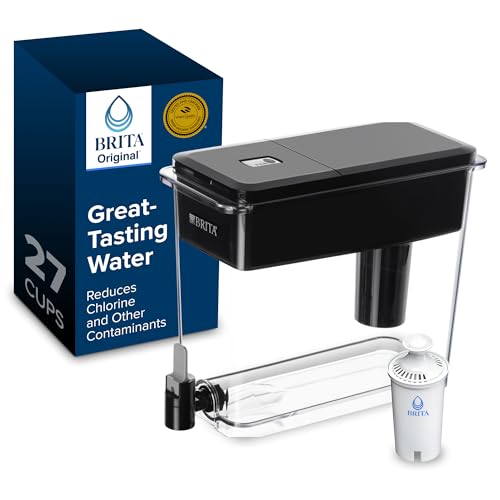
The kitchen that hates jugs. Avalon is the only bottleless pick, filtering through a sediment and a carbon block filter rated at 6 months or 1500 gallons, with a self cleaning cycle and a nightlight. It is 30 pounds and 19 inches tall, and it needs a water supply the listing does not describe.
The shared office counter. ACCVI dispenses from paddles rather than buttons, so a cup is filled without a hand on a switch, and its hot spout has a two step lock. It takes 3 or 5 gallon jugs, states 50 to 55 degrees Fahrenheit cold and 194 to 203 hot, and weighs 6.6 pounds.
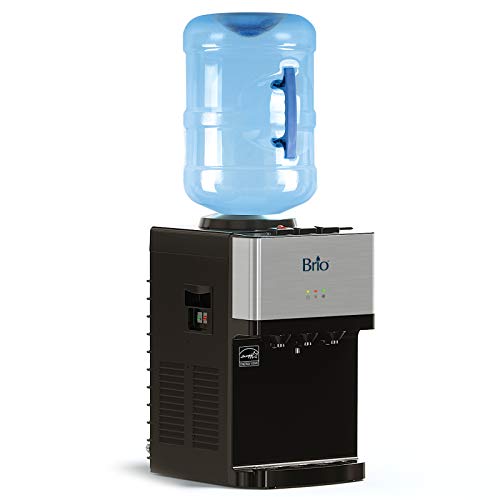
The buyer who wants steel, not plastic, holding the water. Brio states 100 percent stainless steel in both the hot and cold reservoirs, three temperatures including room, a removable drip tray and UL and Energy Star approval. Its published 20.5 by 17.5 by 15 inches makes it the biggest here.
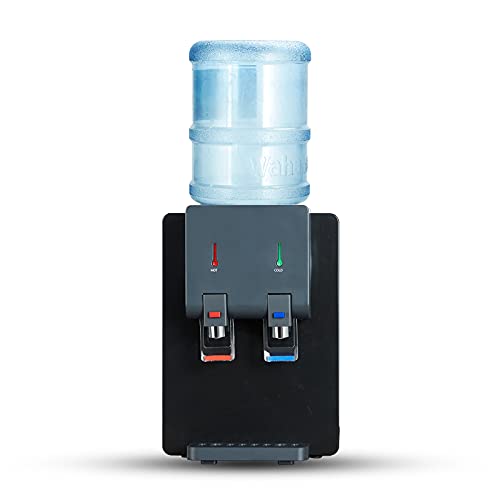
The tea drinker who wants numbers. Housiwill publishes both ends of its range in Celsius, 8 degrees cooling and 95 degrees heating, on an 11 by 11 inch base. It takes jugs from 1.2 to 5 gallons and publishes no weight and no safety listing.
The dorm desk or bedside table. dkfgtna publishes 9.28 by 10 by 12 inches, the smallest figures on this page, plus the only energy claim, about one kilowatt over 24 hours. It takes 1.1 to 4.9 gallon bottles and states no temperature and no child lock.
What We Could Not Verify
These six things decide how a countertop dispenser behaves in daily use, and the listings do not settle any of them.
- Weight on three of the five. Brio, Housiwill and dkfgtna publish none, and no listing gives a weight with a full jug on top, which is the load a shelf actually carries.
- Hot and cold tank volumes. Not one of the five picked publishes a reservoir capacity, so nothing says how many cups you get before the machine has to catch up.
- Delivery rate. No listing states cups per minute or liters per hour for either tank, so the wait to fill a kettle or a bottle is unknown on all five.
- Cooling method. None of the five says whether it uses a compressor or a thermoelectric module, which is the difference between crisp cold and cool, and between quiet and not.
- Noise. No figure and no description anywhere, on machines that cycle a cooling system beside where people are sitting.
- Plumbing requirements for the bottleless pick. Avalon is filtered and jugless, and its listing never states what connection, pressure or space the supply side needs.