How the Five Compare on the Numbers
A food processor is one of the tallest things in a small kitchen, and that is the figure this page turns on. Three of these five publish a dimension between 14.8 and 16.02 inches. A standard wall cabinet sits roughly 18 inches above a worktop. Those three therefore fit underneath one and cannot be used underneath one, because the lid has to lift clear of the bowl.
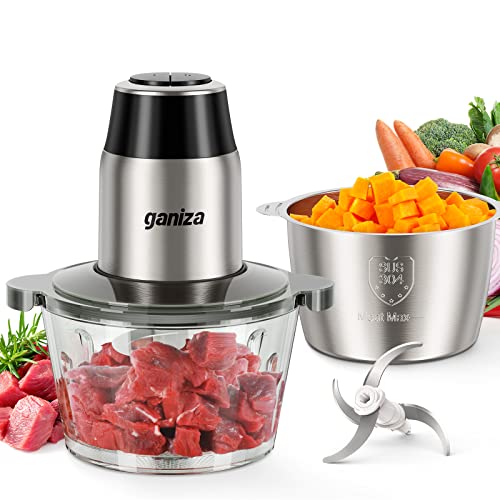
The other two are built differently. KOIOS publishes nothing above 10.37 inches and Ganiza nothing above 11, and both achieve it by shipping two 8 cup bowls instead of one tall one. That is the trade on offer here: a short machine with divided capacity, or a tall machine with one large bowl that has to be pulled forward before it opens.
What the table cannot tell you is the clearance each machine needs to open. No listing publishes it, and on the three machines near 16 inches that single missing figure decides whether the machine is usable where you intend to keep it. Nor does any listing publish a stored height with the bowl inverted on the base.
Height Is the Constraint, Not Width
The gap above the worktop
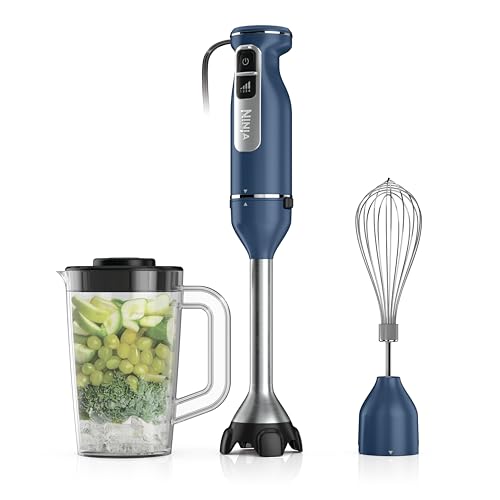
Counter space in a small kitchen is usually described in width, and processors are limited by height. Ninja is published at 7.76 x 9.88 inches on two axes, which is a genuinely narrow piece of bench, and 16.02 inches on the third. Hamilton Beach is 10 x 8.5 and then 16. Both are slim machines that happen to be tall.
The consequence is practical rather than theoretical. A machine 16 inches high under an 18 inch cabinet has two inches of air above it, and the lid of a food processor needs considerably more than that to come off with a blade in it. So both of those machines have to be slid forward to the front of the counter before every use and slid back afterwards.
Two machines that avoid the problem
KOIOS publishes 7.48 x 8.66 x 10.37 inches and Ganiza 8.85 x 6.95 x 11 inches. Those are the only two of the five where every published figure stays at 11 inches or below, which leaves roughly seven inches of clearance under a standard cabinet to lift a lid and a blade out.
They pay for it in bowl size. Each ships two 8 cup bowls rather than one larger one, so the total volume is respectable and it is divided. For chopping two ingredients separately that is an advantage. For one batch of dough, a soup, or anything you want to process in a single pass, it is not.
What Gets Put Away and What Does Not
The weight that decides it
In a kitchen short of counter, the only appliance that truly saves space is the one that leaves the counter between uses. KOIOS at 4.51 lb and Ganiza at 5 lb can be lifted down from a shelf with one hand while the other holds the cupboard door. That is the test.
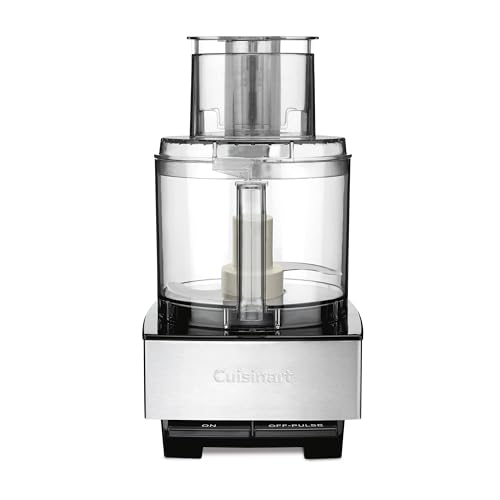
Hamilton Beach at 6.2 lb and Ninja at 7.65 lb are two-handed but reasonable. Cuisinart at 18 lb is in a different category: it will be put somewhere once and stay there, which means its 7.9 x 11 inch footprint is occupied every day of the year rather than only on the days you cook with it.
The parts nobody accounts for
A processor is not one object. It is a base, a bowl, a lid with a feed tube, a pusher and usually at least one disc, and every one of those has to live somewhere. KOIOS is the only listing in this pool that addresses it at all, stating that its two bowls stack.
The other four publish nothing about storage. That omission matters most on the Cuisinart, which ships the most parts of the five, including a 4mm slicing disc and a bowl sleeve assembly. A machine that stays on the counter still has a drawer’s worth of attachments that do not, and no listing here tells you how much room they need.
What You Give Up by Going Small
Chutes and discs
The two short machines are choppers by their published descriptions. Neither KOIOS nor Ganiza publishes a feed chute or a slicing disc, which means vegetables are cut down by hand before they go in, and slicing a cucumber evenly is not something either one claims to do.
Cuisinart publishes an extra-large feed tube with a bowl sleeve assembly and a 4mm stainless slicing disc, so the cut thickness is a stated figure. Hamilton Beach publishes five processing functions with two attachments covering slicing and shredding. If the job you actually want is turning a bag of vegetables into even slices, the tall machines are the ones that claim it.
Reading the motor figures carefully
Ninja publishes 1000 peak watts, Cuisinart 720 watts, KOIOS 500W, and Hamilton Beach and Ganiza 450 watts each. Only one of those uses the word peak, and a peak figure is a maximum draw rather than what the motor sustains, so the five numbers are not measuring the same thing.
Ganiza is the one listing that says what happens at the limit, publishing an overheating protection system and stating that the machine stops and must be left to cool for a few minutes. That is more useful than a wattage, because it tells you the failure mode rather than the headline. No other listing here describes what its motor does under load.
Which One Fits Your Kitchen
If a wall cabinet sits directly above your worktop. KOIOS publishes nothing above 10.37 inches and weighs 4.51 lb, so it can be used and opened where it stands and still be put away afterwards.
If you prepare two things at once. Ganiza ships an 8-cup glass bowl and an 8-cup stainless bowl with two sets of blades, at 5 lb and nothing above 11 inches, so neither bowl waits on the other being washed.
If you want a real bowl and still want it off the counter. Hamilton Beach pairs 10 cups with 6.2 lb and adds a bowl scraper that works without opening the lid. It is 16 inches tall, so plan to slide it forward.
If the motor matters more than the height. Ninja publishes 1000 peak watts and 4 Auto-iQ presets in a body measuring 7.76 x 9.88 inches on two axes, which is the narrowest bench claim here.
If it can simply live on the counter. Cuisinart gives you the 14 cup bowl, the extra-large feed tube, the 4mm disc and the only stated dishwasher-safe parts, at the cost of 18 lb that will not be moved.
What We Could Not Verify
These are the things we went looking for in the five listings and could not source:
- The clearance each machine needs above it to remove the lid with a blade fitted. No listing publishes it.
- A stored height for any of the five with the bowl inverted on the base.
- Where the discs, pusher and lid are meant to be kept on the four listings that say nothing about storage.
- A continuous wattage for the Ninja, or a peak figure for the other four, so the motors could be compared on one measure.
- Whether the parts on the four machines that do not mention it may go in a dishwasher.
- A published weight for the BLACK+DECKER machine in this pool, which is the figure that would place it on this page.