How the Five Compare on the Numbers
Seven oven rack guards are on the fact sheet and five of them state that the parts go in the dishwasher. Those five are this page. LeeYean and WELANGBN are left off for one reason: neither listing mentions a dishwasher anywhere across its bullets, and on a silicone part that lives in baked-on grease, a maker’s silence about cleaning is the answer to the question this page asks.
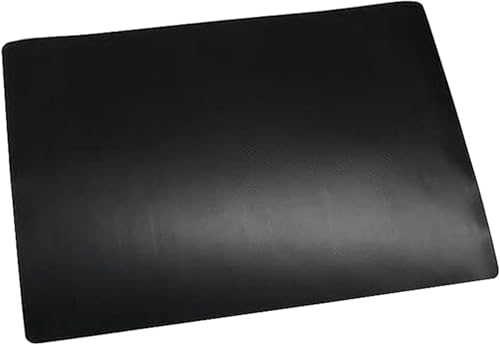
The five that remain are not all the same object. Four are silicone shields that slide onto the front rail of a rack so your forearm does not touch hot metal. Cooks Innovations is a PTFE sheet published at 23 by 16.5 inches that sits on a rack below the food and catches drips. Both get called oven rack guards, both go in the dishwasher, and they solve completely different problems.
The temperature row is the one that should change a decision. Boao publishes 392 F, which is below the setting a great many recipes call for, and it is the only figure in that row that sits under a roasting oven. Nothing in the table tells you what happens at the temperature above the published limit, whether the silicone softens, marks the rack or fails outright, because not one of these seven listings says. Cooks Innovations publishes no temperature figure at all, which for a sheet of PTFE spread inside a hot oven is the largest single omission on the page.
What the Dishwasher Claim Actually Covers
Five Makers Say It and Two Stay Quiet
Cooks Innovations devotes a whole bullet to it, headed dishwasher safe, and adds that the liner can also be wiped clean by hand. Fox Run states that the guards are dishwasher and hand wash safe in the same bullet that gives its temperature figure. SDTC Tech puts it with installation: wash by hand or place in the dishwasher. ANTFEES and Boao both use a more casual phrasing about throwing them in.
LeeYean and WELANGBN publish five and six bullets each covering material, temperature, fitting and safety, and neither one says how to clean the thing. LeeYean goes further in the other direction, warning that the guards must come off before a self-clean cycle because self-clean temperatures exceed 900 F. That is a useful warning and it is not a cleaning instruction, which is why both sit this page out.
Two Listings Use the Same Sentence
ANTFEES and Boao word the claim identically: reusable and easy to clean, whip off the oven rack protectors and throw them into the dishwasher or hand wash. Two makers reaching that phrasing independently is a stretch, and the rest of both listings reads the same way, down to the sliding installation and the silicone lining gripping into place. Treat them as one source of information appearing twice rather than two.
They are not the same product. ANTFEES publishes 22 inches and a pair, Boao publishes eight pieces of 14 by 0.6 inches, and their temperature figures are 482 F against 392 F, which is the largest gap on the page. If the shared copy makes you doubt one listing’s cleaning claim it should make you doubt the other’s equally, and the same goes for believing them.
Heat Ratings That May Not Match Your Oven
392 F Is Under a Roasting Temperature
Boao publishes a ceiling of 392 F for its eight pack. Bread, roast vegetables and most things worth putting in a hot oven go above that, so on paper this is a guard rated for the temperature below the one you use. SDTC Tech publishes 446 F, Fox Run 450 F, and ANTFEES 482 F with a caution attached. Those three sit above normal baking and Boao does not.
None of the listings says what exceeding the figure does. There is no statement about softening, staining, transferring to the rack or releasing anything, only a number and, on two of them, a warning about the self-clean cycle. A buyer is left with a ceiling and no consequence, which makes the conservative choice the sensible one on a part that sits in the oven every time it runs.
A Material Range Is Not a Working Limit
ANTFEES is the only listing here that publishes both. Its range runs from -70 F to 482 F, and the same bullet then suggests using it below 446 F, saying that this extends the life of the part. So the headline figure is what the silicone survives and the second figure is what the maker actually recommends, and they are 36 degrees apart on the page’s own listing.
Nobody else splits the two. Fox Run publishes 450 F as a flat maximum and says the guards can handle it. SDTC Tech publishes 446 F with a metric equivalent. Boao publishes 392 F as a withstand figure. Read the ANTFEES bullet next to those and the suggested limit is the more honest number, which means the rating to compare across all four is closer to 446 F than to 482 F.
Length, Count and What You Are Buying
Fourteen Inches or Twenty Two
Three of these come in at 14 inches: Fox Run, SDTC Tech and Boao, and all three say that covers the full length of a standard rack. ANTFEES publishes 22 inches and argues in its own bullet that nothing else on the market runs longer, which in a wide oven means one piece instead of two butted together. Every one of the four says the silicone can be cut down.
Cut to fit changes how the length should be read. A 22 inch guard becomes a 14 inch guard with scissors, and a 14 inch guard cannot become a 22 inch one, so the longer piece is the more flexible purchase for an oven you have not measured. What none of the four publishes is the rail thickness the channel grips, which is the figure that decides whether it stays on at all.
A Sheet Is Not a Shield
Cooks Innovations belongs to a different category of problem. It is a PTFE sheet of 23 by 16.5 inches, published at 0.23 lb, meant to be trimmed and laid on a rack under whatever is baking so that spills never reach the oven floor. The maker describes it as thinner and lighter than others to make removal easy, and its thickness field arrived as a near zero figure that the fact sheet discarded rather than publish.
It will not stop you burning your arm and the four silicone shields will not keep a pie off the oven floor. They are on one page because both are sold as oven rack guards and both are dishwasher safe, and the only thing that decides between them is which accident you are trying to prevent. Buying one expecting the other is the mistake this category invites.
Which One Fits Your Kitchen
A wide oven and one long piece. ANTFEES, published at 22 inches for a pair, with a material range of -70 F to 482 F and a stated suggestion to work below 446 F. The pair is published at 0.21 lb and can be cut down to any rack.
The highest flat rating with nothing to interpret. Fox Run, a set of two at 14 by 0.7 inches, stated to handle 450 F, and stated dishwasher and hand wash safe in the same bullet. It publishes no weight and no material grade beyond silicone.
Four racks, or three and a spare. SDTC Tech, four pieces of 14 by 0.6 inches in food grade BPA free silicone rated to 446 F, with the dishwasher named in the cleaning bullet. It publishes no weight and no low temperature figure.
Covering every rack in the house. Boao, eight pieces of 14 by 0.6 inches for a published 0.75 lb. Read its 392 F ceiling first, because that is below the temperature a lot of cooking actually runs at.
Keeping spills off the oven floor. Cooks Innovations, a PTFE sheet of 23 by 16.5 inches at 0.23 lb, trimmed to fit and washed in the dishwasher. It publishes no temperature rating at all, and it protects the oven rather than your forearm.
What We Could Not Verify
Every figure above comes from the maker’s own listing text. These are the things we went looking for and could not source in any of them.
- Not one of the seven listings says how many dishwasher cycles the parts survive, or whether heat and detergent together shorten the life of the silicone.
- Cooks Innovations publishes no temperature rating of any kind, which on a sheet that sits inside a working oven is the figure you would want first.
- None of the four shields publishes the thickness of rack rail its channel grips, so whether it will stay on your rack is not answerable before it arrives.
- No listing says what happens above the published ceiling, so Boao’s 392 F is a limit with no stated consequence attached.
- Fox Run and SDTC Tech publish no weight, and the two weights that exist cover a pair and a pack of eight rather than a single guard.
- ANTFEES and Boao share their cleaning and installation wording almost exactly, and neither listing gives any way to tell whether the parts share a source.