How the Five Compare on the Numbers
If you dehydrate in order to fill jars, the useful question is how much comes off one sheet. That is the figure that turns a drying run into a row of labeled jars, and exactly one listing in this pool publishes it. Everything else here publishes a sheet size, a pack count and a temperature range, and leaves the yield to you.
Published weights run from 0.3 pounds for the two sheet NESCO pack to 7.5 pounds for the CiCixixi set of twenty one pieces, the heaviest of the five. Pack sizes run from two sheets to twelve. Two of the five publish a temperature range and one publishes both a sheet thickness and a mesh hole size.
The table cannot tell you the finished weight of what comes off a sheet, only the volume of puree that goes on one, and only for the single listing that publishes even that. It cannot give a temperature range for three of the five. And it cannot tell you how much airflow a fine mesh actually allows, since two listings describe it and only one gives a hole size.
Only One Sheet Says How Much It Dries
Three cups of puree per sheet
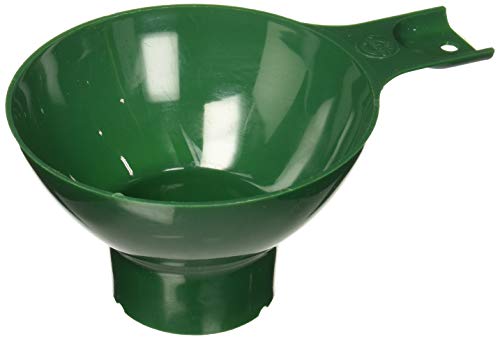
NESCO states that its fruit roll sheet dries up to 3 cups of pureed fruit per sheet, and ships two. That single sentence is the only quantitative link in this pool between a drying run and what ends up in a jar, and it is on a plastic sheet rather than one of the silicone ones.
It is a capacity for puree rather than for slices, which is what a solid sheet with a lip is for. For fruit leather that is exactly the number you want. For sliced apples on a mesh screen, nobody here publishes anything comparable, and the sheet area is all you have to work from.
Why capacity matters for a jar shelf
A shelf of jars is a planning exercise: how many runs fill a quart, and how many sheets per run. Sheet area is a poor proxy because puree spreads to a depth and slices do not. Lova’s 14 by 14 inch sheets have more area than GUCUJI’s 12.6 inch circles, and neither listing converts that into anything you can count.
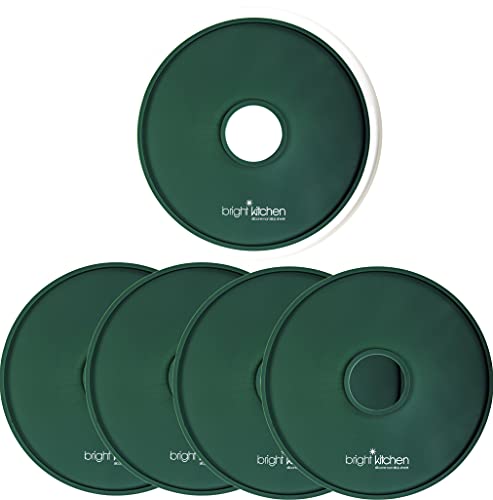
Pack size is the part you can plan with. Lova ships twelve sheets, stating that this lets you line every rack in one batch rather than reusing a few liners across shelves. CiCixixi ships ten mats and ten mesh screens. NESCO ships two, and Bright Kitchen four, so both assume you already have trays.
Mesh Sheets and Edged Mats Are Not the Same Thing
What each type is for
Two of these five are mesh screens. Lova and GUCUJI both state a fine mesh that keeps berries, sliced herbs and thin jerky strips on the rack while air passes through. They are for slices and strips, and a puree would run straight through them.
NESCO and Bright Kitchen are solid sheets with a lip: NESCO calls it an exclusive no spill lip and Bright Kitchen states a quarter inch edge that holds liquid batter. Those are for purees, sauces and soups. CiCixixi is the only pick that ships both types, ten edged mats and ten mesh screens, plus a silicone spatula.
Published thickness and mesh size
GUCUJI is the best documented sheet in this pool. It publishes a 12.6 inch diameter, a thickness of 0.8 mm, restated as 30 mil, and mesh holes of about 1×1 mm, and claims over 5,000 uses. No other listing here publishes a thickness or a hole size at all.
Lova states a fine mesh weave and hundreds of batches without a figure for either. CiCixixi states micro hole mesh screens and a range of minus 40 F to 428 F, matching GUCUJI’s stated range exactly. Bright Kitchen and NESCO publish neither a thickness nor a temperature limit, which on a silicone sheet is the more surprising omission.
Fit, Storage and Numbers That Fail
Center holes and model lists
Round dehydrator sheets need a center hole that clears the fan column, and exactly one of these five publishes the figure. Bright Kitchen states a 12.5 inch diameter with a 3 inch center hole, and warns in the same listing that its sheets are not one size fits all and that any other brand should be measured first. GUCUJI publishes a 12.6 inch diameter and no hole figure at all, which on a round sheet is the omission that matters.
GUCUJI takes the other approach and lists the machines instead, naming a long run of model numbers, and states the sheets can be cut to any size. Lova states its sheets trim cleanly with household scissors and tells you outright to measure your tray before ordering. CiCixixi says only that its mats fit most square dehydrator trays. For a square machine that is enough; for a round one with a column, the hole figure is the one that decides it.
Numbers that fail
The NESCO fruit roll sheet contradicts itself on size. Its title states 13.75 inches and its first bullet states it is compatible with 15 and a half inch diameter trays. Those cannot both be the sheet, and the listing never says which is the sheet and which is the tray it drops into.
CiCixixi’s published 7.5 pounds is plausible only because the pack runs to twenty one pieces, and its own size field of 11.81 by 9.84 inches has to describe a single mat rather than the set. Bright Kitchen is the one listing here whose figures line up: fields of 12.5 by 12.5 by 0.25 inches against a stated 12.5 inch diameter and a stated quarter inch lip, so every published number has an explanation.
Which One Fits Your Kitchen
Planning jars from purees. NESCO states two solid sheets of 13.75 inches with a no spill lip, each drying up to 3 cups of pureed fruit, in food grade plastic. It publishes 0.3 pounds, the lightest of the five, and is hand wash only.
Lining every rack in one run. Lova ships twelve 14 by 14 inch fine mesh silicone sheets that trim with household scissors, states hundreds of batches of reuse, warm soapy water or the dishwasher top rack, and includes a recipe guide. It publishes 1.23 pounds.
The best documented sheet. GUCUJI states a 12.6 inch diameter, 0.8 mm thickness restated as 30 mil, mesh holes of about 1×1 mm, minus 40 F to 428 F and over 5,000 uses. It publishes 0.32 pounds for five sheets and lists the machines it fits.
Both sheet types at once. CiCixixi ships ten edged silicone mats and ten mesh screens at 11.81 by 9.84 inches with a spatula, states minus 40 F to 428 F, dishwasher safety and that the mats roll up without creasing. It publishes 7.5 pounds.
Purees on a round tray. Bright Kitchen states four solid sheets of 12.5 inches with a 3 inch center hole and a quarter inch lip, in 100 percent food grade silicone, dishwasher safe, stated to fit all round and square models of one dehydrator brand.
What We Could Not Verify
These are the figures a jar shelf would want, and that these listings do not give.
- A drying capacity for four of the five, published only by NESCO and only for puree.
- A finished yield in jars or cups for any sheet in this pool.
- A sheet thickness for four of the five, published only by GUCUJI.
- A temperature range for the NESCO, Lova and Bright Kitchen sheets.
- A mesh hole size for the Lova and CiCixixi screens, described only as fine and micro hole.
- Whether the NESCO sheet is 13.75 inches or fits 15 and a half inch trays, since it states both.