Lush Food & Drink

Buying Guide ·Baking

Best Bread Cloches That Fit in a Baking Drawer

The deciding specification is the published total height with the lid on, because a cloche is a dome and a drawer closes on the highest point.

By the Lush Editorial Team·Researched & Compared

  • Researched & ComparedSpecs pulled from the manufacturer listing
  • Like-for-LikeSame measures across every model
  • No Paid PlacementsNobody pays to appear here

Compared the published total height, footprint, weight and temperature limit that each of these five makers states on its own listing.

Our shortlist

Five products, one set of published numbers.
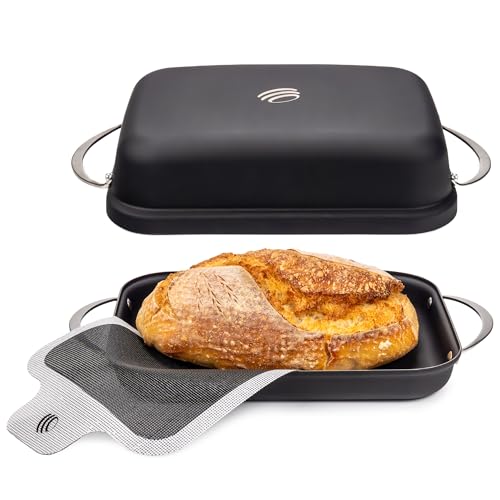
  1. Bulka Carbon Steel Dutch Oven for Bread Baking
    Best for the least drawer height of the five

    Bulka Carbon Steel Dutch Oven for Bread Baking

    5.2 inches high with a published 3.7 inches of headroom for the loaf.

    • Bulka
    • Large
    • 8.5 lb
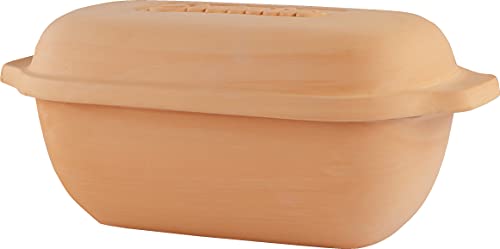
  2. Eurita Clay Roaster
    Best for a clay cloche at two quarts

    Eurita Clay Roaster

    5.25 inches high on an 11.75 by 6.37 inch base, at 3.0 pounds.

    • Reston Lloyd
    • 2 Quarts
    • 3 lb
  3. Brod & Taylor Ultralight Baking Shell for Sourdough ...
    Best for a shell that needs no preheat

    Brod & Taylor Ultralight Baking Shell for Sourdough ...

    5.5 inches high, one pound, and cleared to 550 F in aluminum.

    • Brod & Taylor
    • Batard
    • 1 lb
  4. Flavehc Bread Oven Cast Iron Bread Dutch Oven with C...
    Best for a wide dome on a shallow base

    Flavehc Bread Oven Cast Iron Bread Dutch Oven with C...

    5.85 inches high over a 9.8 inch enameled cast iron base.

    • Flavehc
    • 9.8 Inches
    • 7.94 lb
  5. HAWOK Baking Pre-Seasoned Cast Iron Bread cloche Pan...
    Best for a height split into two figures

    HAWOK Baking Pre-Seasoned Cast Iron Bread cloche Pan...

    6.3 inches total, published as a 4.6 inch lid and a 1.8 inch base.

    • HAWOK
    • DIA.7.9"
    • 7.43 lb

Side by side

Blank means the maker does not publish it.
ModelBrandSize (capacity)WeightBest for
Bulka Carbon Steel Dutch Oven for Bread Baking Bulka Large 8.5 lb Best for the least drawer height of the five
Eurita Clay Roaster Reston Lloyd 2 Quarts 3 lb Best for a clay cloche at two quarts
Brod & Taylor Ultralight Baking Shell for Sourdough ... Brod & Taylor Batard 1 lb Best for a shell that needs no preheat
Flavehc Bread Oven Cast Iron Bread Dutch Oven with C... Flavehc 9.8 Inches 7.94 lb Best for a wide dome on a shallow base
HAWOK Baking Pre-Seasoned Cast Iron Bread cloche Pan... HAWOK DIA.7.9" 7.43 lb Best for a height split into two figures

Each pick in detail

What the listing says for it, and against it.
1 Best for the least drawer height of the five

Bulka Carbon Steel Dutch Oven for Bread Baking

5.2 inches high with a published 3.7 inches of headroom for the loaf.

  • For it
  • Publishes 5.2 inches of height on an 11.3 inch square footprint, the lowest published height of these five
  • Publishes 3.7 inches of headroom inside, the only interior clearance figure among these five, so the dome height is accounted for
  • Publishes 8.5 pounds twice, in the fields and in its own sentence, and argues the case against a 15 to 20 pound cast iron pot
  • Carbon steel rather than cast iron, and the maker states it preheats faster for the same job
  • Against it
  • Publishes 8.5 pounds, the heaviest of these five, which is a lot of drawer load even at 5.2 inches
  • Publishes no diameter for the loaf, only an 11.3 inch overall footprint
  • Its size field says only Large, so the 11.3 inch footprint comes from the dimension fields alone
2 Best for a clay cloche at two quarts

Eurita Clay Roaster

5.25 inches high on an 11.75 by 6.37 inch base, at 3.0 pounds.

  • For it
  • Publishes 5.25 inches of height on an 11.75 by 6.37 inch base, so all three figures are stated
  • Publishes 2 quarts of capacity, where only HAWOK's 0.65 quart gives another capacity figure here
  • Publishes 3.0 pounds against 7.43 for the HAWOK and 7.94 for the Flavehc in cast iron
  • The maker explains its own steam method: the unglazed lid is soaked before use and is deliberately not tight-fitting so some steam escapes
  • Against it
  • The lid has to be soaked before every bake, which is a step none of the other four asks for
  • Hand wash stated, so the clay has no dishwasher option
  • An 11.75 inch field against a 6.37 inch one, so the loaf is oblong rather than a round boule
3 Best for a shell that needs no preheat

Brod & Taylor Ultralight Baking Shell for Sourdough ...

5.5 inches high, one pound, and cleared to 550 F in aluminum.

  • For it
  • Publishes 1.0 pound, the lightest of these five, and states the figure in its own sentence as well as in the fields
  • Publishes its dimensions in words as 12.5 by 8 by 5.5 inches, and states aluminum cleared to 550 F with no PTFE or PFOA
  • No preheating required, which the maker contrasts with 30 to 45 minutes for a Dutch oven and with the risk of handling a scorching pot
  • Cools fast and will not crack, and the maker says two shells fit side by side in a wide oven
  • Against it
  • It is a shell with no base: you supply a stone, a steel or a baking sheet, so the drawer holds the shell and the loaf bakes on something else
  • A batard shape at 12.5 by 8 inches, so a round boule is the wrong loaf for it
  • Its dimension fields give 5.5 inches where its own sentence gives 8 inches for the same axis
4 Best for a wide dome on a shallow base

Flavehc Bread Oven Cast Iron Bread Dutch Oven with C...

5.85 inches high over a 9.8 inch enameled cast iron base.

  • For it
  • Publishes 5.85 inches of height with a 9.8 inch dome, so the loaf diameter and the drawer figure are both known
  • The maker states the base is deliberately shallow, which makes loading the dough easier and keeps the stored height down
  • Enameled cast iron, and the maker states the dome allows for upward expansion of the loaf
  • Published for beef roasts and chicken as well as bread, so the drawer space is not single-purpose
  • Against it
  • Publishes 7.94 pounds against 1.0 pound for the Brod and Taylor shell
  • Its dimension fields read 12.76 by 12.76 inches against a stated 9.8 inch size, so the footprint and the dome figure are not the same number
  • Hand washing with a nylon brush only, and the maker warns metal tools will scratch the enamel

Who should skip this: Skip this if counter or storage space is tight: it has the largest published footprint of the five, 12.76 by 12.76 inches.

5 Best for a height split into two figures

HAWOK Baking Pre-Seasoned Cast Iron Bread cloche Pan...

6.3 inches total, published as a 4.6 inch lid and a 1.8 inch base.

  • For it
  • The only one of these five to publish the height in parts: a 4.6 inch dome lid and a 1.8 inch base, for a stated total of 6.3 inches
  • That split is what a drawer needs, because a lid and a base can be stacked separately or nested
  • Publishes a diameter twice over, 7.87 inches and 20 cm, on a pre-seasoned cast iron dome
  • A tight-fitting domed lid published as trapping and circulating steam, with a large bow on top to lift by
  • Against it
  • Publishes 6.3 inches, the greatest published height of these five
  • Publishes 7.43 pounds of cast iron across two pieces
  • Its dimension fields read 8.1 by 10.5 by 5.5 inches, which agrees with neither the 7.87 inch diameter nor the 6.3 inch total height

Our verdict

A cloche is a dome over a base, so its stored height is the sum of both and it cannot be laid on its side. Bulka publishes 5.2 inches with 3.7 inches of headroom inside. Reston Lloyd publishes 5.25 inches of clay. Brod and Taylor publishes 5.5 inches at one pound. Flavehc publishes 5.85 inches on a 9.8 inch dome. HAWOK publishes 6.3 inches and is the only pick that splits it into a 4.6 inch lid and a 1.8 inch base.

“A dome has one orientation and a drawer has one gap.”

Lush Editorial Team

What separates these five

Published heights run 5.2 inches to 6.3 Bulka publishes 5.2, Reston Lloyd 5.25, Brod and Taylor 5.5, Flavehc 5.85 and HAWOK 6.3. That is a spread of 1.1 inches across the five, and every one of them is the figure a closed drawer has to clear.
One pick publishes the lid and the base separately HAWOK states a 4.6 inch dome lid on a 1.8 inch base for a total of 6.3 inches, in inches and in centimeters. The other four publish one height and leave you to work out how much of it is dome.
The same job weighs 1.0 pound or 8.5 Brod and Taylor publishes 1.0 pound of aluminum, Reston Lloyd 3.0 of clay, HAWOK 7.43 of cast iron, Flavehc 7.94 of enameled cast iron and Bulka 8.5 of carbon steel. The drawer runner carries whichever you pick.
Three of the five disagree with their own words Flavehc publishes fields of 12.76 by 12.76 inches against a stated 9.8 inch size. HAWOK publishes 8.1 by 10.5 by 5.5 inches against a stated 7.87 inch diameter. Brod and Taylor's fields give 5.5 where its sentence gives 8 inches.
One pick publishes interior headroom Bulka publishes 3.7 inches of headroom inside the chamber. The other four publish an external height and leave you to work out how much of it is dome, which is what decides whether the loaf springs or touches the lid.

How we chose

Priorities, not a computed score. The inputs are published specifications, so we rank by what matters most and say how much.

  1. 30% Published total heightA drawer is a fixed gap and a dome cannot be laid on its side
  2. 20% Height split into partsOne listing publishes a lid and a base separately, which changes how it stores
  3. 20% Published footprintWidth and depth decide whether anything fits beside it
  4. 15% Published interior headroomOne of these five publishes it, and it is what the dome is for
  5. 15% Published temperature limitBecause a drawer-friendly shell is no use if the oven is too hot for it

How the Five Compare on the Numbers

A bread cloche is a dome over a shallow base, and unlike almost everything else in a baking drawer it has only one orientation. Laid on its side the dome rolls and the base cannot sit inside it. So the figure that decides whether it goes away is the total assembled height, and the published figures across these five run from 5.2 inches to 6.3 for what is essentially the same job.

The second figure is the footprint, and it varies more than the height. Bulka publishes 11.3 inches square. Reston Lloyd publishes 11.75 by 6.37 inches, which is a loaf shape rather than a round one. Brod and Taylor publishes 12.5 by 8 inches. Flavehc publishes fields of 12.76 inches square over a stated 9.8 inch dome. A drawer has to take the larger of the two dimensions.

Published specification Bulka carbon steel Reston Lloyd clay Brod and Taylor shell Flavehc cast iron HAWOK cast iron
Published total height 5.2 in 5.25 in 5.5 in 5.85 in 6.3 in
Height split published not published not published not published not published 4.6 in lid, 1.8 in base
Published footprint 11.3 x 11.3 in 11.75 x 6.37 in 12.5 x 8 in 12.76 x 12.76 in in the fields 8.1 x 10.5 in in the fields
Published diameter or size not published 2 quarts Batard 9.8 in 7.87 in, 20 cm
Interior headroom published 3.7 in not published not published not published not published
Published temperature limit not published 500 degrees F 550 F 500 F not published
Published weight 8.5 lb 3.0 lb 1.0 lb 7.94 lb 7.43 lb
Published material Carbon steel Unglazed clay Aluminum, no PTFE or PFOA Enameled cast iron Pre-seasoned cast iron
Preheating published About 15 minutes Lid soaked before use No preheating required not published not published

The row almost nobody fills is the one that matters inside the dome. Bulka publishes 3.7 inches of headroom, and it is the only interior figure of the five. Everybody else publishes an outside height and leaves you to guess how much of it is base and how much is air above the loaf, which is the difference between a loaf that springs and one that hits the lid.

The One Listing That Splits the Height

A Lid and a Base Are Two Objects

HAWOK publishes the figure this page wants and no other pick gives: a cast iron dome lid 4.6 inches high plus a base 1.8 inches deep, for a stated total height of 6.3 inches. It states those in inches and in centimeters, 11.6 cm for the lid and 4.5 cm for the base, and gives the diameter twice over as 7.87 inches and 20 cm.

That split changes how the thing stores. Assembled, the HAWOK publishes 6.3 inches, the greatest height of these five. Taken apart, the base is 1.8 inches and the lid 4.6, so the base slides under a tray and the lid goes somewhere else, or inverts over another pan. No other pick lets you plan that, because no other pick publishes the two numbers.

What the Others Leave Out

The other four publish one number and stop. Bulka gives 5.2 inches and 3.7 inches of headroom, so you know the air above the loaf but not where the base ends. Reston Lloyd gives 5.25 inches for a lid and a base it describes separately in words without measuring either. Brod and Taylor gives 5.5 inches for a shell that has no base at all.

Flavehc and HAWOK are the two cast iron picks and they treat the question differently. Flavehc publishes 5.85 inches assembled and says only that its base is shallow. HAWOK publishes the base at 1.8 inches deep and the dome at 4.6 inches high. In a drawer that difference is practical: one of them you can plan around, and the other you have to measure yourself.

Weight, Material and the Drawer Underneath

One Pound to Eight and a Half

The spread across these five is extraordinary for a single job. Brod and Taylor publishes 1.0 pound of aluminum. Reston Lloyd publishes 3.0 pounds of clay. HAWOK publishes 7.43 pounds of cast iron across a lid and a base. Flavehc publishes 7.94 pounds of enameled cast iron. Bulka publishes 8.5 pounds of carbon steel, which it states twice, in the fields and in its own sentence.

Bulka makes the argument explicitly, publishing 8.5 pounds against what it calls a typical 15 to 20 pound cast iron pot, and saying the point is being able to load and lift it safely with a hot loaf inside. On this page the same figure is a drawer load, and 8.5 pounds sliding forward on a runner is a different concern from 8.5 pounds coming out of an oven.

The Shell That Needs No Preheat

Brod and Taylor publishes the most drawer-friendly proposition of the five and does it by removing half the product. There is no base: the shell goes over dough sitting on a stone, a steel or a baking sheet, it needs no preheating where the maker says a Dutch oven wants 30 to 45 minutes, and it publishes 1.0 pound, 12.5 by 8 by 5.5 inches and food-safe aluminum to 550 F.

Reston Lloyd is the opposite trade. Its unglazed clay lid must be soaked before use so the water evaporates into steam during the bake, and the maker states the lid is deliberately not tight-fitting so some steam escapes. That is a genuine method rather than a shortcut, and it is a step before every loaf that none of the other four asks for.

What the Makers Say About Heat and Cleaning

Published Oven Limits

Three of the five publish a temperature. Brod and Taylor states food-safe aluminum to 550 F with no PTFE or PFOA. Reston Lloyd states its clay is microwave and oven safe up to 500 degrees F. Flavehc states enameled cast iron in the oven up to 500 F. Those are the only three figures here, and all three sit above any bread bake.

The two cast iron picks are split on it. Flavehc publishes 500 F; HAWOK publishes no temperature at all, which is unusual for pre-seasoned cast iron, where the seasoning rather than the metal sets the ceiling. Bulka publishes no ceiling either, but it does publish advice: if the base browns too fast, drop the oven about 25 F, or 15 C, and move the rack up a level.

Four of the Five Tell You How to Wash It

Four of the five say something about it. Bulka says to hand wash, dry and bake again, and adds that the nitrided carbon steel is hardened through rather than coated, so there is nothing to season, chip or flake. Flavehc asks for warm soapy water and a nylon brush and warns that metal tools will scratch the enamel. Both are complete instructions.

Brod and Taylor says cleanup is a quick wipe and contrasts that with scrubbing and reseasoning a cast iron pot, which it puts at 20 to 30 minutes after a bake. Reston Lloyd says hand wash and explains that the bottom section is glazed with a glass frit lining to make it easy. HAWOK is the only pick that says nothing about cleaning at all.

Which One Fits Your Kitchen

The drawer gap is the binding constraint. Bulka publishes 5.2 inches of height and 3.7 inches of interior headroom on an 11.3 inch square base. At 8.5 pounds it is the heaviest of these five and the only one to publish what is above the loaf.

A narrow loaf and a light object. Reston Lloyd publishes 5.25 inches on an 11.75 by 6.37 inch clay base at 3.0 pounds and 2 quarts. Soak the lid before every bake.

You want nothing heavy in the drawer. Brod and Taylor publishes 1.0 pound, the lightest of these five, at 12.5 by 8 by 5.5 inches, cleared to 550 F, with no preheating. You supply the flat surface it covers.

A round boule with room to spring. Flavehc publishes 5.85 inches over a 9.8 inch dome in enameled cast iron at 7.94 pounds, with a base the maker says is deliberately shallow. Its footprint fields read larger than its stated size.

You want to store the lid and base apart. HAWOK publishes a 4.6 inch lid and a 1.8 inch base for 6.3 inches assembled, on a 7.87 inch pre-seasoned cast iron cloche at 7.43 pounds.

What We Could Not Verify

Every figure above is a manufacturer’s own published number or sentence. These are the things we went looking for across these five listings and did not find.

  • An interior headroom figure for four of the five picks. Only Bulka publishes one, at 3.7 inches.
  • A lid height and base depth for four of the five. Only HAWOK splits its total height into the two parts.
  • A cleaning statement for HAWOK, the one pick of the five that says nothing about washing its cast iron.
  • A resolved footprint for Flavehc, whose fields read 12.76 by 12.76 inches against a stated 9.8 inch size.
  • Any mention of storage at all. Not one of the five names a drawer, a cupboard or nesting.
  • A drawer or runner load rating anywhere, on five listings whose published weights reach 8.5 pounds.
Frequently asked questions

Why is height the deciding figure for a cloche?+

Because a dome has one orientation. A flat pan can go on edge; a cloche on its side rolls and the base will not sit under it. So the stored height is the lid plus the base, and in a drawer that is the number that has to clear the runner above. The published heights across these five run from 5.2 inches to 6.3, a spread of 1.1 inches, and in a shallow drawer that is the difference between it going in and not.

Which pick tells you the most about its own height?+

HAWOK. It publishes a cast iron dome lid 4.6 inches high and a base 1.8 inches deep for a stated total height of 6.3 inches, alongside a 7.87 inch diameter. None of the other four separates the lid from the base, and it matters because a lid and a base can be stacked or nested in a drawer rather than assembled into one tall object.

How much loaf fits under the dome?+

Only Bulka publishes a figure, and it publishes the right one: 3.7 inches of headroom inside, with the maker adding that the wider chamber lets loaves spring up and outward rather than crowding the lid. Flavehc gets closest otherwise, stating that its base is shallow and its dome allows for the upward expansion of the loaf, without attaching a figure. The other three publish an external height and leave the internal question open.

Is the one pound shell really a cloche?+

It is a shell without a base, which is a different tool doing the same job. Brod and Taylor publishes an ultralight aluminum baking shell at 12.5 by 8 by 5.5 inches and 1.0 pound, cleared to 550 F, with no preheating required: the dough goes on a stone, a steel or a baking sheet and the shell goes over it. For a drawer that is the lightest and the lowest-risk object of the five, and you have to own the flat surface.

Which of these five disagree with their own words?+

Three of them. Flavehc publishes dimension fields of 12.76 by 12.76 inches against a stated 9.8 inch size. HAWOK publishes fields of 8.1 by 10.5 by 5.5 inches against a stated 7.87 inch diameter and a 6.3 inch total height. Brod and Taylor publishes a field of 5.5 inches where its own sentence reads 12.5 by 8 by 5.5 inches. In each case this page quotes the maker's sentence rather than the field.

How much weight does a drawer actually take?+

More than you would guess. These five run from 1.0 pound for the Brod and Taylor aluminum shell to 8.5 pounds for the Bulka carbon steel oven, with HAWOK at 7.43 and Flavehc at 7.94 for cast iron and Reston Lloyd at 3.0 for clay. A drawer runner has a rating nobody publishes, and 8.5 pounds sliding forward on a loaded runner is a real load.

Specifications come from the manufacturers' own published listings. Lush Food & Drink may earn a commission if you buy through a link on this page, at no extra cost to you. How we research.