How the Five Compare on the Numbers
A cake stand spends most of its life clean and its worst hour covered in buttercream, so the washing instruction is the one specification that decides whether you use it twice. These five answer it three ways for the same material. Three glass stands publish three different routines, and the only metal listing that addresses it refuses the dishwasher in writing.
Fortessa publishes dishwasher safe and names both commercial and residential machines. Fitz and Floyd publishes hand wash with warm water and a mild detergent, then rinse and dry immediately. Libbey publishes two instructions for one product. Aofure publishes a wet cloth and states that a microwave, dishwasher and oven are all not recommended. NWK publishes dish washer safe on plastic.
What the table cannot resolve is why the same material gets opposite instructions. Fortessa names its glass as soda lime with magnesium oxide and alumina and sends it to a commercial dishwasher. Fitz and Floyd names its glass as clear glass and asks for a mild detergent by hand. Neither publishes a temperature, a cycle or a reason.
Three Glass Stands, Three Answers
One Says Commercial Dishwashers
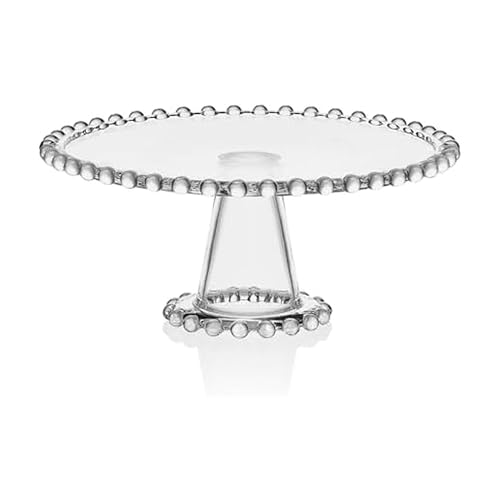
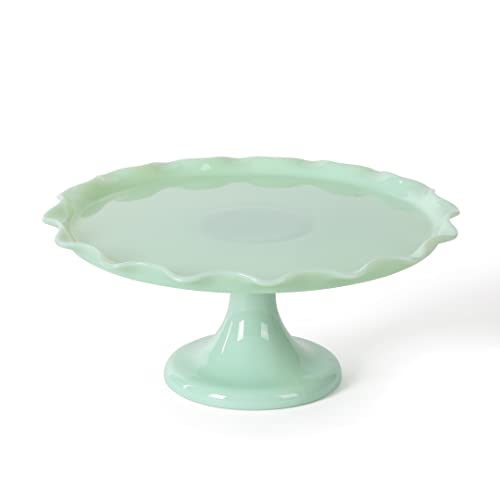
Fortessa is the only one of these five that names the kind of dishwasher. It publishes safe for both commercial and residential dishwashers, and it is also the only one that names the glass composition: soda lime with magnesium oxide and alumina, stated as being for durability. Naming the commercial machine as well as the domestic one is a wider permission than anything else here gives.
The rest of what it publishes is thin. Its dimension fields read 13 by 13 by 4.3 inches and it publishes a weight of 1.0 pound, which for a 13 inch glass pedestal is a figure worth doubting: Fitz and Floyd publishes 5.0 pounds for a smaller glass stand. Fortessa publishes no plate diameter in words and no cake size.
Two Say Hand Wash the Same Glass
Fitz and Floyd publishes the fullest hand washing routine of these five: hand wash with warm water and a mild detergent, then rinse and dry immediately to maintain the clarity and brilliance of the glass. It is the only listing here that gives a reason for hand washing rather than simply asking for it, and the only one that mentions drying at all.
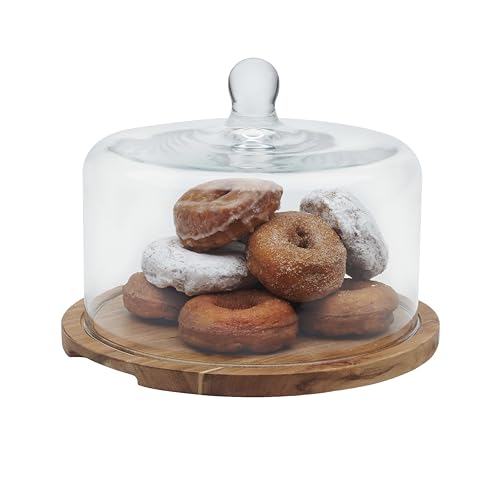
The Libbey acacia stand asks for the same thing and only for part of itself: the cover is stated lead-free and to be hand-washed, while the wood board is wiped clean with a damp cloth. So two of the three glass surfaces on this page are hand wash and one is cleared for a machine, and no maker explains why the same material divides that way.
When One Product Needs Two Routines
A Wood Base and a Glass Dome
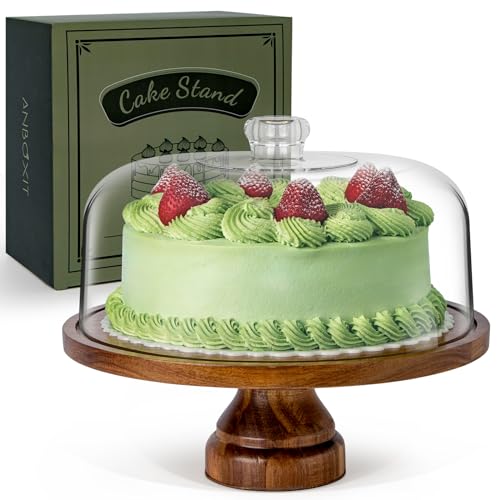
The Libbey acacia stand is the only one of these five that publishes a different routine for each part of one product. The cake holder with cover is stated as lead-free and should be hand-washed, while the wood serving board can be wiped clean with a damp cloth. Two materials, two instructions, one purchase.
That distinction matters because the two parts get equally dirty and only one can be soaked. The same listing also publishes two sizes for itself: its dimension fields read 10.5 by 10.5 by 8.25 inches and one of its own bullets describes an 11.75 inch round stand. It publishes 9.0 pounds and engraved handles on the dome.
The Metal Listing That Refuses the Machine
Aofure is the clearest statement on this page and it is a refusal. The eleven piece metal display is stated as easy to wash with a wet cloth wiped over the surface, and then: it is not recommended to use a microwave, dishwasher or oven. That is a maker ruling out three appliances by name, which nothing else here does.
The reason is in the same listing. Aofure publishes welding and painting processes and a food safe silver baked paint stated as not easy to fade or rust. Painted metal is the material whose finish a wash cycle is likeliest to reach, and the refusal follows the paint rather than the metal under it. Aofure publishes 12.46 pounds, the heaviest of these five, for eleven pieces.
Weights That Do Not Match the Glass
Thirteen Inches at a Pound
Two glass pedestals here publish weights that cannot both be right. Fortessa publishes 13 by 13 by 4.3 inches and 1.0 pound. Fitz and Floyd publishes 10.75 by 10.75 by 4.5 inches and 5.0 pounds. The larger stand is published as weighing a fifth of the smaller one, on the same material and in the same shape.
The Libbey acacia stand settles which figure is credible. It publishes 9.0 pounds for a 10.5 inch wood plate with a glass dome, which is nine times the 1.0 pound Fortessa publishes for a wider glass plate. This page quotes the 1.0 pound as published and ranks nothing on it, because a 13 inch glass pedestal that weighs a fifth of a 10.75 inch one is not a figure a reader can use.
One Listing Publishes Two Weights
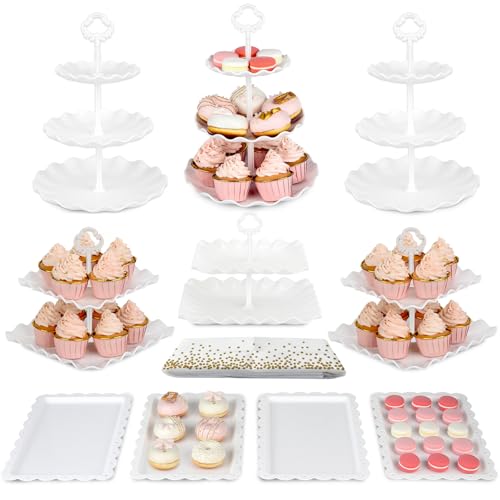
NWK publishes 4.9 pounds in its weight field and 0.5 pounds in its own feature text. The purchase is eleven pieces of extra thick plastic: six cupcake stands, four rectangular appetizer plates of 14.5 by 9.5 inches, and a tablecloth. Eleven pieces at half a pound in total is not credible, and 4.9 pounds is.
The cleaning claim on that purchase is the most confident of the five and the least surprising: dish washer safe, just put them into dish washer for easy cleanup. Plastic is the one material here with nothing to lose. The tablecloth is published separately as waterproof and oil-proof and easy to clean, which is a third routine inside one purchase.
Which One Fits Your Kitchen
You want a dishwasher permission and you want glass. Fortessa publishes soda lime glass with magnesium oxide and alumina, safe for commercial and residential dishwashers, at 13 by 13 by 4.3 inches. Its published 1.0 pound is the figure to discount.
You will hand wash and want it to stay clear. Fitz and Floyd publishes hand wash with warm water and a mild detergent, then rinse and dry immediately, on a 10.75 inch beaded glass pedestal at 5.0 pounds.
You want wood on the table and a dome over the cake. Libbey publishes an acacia wood plate with a glass dome, the cover hand-washed and the wood wiped with a damp cloth, engraved handles, 10.5 by 10.5 by 8.25 inches and 9.0 pounds.
You are setting a whole dessert table. Aofure publishes eleven painted metal pieces at 12.46 pounds, cleaned with a wet cloth, and states outright that a microwave, dishwasher and oven are all not recommended.
You want the whole lot to go in the machine. NWK publishes eleven plastic pieces, six cupcake stands and four 14.5 by 9.5 inch appetizer plates with a tablecloth, and the plainest instruction here: dish washer safe.
What We Could Not Verify
Every figure above is a manufacturer’s own published number or sentence. These are the things we went looking for across the five and did not find.
- Any reason from Fortessa or Fitz and Floyd for reaching opposite conclusions about washing glass.
- A cycle, a rack or a temperature from the two listings here that permit a dishwasher.
- A per-piece weight from Aofure or NWK, both of which publish a figure covering eleven pieces.
- Which of the two NWK weights is the purchase, 4.9 pounds or 0.5.
- A plate diameter in words from Fortessa or Fitz and Floyd, so the cake size each fits is unstated.
- Whether the Libbey acacia stand is 10.5 inches or the 11.75 inches its own bullet describes.