How the Five Compare on the Numbers
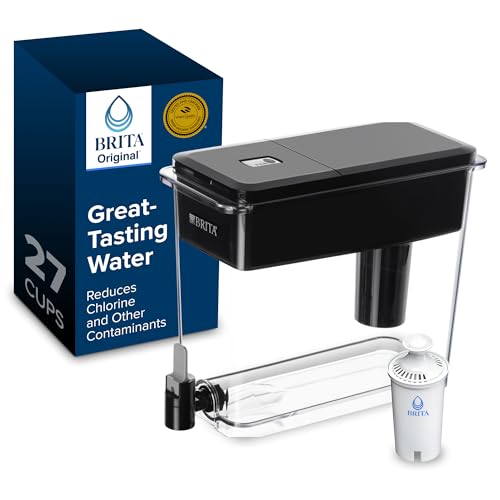
Three listings were set aside. Maxblue is a plain borosilicate carafe with a 304 stainless inner lid, sold as a companion to a Waterdrop reverse osmosis system, and it filters nothing at all. Brita’s 27 cup UltraMax and Culligan’s 40 cup glass model are both dispensers with spigots that live on a counter or a fridge shelf, not pitchers you pour from.
The five that remain are all pitchers, and what separates them is what the filter is certified to reduce. ZeroWater is built around removing dissolved solids and ships a meter to prove it. Waterdrop opens its listing by stating in bold that it does not lower TDS. Amazon Basics names nine contaminants. LifeStraw claims bacteria and parasites. aarke names none.
What none of the five publishes is the flow rate: how long a full pitcher takes to filter. On a gravity pitcher that is the difference between a usable jug and one you fill in the evening for the morning. Waterdrop sidesteps it by being electric and claiming filtered water in one second, but it publishes no volume per second, so the claim is about the wait rather than the throughput.
Dissolved Solids Are the Real Fork in the Road
One Pitcher Is Built For It
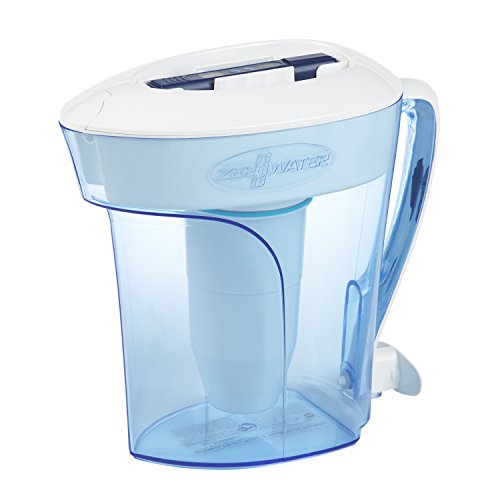
ZeroWater’s entire design is a five stage ion exchange filter, and it states that it removes virtually all dissolved solids: metals, minerals, salts and ions. It ships a TDS meter so you can read the number yourself, and it tells you the meter is also your filter change indicator, because when the reading climbs the resin is spent. That is a closed loop a buyer can actually check.
The trade is taste and filter life. Water with the minerals stripped out tastes flat to some people, and ion exchange resin exhausts faster than carbon. ZeroWater publishes its life as 110 single use bottles per filter rather than in gallons, which is the one figure on this page that is hard to compare against anything else on it.
One Pitcher Says Plainly That It Does Not
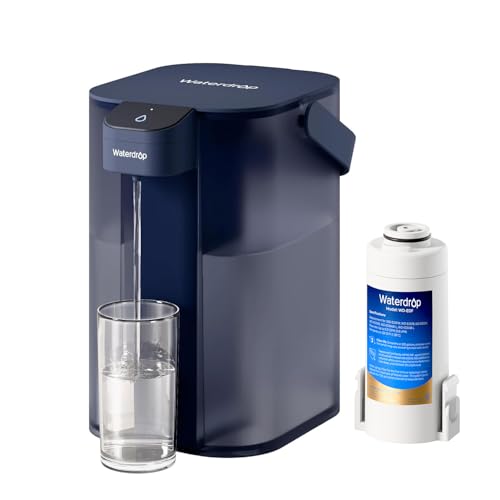
Waterdrop’s first bullet, in bold before any selling point, states that this system does not lower TDS, and directs you to a different model if you want that. That is the most useful sentence on any listing in this pool. It is a carbon block pitcher, 0.5 micron, IAPMO certified against NSF ANSI 42, 53, 401 and 372 to reduce over 45 contaminants.
Carbon and ion exchange are answering different questions. Carbon handles chlorine, organics, lead and microplastics and leaves the minerals in, which is why the water tastes like water. Amazon Basics and LifeStraw are both in that family, and neither of them mentions TDS at all, so the silence there is less informative than Waterdrop’s bold warning.
Certifications and the Ones That Have None
Three Listings Name a Standard
Waterdrop names IAPMO certification against NSF ANSI 401, 53, 42 and 372, which covers emerging contaminants, health effects, aesthetic effects and lead free materials. Amazon Basics names WQA certification against NSF 42, 53, 401 and 372, which is the same four standards through a different certifying body. ZeroWater names IAPMO certification for PFOA, PFOS, lead, chromium and mercury.
Those three are checkable claims. A standard number and a certifying body can be looked up, and that is the difference between a specification and an adjective. Amazon Basics goes furthest on specificity, naming nine contaminants including three that almost no listing mentions: atenolol, linuron and trimethoprim, which are a beta blocker, a herbicide and an antibiotic.
Two Listings Name None
LifeStraw makes the boldest claim in this pool and backs it with no certification. It states that it is the only water filter pitcher that removes microplastics, bacteria and parasites while also reducing PFAS, lead, mercury, chlorine, herbicides, pesticides and VOCs. Microbiological removal is a serious claim and no standard, body or test is named anywhere in the five bullets.
aarke names nothing at all. Its filtration is described as a patented refillable stainless steel cartridge with granules developed with BWT, in two versions: Pure for clean crisp water, and Enriched, sold separately, which adds minerals. There is no contaminant list, no certification and no filter life. What it sells instead is glass, steel and Swedish design.
Filter Life, Capacity, and What Sits in the Fridge
Three Different Units for Filter Life
Waterdrop publishes 200 gallons or up to 3 months, which is the clearest figure here and roughly five times the Amazon Basics life of 40 gallons. ZeroWater publishes 110 bottles per filter and up to 660 bottles a year. LifeStraw and aarke publish no filter life at all, which on a product whose entire running cost is cartridges is a significant omission.
Capacity is nearly as uneven. ZeroWater, Amazon Basics and LifeStraw all state 10 cups. aarke states its capacity three ways and they are worth untangling: the title says 81 oz, which is the 2.4 L pitcher volume, while the bullet says the standard model has a 1.18 L fill capacity, or 5 cups. Waterdrop states no cup figure at all.
The aarke Is a Different Object
aarke is glass and stainless steel where the other four are plastic, it states dishwasher safe components, and its filter cartridge is refillable rather than disposable, which is the only genuinely different answer to running costs on this page. Its published fields, 12.6 by 8.54 by 6.45 inches, read as a carton rather than a carafe, and its weight came through as a near zero figure and had to be dropped.
Against that, LifeStraw’s one piece welded construction is the strongest durability claim among the plastic pitchers, and it is specific: welded rather than assembled means no seam to leak. Amazon Basics goes the other way and sells compatibility, stating that it takes Brita pitcher filters, which is a real cost advantage on a shelf full of them.
Which One Fits Your Kitchen
Hard water you want the minerals out of. ZeroWater is a five stage ion exchange pitcher that states it removes virtually all dissolved solids, ships a TDS meter so you can read the result and know when to change, and states IAPMO certification for PFOA, lead, chromium and mercury. It is 10 cups at 1 pound.
No waiting for a jug to drip. Waterdrop is electric, delivering filtered water in a stated one second from a 0.5 micron carbon block, IAPMO certified against four NSF ANSI standards for over 45 contaminants, with a 200 gallon filter and 30 days of standby battery on USB-C. It is the heaviest of the five at 4.33 pounds.
A shelf already full of Brita filters. Amazon Basics is 10 cups, takes Brita compatible filters, is WQA certified against NSF 42, 53, 401 and 372, and names nine specific contaminants including a beta blocker, a herbicide and an antibiotic. Its filter is stated at 40 gallons, the shortest life published here.
Water you are not sure about. LifeStraw claims to remove microplastics, bacteria and parasites as well as reducing PFAS, lead, mercury and VOCs, on a one piece welded body at 1.7 pounds. It names no certification, no standard and no filter life, so the claim stands on the brand alone.
A pitcher that lives on the table. aarke is a glass carafe with a stainless steel refillable cartridge and BWT granules, with a 1.18 L fill capacity in a 2.4 L pitcher, stated dishwasher safe components, and a larger 1.66 L version. It publishes no contaminant list and no certification.
What We Could Not Verify
These are the figures that decide how a filter pitcher performs, and they are missing more often than not.
- No listing publishes a flow rate, so how long a full pitcher takes to filter is unknown on all five.
- LifeStraw and aarke name no certification, no standard and no certifying body at all.
- LifeStraw and aarke publish no filter life, which is the entire running cost of the product.
- Waterdrop publishes no capacity in cups or liters, and its size field reads only Advanced.
- aarke’s title states 81 oz while its bullet states a 1.18 L fill capacity, and the two describe different things.
- No listing publishes a reduction percentage per contaminant, so the length of a claimed list says nothing about how much of each is removed.