How the Five Compare on the Numbers
This is the first page written on this pool, so nothing here is settled by what a sibling already ranked. The qualifier looks like a formality, because every listing in this category says food grade silicone somewhere in its first bullet. Reading all twelve shows it is not a formality at all, and the sentence that matters is usually the second or third one.
Two of these five put a second material in the box or under the surface, and both of them say so in writing. The other three make a plain silicone claim and then differ in what they will promise about it: what the material excludes, how hot it may get, and whether the maker will admit a weakness. Those are the figures and sentences below.
What the table cannot tell you is whether a silicone claim and a silicone coating are the same promise. Three of these listings say the sheet is made of silicone, one says a surface of silica gel sits on a polyester base, and one says four of its twelve pieces are plastic. A buyer who only reads the words food grade silicone gets all five of those answers.
What the Material Claim Actually Covers
Two Listings That Name a Second Material
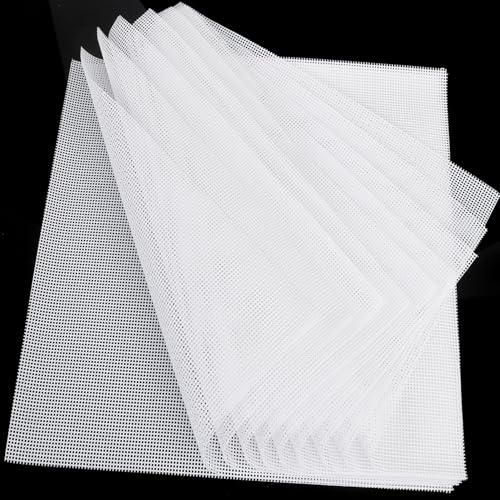
Limbeuuu is the most direct answer on this page and the least flattering one. Its material bullet states that the surface coating is made of silica gel and the substrate is made of quality polyester, so the sheet that arrives is a coated fabric rather than a slab of silicone. The maker puts that in the first bullet rather than burying it, which is the opposite of hiding it.
Domensi does the same thing with pieces instead of layers. Twelve arrive, and the listing states that four green round trays are crafted from plastic while eight white round mats are made of silicone. The title of that listing says silicone dehydrator sheets. Both statements are the maker’s own, and a reader who wants silicone throughout is paying for a box that is one third something else.
What the Other Three Will and Will Not Promise
Kispog names three absences rather than one presence: BPA, PFOA and non-stick coatings are all listed as not being in the material, alongside a stated 450 F ceiling. Bright Kitchen names its exclusions differently, as no plastic BPA and Teflon free, with PTFE spelled out in brackets. Naming Teflon is more specific than naming food grade silicone, because it rules out a particular coating rather than asserting a category.
Aulock keeps its claim short, food grade silicone with BPA free and non-toxic beside it, and then does something none of the other four do: it publishes a weakness. The bullet states the silicone is soft and cannot be used alone, so it must sit on a hard tray before food goes on it, and that the same softness means the mat changes shape easily. Domensi names no excluded substance at all, only that its pieces are nonstick and safe.
Where One Listing Contradicts Itself
A Coating That Is Both the Feature and the Absence
The Kispog listing carries two sentences that cannot both be true. One bullet credits a high-release silicone coating with making the mats completely non-stick, so no scrubbing is needed after oils and sugars. A later bullet lists non-stick coatings among the things the material does not contain, beside BPA and PFOA. The first sentence sells a coating and the second sells the absence of one.
A charitable reading is that the maker means a PTFE style coating when it writes non-stick coatings, and means the silicone itself when it credits the release. That reading is probably right and it is still a reading, not a statement. This page treats the 450 F figure as published and the coating question as open, because the listing gives a reader no way to settle it.
Why the Temperature Figure Is the Material Test
A material claim with no number attached cannot be checked against anything. Four of these five attach one. Kispog states 450 F, Aulock states -40 F to 446 F, Bright Kitchen states up to 425 degrees, and Limbeuuu states up to 230 degrees Celsius at most. Aulock is the only pick that publishes both ends of a band rather than a ceiling alone.
Domensi publishes no temperature figure anywhere in its listing, which on a purchase that mixes plastic with silicone is the silence that matters most here. Plastic and silicone do not share a heat ceiling, and a dehydrator run is hours long rather than minutes. The listing names the two materials honestly and then declines to say what either of them will take.
What the Fields Add, and What They Leave Out
Three Sets of Fields, Two Blanks
Kispog publishes 14.0 by 14.0 by 0.04 inches and states 14 x 14 in, so the field and the sentence agree. Bright Kitchen publishes 14.0 by 14.0 by 0.1 inches against a stated 14 x 14 in for a set of three. Aulock publishes 11.8 by 10.6 by 0.1 inches against a stated 10.6 x 11.8 in. Three of these five agree with their own words, which is a better rate than this category usually manages.
The other two publish no dimension field at all. Limbeuuu states 14 x 21 inches in a sentence and leaves every field empty, and Domensi leaves the fields empty as well while stating 12.5 inch and 13 inch diameters for its two mat types in a bullet. In both cases the maker’s sentence is the only measurement a reader has, which is exactly the case the house rule was written for.
The Thickness Nobody Else States
Limbeuuu is the only pick that states a thickness in words rather than leaving it to a height field: 0.8 mm, written also as 0.03 inch, with a mesh of 1 x 1 mm, written also as 0.04 x 0.04 inch. For a mesh sheet that is the figure that decides whether blueberries sit on top or fall through, and it is the figure the other four leave to a field or omit.
Those height fields are not the same thing. Kispog’s 0.04 inch and the 0.1 inch fields from Bright Kitchen and Aulock are field entries with no sentence behind them, and on a flexible mat a hundredth of an inch is inside the tolerance of how the thing was measured. The page treats them as published and does not rank on them, because no maker here claims them as a thickness.
Which One Fits Your Kitchen
You want the exclusions named. Kispog. BPA, PFOA and non-stick coatings are all listed as absent and the silicone is certified to 450 F. Read both coating bullets before you decide what that absence covers, and note the oven is ruled out.
The mats have to go in the oven too. Bright Kitchen, stated for dehydrator or oven up to 425 degrees and named as Teflon and PTFE free. Three sheets at a stated 14 x 14 in, which is the fewest pieces of these five.
You want the maker to admit a weakness. Aulock. It states the silicone is too soft to use alone and must sit on a hard tray, publishes -40 F to 446 F, and gives fields of 11.8 by 10.6 by 0.1 inches that match its own sentence.
You are drying liquids and purees. Domensi, if the mixed box suits you: four plastic trays with edges at about 12.5 inches and eight silicone mesh mats at about 13 inches. No temperature figure is published for either material.
You need sheets for a large tray. Limbeuuu, stated at 14 x 21 inches with a 0.8 mm thickness, sixteen to a pack. Accept that the sheet is silica gel over polyester, because the maker says so, and that no field or weight is published.
What We Could Not Verify
These are the specifications we went looking for in all five listings and did not find.
- Whether the non-stick coating Kispog credits is the same kind of coating its other bullet lists as absent.
- Any temperature figure at all from Domensi, for either the plastic trays or the silicone mats.
- Whether Limbeuuu’s 230 degrees Celsius ceiling describes the silica gel surface, the polyester substrate, or the sheet as a whole.
- A Fahrenheit figure from Limbeuuu, which publishes its only heat claim in Celsius alone.
- Any weight for Limbeuuu, in a field or in a sentence, on a pack of sixteen large sheets.
- A stated thickness from Kispog, Bright Kitchen, Aulock or Domensi, none of which puts a number on how thick the mat is in its own words.