How the Five Compare on the Numbers
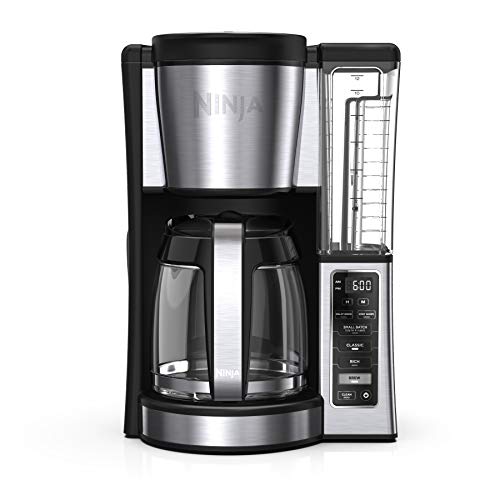
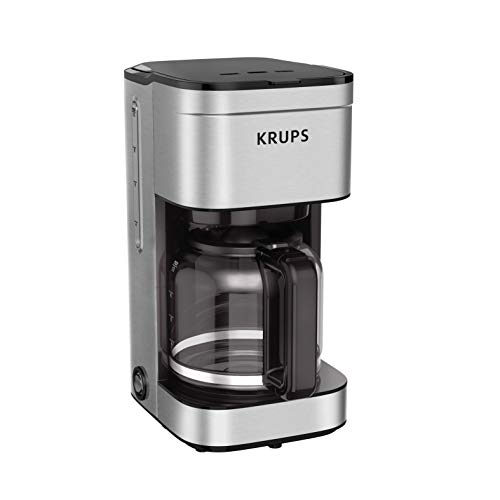
These five brewers are separated first by batch size. The Cuisinart DCC-3200 publishes a 14 cup carafe, the Ninja CE251 and the BLACK+DECKER publish 12 cups, the KRUPS Simply Brew publishes 10 cups, and the Elite Gourmet EHC4128 publishes 4 cups. Cuisinart and BLACK+DECKER both state that a cup is about 5 ounces of brewed coffee, so a 12 cup carafe is closer to five large mugs than to twelve.
Weight follows capacity, but not tidily. The Cuisinart publishes 12.79 pounds, roughly six times the 2.12 pounds Elite Gourmet publishes for its 4 cup machine. The KRUPS publishes 4.06 pounds and the BLACK+DECKER 4.5 pounds, within half a pound of each other, while the Ninja sits between at 6.55 pounds. A heavier machine is harder to move for cleaning behind the counter.
What the table cannot show you is brew temperature. Ninja states hotter brewing technology and Cuisinart states an adjustable warming plate with low, medium and high settings, but neither publishes a number in degrees, and the other three say nothing about water temperature at all. Anyone choosing on extraction temperature is choosing on marketing language, because no figure exists on these listings to compare.
Batch Size Is the Decision, Not the Feature List
What a published cup actually holds
Cuisinart and BLACK+DECKER both state plainly that one cup means about 5 ounces of brewed coffee. That matters more than any other number on the page. A 12 cup carafe holds around 60 ounces, which is five 12 ounce mugs rather than twelve servings. Buyers who read cups as mugs consistently buy a machine one size too small for the household.
Against that measure the Elite Gourmet at 4 cups is a single person machine, one mug and a refill, though its own size field reads 32 ounce rather than a 5 ounce cup. The Cuisinart at 14 cups is the other end, three and a half times the Elite Gourmet on cup count. The Ninja, BLACK+DECKER and KRUPS sit in the middle at 12, 12 and 10 cups, which covers most two and three person mornings without a second brew.
Brewing less than a full carafe
Two of the five publish a small batch mode. Ninja states a small batch function for 1 to 4 cups and says it exists to stop a part filled carafe brewing weak. Cuisinart publishes a 1 to 4 cup setting alongside its brew strength control. The other three publish nothing about brewing under capacity, which does not mean they cannot, only that the maker makes no claim about the result.
This is the specification that decides whether a large machine suits a small household. A 14 cup Cuisinart with a 1 to 4 cup setting can serve one person on a weekday and a table on a Sunday. A 12 cup machine with no small batch claim is a 12 cup machine, and brewing two cups in it is something the maker has not described.
Counter Space and the Shape of the Machine
Footprint against cabinet height
The published heights split these five sharply. Elite Gourmet publishes 6.0 inches, which clears almost any wall cabinet. BLACK+DECKER publishes 11.0 inches and KRUPS 12.83 inches. The Ninja publishes 14.6 inches and the Cuisinart 14.0 inches, and both need the clearance measured before buying, because no maker here publishes the gap a machine needs above it and the lid still has to open.
Width and depth matter less but are not equal. KRUPS publishes 6.65 inches wide, which fits between a kettle and a toaster. BLACK+DECKER publishes 12.25 inches wide but only 11.0 inches tall, a low wide shape rather than a tall one. The Cuisinart publishes 9.0 by 7.75 inches, a compact base for a machine that weighs 12.79 pounds.
Moving the machine to clean behind it
Weight decides how often a machine gets pulled forward. At 2.12 pounds the Elite Gourmet lifts with one hand. KRUPS at 4.06 pounds and BLACK+DECKER at 4.5 pounds are close enough that neither is meaningfully easier. The Ninja at 6.55 pounds is a two handed lift when the reservoir holds water.
The Cuisinart at 12.79 pounds is the heaviest of the five by a wide margin, and that is worth knowing before it goes into a corner. Ninja is the only one of the five to publish a removable water reservoir, a 60 oz one it says can be carried to the sink, which is the feature that decides whether a machine has to move at all to be filled. The other four listings say nothing either way.
What Each Maker Actually Promises
Pouring before the cycle ends
All five publish a way to pour mid brew, and each gives it a different name. Ninja calls it Mid-Brew Pause, Cuisinart calls it Brew Pause, BLACK+DECKER calls it Sneak-A-Cup, KRUPS calls it Pause and Brew, and Elite Gourmet calls it Pause ‘n Serve. BLACK+DECKER is the only one that states what the feature is for in plain terms, saying it temporarily stops the flow so the first cup pours without a mess.
Ninja states its version in one line, that you can pour yourself a cup before the brew is complete. It also publishes a 24 hour delay brew and an adjustable warming plate rated for up to 4 hours, which is a different answer to the same problem: have the coffee ready rather than interrupt the brew. Buyers who reach for a cup early will find a named feature on all five of these listings.
Filters, cleaning and what runs out
Ninja, KRUPS and Elite Gourmet all list a reusable filter in the box, Ninja calling it a permanent filter among its included items. KRUPS also states the carafe is dishwasher safe and includes a measuring spoon. Elite Gourmet states its filter basket is removable for cleaning. For anyone who does not want a paper filter in the weekly shop, those are the three listings that commit to it.
BLACK+DECKER states the opposite plainly: its brew basket requires a standard paper coffee filter for proper operation. Cuisinart publishes nothing either way on this listing, naming no filter at all among its features. That silence is worth noticing, because a reusable filter is cheap to add later but only if the basket takes one, and Cuisinart does not say whether its basket does.
Which One Fits Your Kitchen
The household that empties a full carafe. Cuisinart DCC-3200. It publishes the largest capacity here at 14 cups, with brew strength control and a warming plate that adjusts across low, medium and high. It is also the heaviest at 12.79 pounds, so give it a permanent spot.
The one person who wants one mug. Elite Gourmet EHC4128. Four cups, 6.0 inches tall, 2.12 pounds, with a reusable filter and a pause function. Nothing here is oversized, and it clears a wall cabinet without measuring.
The buyer who brews two cups on weekdays and eight on Sunday. Ninja CE251. It publishes a 12 cup carafe with a small batch function for 1 to 4 cups and two brew styles, which is the combination that handles both without a weak pot.
The narrow gap between the kettle and the toaster. KRUPS Simply Brew. It publishes 6.65 inches wide, brews 10 cups, states 900 watts, and ships with a reusable filter and a dishwasher safe carafe.
The reader who pours before the machine finishes. BLACK+DECKER. Sneak-A-Cup is the only mid brew feature on these listings described in terms of what it prevents, and the front water window shows exactly how much coffee is coming.
What We Could Not Verify
Every figure above comes from the manufacturer’s own listing. These are the things those listings do not answer.
- Brew temperature in degrees. Ninja and Cuisinart describe hot brewing in words; no maker here publishes a number.
- Whether the water reservoir lifts out on four of the five. Only Ninja states that its 60 oz reservoir is removable.
- Time to brew a full carafe. No maker publishes a figure for these machines.
- Whether the Cuisinart basket accepts a reusable filter. Its listing names no filter at all.
- Power draw for the Ninja, Cuisinart, BLACK+DECKER and Elite Gourmet. Only KRUPS publishes a wattage.
- Carafe weight when full, which is what decides whether the handle is comfortable to pour.