How the Five Compare on the Numbers
Every espresso machine needs the same two jobs doing: the steam wand cleared after milk, and the boiler descaled before scale closes it up. Read these five listings and almost all of them answer with objects rather than instructions. Powders, discs, brushes and tools arrive in boxes, and only one listing says what you do with any of them.
That is the deciding specification here. A kit is useful and a procedure is more useful, because the wand blocks weekly and the descale interval depends on water nobody has measured. One machine on this page ships a water hardness test. One explains the wand. No machine does both, and three do neither.
What the table cannot tell you is how often any of this needs doing. No listing publishes a descaling interval, and only one supplies the water test that would let you calculate one. Nor does any listing say whether a single part may go in a dishwasher.
Instructions Beat Accessories
The one machine that explains itself
KEENSTAR publishes what reads like a warning and is actually the most useful cleaning text in this pool. It says to clean the steam wand after every use to prevent milk or water scale blockages, then gives the method: wipe the frothing arm, unscrew the tip, and clean the valve with a needle or toothpick.
That matters because a wand tip is a pinhole, and milk dries in it within hours. Unscrewing the tip is the step most owners never discover, and it is the difference between a wand that textures milk in a year and one that spits. The same listing also publishes a safety step, telling you to relieve pressure before opening the water tank cap or removing the portafilter.
What four boxes contain instead
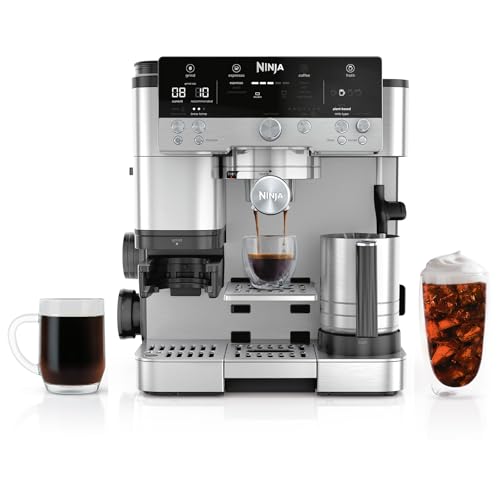
Ninja ships the fullest kit on this page: a Cleaning Brush, a Cleaning Disc, Descaling Powder, Cleaning tablets and a Hard Water Testing Kit, alongside an Assisted Tamper, a Funnel and two baskets. The disc is the notable item, because backflushing is a habit most home machines never introduce you to.
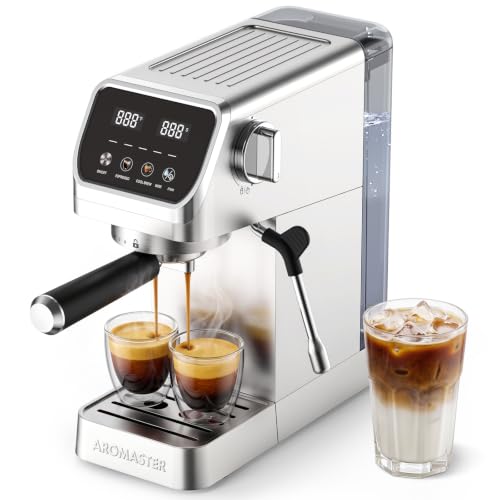
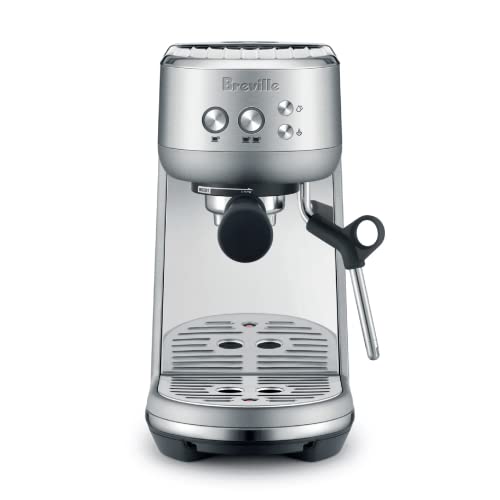
Breville supplies a Steam Wand Tip Cleaning Tool and Descaling Powder, which targets exactly the two failure points with no words attached. Aromaster publishes a one-touch descaling function, which is the opposite approach: automate the job rather than equip the owner. CHULUX publishes no cleaning consumable at all.
Scale Is a Water Problem, Not a Machine Problem
Measuring it instead of guessing
Descaling frequency has almost nothing to do with which machine you bought and everything to do with the water going into it. A machine in a soft water area may go a year comfortably; the same machine on hard water will suffer in months. Only Ninja addresses this, supplying a Hard Water Testing Kit so the interval can be set from a measurement.
No listing on this page publishes an interval, with or without a test. That is the single most useful missing figure in the pool, and the absence is consistent across all five, which suggests nobody wants to print a number that varies by household. A test kit is the honest answer to that problem and it appears once.
Where the scale actually forms
CHULUX is the only listing here that describes the water path, naming the boiler, water tank, brew head, inside silicone pipes, filter and steam wand as its food-grade components. That list is a map of where scale accumulates, and seeing it written out makes clear why descaling is a whole-machine job rather than a tank rinse.
The gap in that listing is the obvious one: having named every part the water touches, it publishes no method for cleaning any of them and no descaling provision. Aromaster takes the reverse position, publishing a one-touch descaling function without saying what solution it uses or whether any arrives with the machine.
Size, Weight and Cleaning Around the Machine
The machines you can move
Part of keeping an espresso machine clean is reaching behind and under it, where ground coffee collects. KEENSTAR at 4 lb is the lightest of the three machines here that publish a weight, and at 6.1 x 9.4 x 13.3 inches it can be picked up with one hand and the counter wiped in a single motion.
CHULUX at 7.8 lb and published at 5.5 x 11.7 x 12.5 inches is a two-handed lift. Breville at 10.9 lb is a deliberate one. For the Ninja and the Aromaster no weight is published at all, and on the Ninja, with a published footprint of 13.39 x 12.99 x 14.57 inches, that is the figure you would most want before choosing where it lives.
Footprint against what is included
The Ninja occupies the most bench of these five and also arrives with the most parts, which is a consistent trade rather than a contradiction: a machine that brews espresso, drip coffee and cold brew needs more baskets, more tools and more room. Its kit list is long because its job list is.
At the other end, CHULUX at 5.5 inches on one axis and Breville at 7.7 inches are the narrow machines, and both publish genuinely useful cleaning detail for their size. Narrow does not mean neglected here: the smallest-bodied listings on this page are not the ones that say least about keeping the machine clean.
Which One Fits Your Kitchen
If you want the routine solved for you. Ninja ships the brush, the disc, the tablets, the descaling powder and the Hard Water Testing Kit, which is the only published way here to set a descale interval from your own water.
If you want to be told what to do. KEENSTAR publishes the wand procedure step by step and weighs 4 lb, so it is also the easiest of these to lift to a sink and clean properly.
If you want to know what the water touches. CHULUX names the boiler, tank, brew head, silicone pipes, filter and wand, publishes a 40 oz tank and a removable drip tray, at 7.8 lb.
If you would rather press a button. Aromaster publishes a one-touch descaling function with removable parts and 1400W. Go in knowing the solution it needs is not named and no weight is published.
If you want a compact portafilter machine with its own tools. Breville at 10.9 lb and 7.7 x 12.6 x 12.2 inches ships a Steam Wand Tip Cleaning Tool and Descaling Powder, covering both failure points.
What We Could Not Verify
These are the things we went looking for in the five listings and could not source:
- A descaling interval on any of the five, with or without the supplied water hardness test.
- What solution the Aromaster one-touch descaling function uses, or whether any is supplied.
- Whether any drip tray, basket or portafilter on these five may go in a dishwasher.
- Published weights for the Ninja and the Aromaster, which decide whether either can be moved to clean behind.
- Any method for cleaning the parts CHULUX names, having listed every component the water passes through.
- How often the Ninja cleaning tablets and descaling powder need replacing, or what replaces them.