How the Five Compare on the Numbers
Sixteen tray and sheet listings sit on the fact sheet for this topic and most of them are silicone liners sold in packs of two, four, six or twelve. That matters more than it looks, because the weight a listing publishes is the weight of everything in the box. A pack of five sheets and a pack of twelve are not two products of different weights. They are two different quantities of the same thing.
So the five below were picked to keep the quantity readable rather than to chase the lowest figure. Each one states how many pieces it contains, and between them they cover a mesh liner, a solid fruit roll sheet, a mesh screen, a rigid plastic tray and a stainless steel tray. Two of the five are Nesco parts with different published figures, so both appear.
What the table cannot tell you is how any of this behaves once it is loaded and hot. None of the five publishes a sag figure, a warp temperature for the plastic parts or an airflow loss for the mesh, and only GUCUJI puts a number on the sheet itself at 0.8 mm. The Cosori screen does not even name its material, which on a hot part is the specification a buyer most wants.
What the Weight Field Is Actually Weighing
Five Sheets in a Third of a Pound
GUCUJI publishes 0.32 lb, and the listing is explicit that the pack holds five round sheets of 12.6 inch diameter. The same listing gives the thickness at 0.8 mm and the mesh holes at about 1 by 1 mm, which is the most detailed description of a drying surface in the whole pool. A figure that covers five pieces and still sits under a third of a pound tells you these sheets are very thin indeed.
The Nesco SLD-2-6 publishes 0.3 lb for two fruit roll sheets. Read the weight column alone and it looks like the lighter product. Read the quantity beside it and the picture reverses, because one figure covers five pieces and the other covers two. Neither listing publishes the weight of a single sheet, so the arithmetic a buyer wants is not on the page and cannot be done honestly from what is there.
Four Steel Trays at 1.51 Pounds
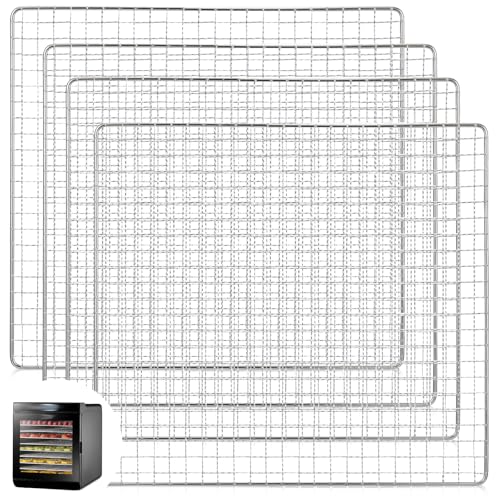
Baderke publishes 1.51 lb, the heaviest figure of the five, and the listing says the package holds four trays of 304 solid stainless steel measuring about 12 by 13 inches. Steel does not flex, does not need a rigid tray underneath it and can be scrubbed, so the weight is buying something. The listing is also the strictest on fit in the group: it names one machine, CP267-FD, and says compatible with that model only.
Between those ends sit the Cosori screen at 0.8 lb for two and the Nesco WT-2SG at 1.0 lb for two. Both are rigid parts rather than liners, and both publish a weight that covers a pair. On a page about a lightweight build, the useful conclusion is that every figure here is a pack figure, and a pack figure only means something next to the count that goes with it.
Where Two Listings Contradict Themselves
A Mesh Screen With Three Identical Numbers
The Cosori mesh screen publishes 15 x 15 x 15 inches in its dimension fields. A mesh screen for a food dehydrator cannot be a cube. The maker’s own bullet settles it in one line: item dimensions are 15 x 15 inches, suitable for any dehydrator with a tray larger than that. Two of the three numbers are the screen and the third is the first one repeated, which is a placeholder rather than a measurement.
That is the figure used above, on the maker’s own words, and the dimension trio is reported in the table as published rather than corrected. It leaves a real gap. Nothing in the listing gives the thickness of the screen, the gauge of its mesh or the size of its holes, and on a mesh part those are the numbers that decide whether sliced herbs stay on the rack or fall through it.
A Tray Narrower Than the Tray It Replaces
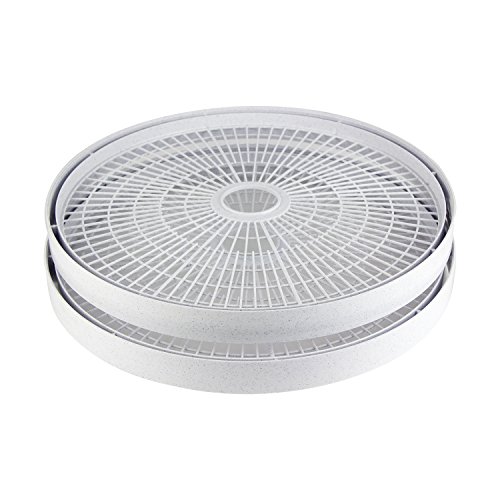
The Nesco WT-2SG publishes 4 x 2.5 x 14 inches, and its own title calls it a 13 1/2 inch Add-A-Tray sold in a set of two. A round tray of that diameter cannot pass through a 4 inch field, and one of the three published numbers is narrower than the part itself. The bullet repeats the point: compatible with 13 1/2 inch diameter trays. The title and the bullet agree, and the fields do not.
So the title and the bullet are what this page went with, and the field trio was set aside. It is worth saying plainly that no comparison here is anchored on it. The listing does publish a weight of 1.0 lb for the pair, a plastic grade described as food grade and the two Nesco dehydrator series it fits, and those three facts are the whole of what it verifiably offers.
Mesh, Solid Sheets and Rigid Trays
Mesh for Small Pieces, Solid for Puree
The two jobs pull in opposite directions. GUCUJI states holes of about 1 by 1 mm, fine enough to hold blueberries and raspberries while still letting air through from above and below. That is a mesh answer to a mesh problem. The listing also says the sheets can be cut to any size, which is the only fit escape hatch in this group of five and the reason it suits an odd tray.
The Nesco SLD-2-6 goes the other way with a solid surface and what the listing calls an exclusive no spill lip, for sauces, soups and other liquids. It is also the only listing in this five that publishes a capacity at all: up to 3 cups of pureed fruit per sheet. That single number does more work for a buyer than any of the dimension fields on this page, and no other pick offers one.
Steel and Plastic Do Not Need a Tray Underneath
Silicone liners share a limitation the listings mention only in passing: they are soft, so they want a rigid tray beneath them. Several sheet listings elsewhere in the pool say so directly. The Baderke steel trays and the Nesco WT-2SG plastic trays are that rigid layer, which is why they read as heavier for what looks like less surface. They are structure, not lining.
The Cosori screen sits between the two ideas. It is rigid enough to be described as a screen and is sold as an accessory for a machine that already has trays, adding a finer surface on top of an existing rack. The listing says hand wash only and not dishwasher safe, which is the only explicit dishwasher warning among these five and worth knowing before a batch of sticky fruit.
Which One Fits Your Kitchen
A Nesco round dehydrator and small fruit. GUCUJI, 0.32 lb for five silicone mesh sheets of 12.6 inch diameter, 0.8 mm thick with holes of about 1 by 1 mm, rated -40 F to 428 F, cut to any size, and named for the FD-61 and FD-75A among others.
Purees, sauces and fruit leather. Nesco SLD-2-6, 0.3 lb for two solid 13.75 inch fruit roll sheets with a no spill lip, food grade plastic, hand wash only, and the only pick here that publishes a capacity at up to 3 cups of puree per sheet.
A square Cosori and finely sliced herbs. Cosori, 0.8 lb for two BPA free mesh screens the maker states as 15 x 15 inches, for any machine with a larger tray, hand wash only and not dishwasher safe. It names no material and no mesh size.
More rack space in an older Nesco. Nesco WT-2SG, 1.0 lb for a set of two speckled food grade plastic Add-A-Trays for the 20 Series and 30 Series, made in the USA, and stated compatible with 13 1/2 inch diameter trays.
A CP267-FD owner who wants to scrub. Baderke, 1.51 lb for four trays of 304 solid stainless steel at about 12 by 13 inches, the heaviest pack figure here, and stated compatible with that one dehydrator model and no other.
What We Could Not Verify
Every figure above comes from the maker’s own listing text. These are the things we went looking for and could not source in any of them.
- Not one of these five publishes the weight of a single sheet or tray, so every weight on this page is a pack figure and the per piece figure cannot be derived honestly.
- The Cosori screen names no material at all, which on a part that sits in heat for a long drying run is the specification a buyer would most want to read.
- Only GUCUJI publishes a thickness, at 0.8 mm, so how thin the other four surfaces are is unknown.
- Only GUCUJI publishes a temperature range, at -40 F to 428 F, and the other four listings say nothing about heat at all.
- Only the Nesco SLD-2-6 publishes a capacity, at up to 3 cups of puree per sheet, so what the other four hold is not stated.
- Mesh hole size appears on one listing only, so whether the Cosori screen would hold sliced herbs or let them through cannot be compared.