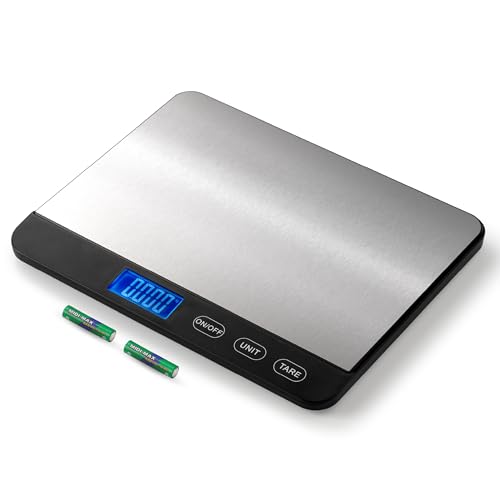
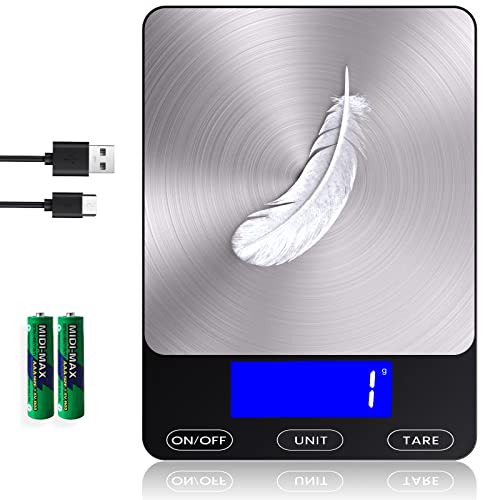
How the Five Compare on the Numbers
Every one of these five listings puts a word in the row a shopper reads as the size. Read in order they run small, Medium, Medium Size, Large and Mini. Four of the words sound like a ladder and the fifth, Mini, sits on a listing that publishes 10.2 and 11.7 inches where the two mediums reach 7.1 and 7.56. The words are doing no work at all.
What makes the comparison possible is that the figures come from three different places. Yoncon states a size in a bullet and publishes no dimension field. Ultrean, Etekcity and My Weigh publish dimension fields and never state a size in words. ionsno states a figure in a bullet, but for its weighing surface rather than for the scale, and publishes no field at all.
What the table cannot show is that no listing here publishes both a size in words and a size in its fields, so not one of the five can be checked against itself on this question. Yoncon and ionsno give words and no fields. Ultrean, Etekcity and My Weigh give fields and no words. The size word is the only thing all five have in common, and it is the one thing none of them defines.
Five Labels on One Shelf
The Ladder, and What Sits Behind Each Rung
Take the labels at face value and the five go Mini, small, Medium, Medium Size, Large. Now put the figures beside them. Mini publishes 10.2 by 11.7 by 7.4 inches. small publishes 6.7 by 4.7 by 0.6 inches. Medium publishes 5.5 by 7.1 by 0.6 inches and Medium Size publishes 6.18 by 7.56 by 0.75 inches. Large publishes no figure for the scale at all.
So the label at the bottom of the ladder carries 10.2 and 11.7 inches while the two mediums reach only 7.1 and 7.56 inches, and the label at the top carries no figure for the scale at all. Between them, Ultrean’s Medium measures 5.5 by 7.1 inches in plan and Yoncon’s small measures 6.7 by 4.7, so each exceeds the other on one axis. The two words do not sort these two scales in either direction.
The One Listing Where the Word and a Figure Meet
Yoncon is the only one of the five that puts a word and a measurement in the same sentence. Its third bullet reads compact and then gives 6.7 by 4.7 by 0.6 inches, and adds that it fits a drawer. That is the whole of what this page is asking for: a word with a number attached, published by the person using the word.
It is also the most specific listing of the five on everything else. Yoncon states a range from 0.3 grams to 5000 grams, an increment of 0.1 grams, seven units, two AAA batteries included and a five year limited warranty. The scale itself is published at 0.5 pounds. Nothing on the listing contradicts anything else on it, which is rarer here than it should be.
Where the Label Argues With the Listing
Medium Size, and a Bullet That Says Small
Etekcity’s size row reads Medium Size. Its third bullet is headed simple and compact and opens with the words the small and sleek scale. So one listing describes the same object as medium in the field a shopper filters on and as small in the sentence a shopper reads, and never gives a figure in either place. The only numbers are in its dimension fields, at 6.18 by 7.56 by 0.75 inches.
Ultrean does something quieter and similar. Its size row says Medium and its first bullet is headed contemporary slim design, so slim and medium are the two words on offer and neither is attached to anything. Its fields read 5.5 by 7.1 by 0.6 inches, which is a scale 0.6 inches thick, and that is the figure the word slim is presumably about, though the listing never says so.
Mini, at 10.2 by 11.7 by 7.4 Inches
My Weigh publishes a size row reading Mini and three dimension fields reading 10.2 by 11.7 by 7.4 inches, and that is the entire listing. There are no feature bullets, no capacity, no increment, no unit list and no weight. Two of its three figures, 10.2 and 11.7 inches, are above every figure Ultrean and Etekcity publish, and the third, 7.4 inches, is not.
That third figure is the one that gives the game away. Every other listing here that states a thickness gives 0.6 inches or 0.75 inches, and no flat kitchen scale stands 7.4 inches off a counter. A triple with a 7.4 inch height is far more likely to be the box than the scale, which means Mini may well be accurate and the fields are simply measuring the wrong object.
What the Figures Are Actually Measuring
A Platform Is Not the Whole Scale
ionsno publishes no dimension field at all. What it does publish, in its second bullet, is an 11.6 by 9.45 inch weighing surface and a slim 0.6 inch profile, and its title calls that surface an extra large platform. Those are real figures and they answer a real question, which is whether a sheet pan will sit on it. They are not the size of the scale.
The gap matters because a platform is the top of the object and a scale has a bezel, a display and a set of feet around it. A buyer who writes 11.6 by 9.45 inches into a cabinet plan is planning for the glass, not the appliance, and ionsno is the one listing of the five that offers no figure for the appliance. Its size row says Large and its title says extra large.
What These Five Will Weigh and to What Precision
Capacity separates them cleanly where the words do not. ionsno states 44 pounds, or 20 kilograms, against 11 pounds on Yoncon, Ultrean and Etekcity, and My Weigh states none. On increment, Yoncon states 0.1 grams while Etekcity and ionsno state 1 gram, and Ultrean publishes no increment anywhere. Those are the figures that decide whether a scale suits sourdough or espresso.
The published weights sort the same way as the capacities. ionsno is published at 1.5 pounds and Etekcity at 0.44 pounds, with Yoncon at 0.5 pounds between them, and Ultrean and My Weigh publish nothing. Unit counts run from five on Etekcity to seven on Yoncon, and all four that list them include grams, ounces and milliliters.
Which One Fits Your Kitchen
The cook who wants the label explained. Yoncon is the only listing here that prints a word and a figure in one sentence, giving 6.7 by 4.7 by 0.6 inches beside the word compact, with a 0.1 gram increment and seven units.
The cook with a shallow drawer and a tape measure. Ultrean publishes 5.5 by 7.1 by 0.6 inches in its fields, so the thickness is there even though no bullet mentions it. Expect no increment figure and no published weight.
The cook weighing to the nearest gram. Etekcity states 11 pounds, or 5 kilograms, in 1 gram increments and publishes 6.18 by 7.56 by 0.75 inches. Read its size row as advice rather than fact, since its own bullet calls the same scale small.
The cook putting a sheet pan on the scale. ionsno publishes an 11.6 by 9.45 inch weighing surface and 44 pounds of capacity. Allow extra room on the counter, because the platform figure is not the size of the scale around it.
The cook who will measure it on arrival. My Weigh publishes 10.2 by 11.7 by 7.4 inches and the word Mini and nothing else whatsoever. One of those two is wrong and the listing gives you no way to decide which.
What We Could Not Verify
Everything here comes from the makers’ own listings, and these are the questions those listings leave open.
- What any of these five makers means by its size word. Not one of the five defines small, Medium, Medium Size, Large or Mini against a figure in the same breath.
- Whether My Weigh’s 10.2 by 11.7 by 7.4 inches is the scale or the carton. The listing has no bullets at all, so there is nothing to check it against.
- The size of the ionsno scale. It publishes 11.6 by 9.45 inches for the weighing surface and no figure for the body around it.
- A dimension figure for Yoncon or ionsno in the dimension fields, and a size in words from Ultrean, Etekcity or My Weigh. No listing here publishes both.
- A capacity, an increment, a unit list, a weight or a material for My Weigh. The listing publishes a title, a size word and three figures.
- Whether Ultrean’s batteries are AAA and how many arrive. It says batteries are included and never names a cell.