Lush Food & Drink

Buying Guide ·Coffee

Best Manual Coffee Grinders for a Clean Coffee Setup

Four of these five instruct you not to rinse the grinder with water.

By the Lush Editorial Team·Researched & Compared

  • Researched & ComparedSpecs pulled from the manufacturer listing
  • Like-for-LikeSame measures across every model
  • No Paid PlacementsNobody pays to appear here

I compared sixteen manual coffee grinders on the fact sheet using only each maker's published dimensions, weights and feature bullets, and kept five whose cleaning instructions genuinely differ.

Our shortlist

Five products, one set of published numbers.
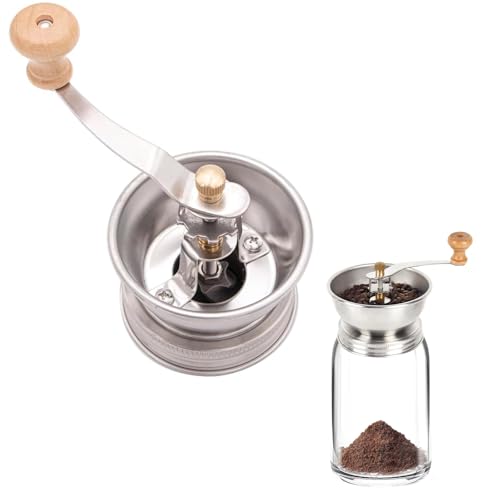
  1. Stainless Steel Coffee Grinder Lid Attachment for Re...
    Best cleaning method nobody else states

    Stainless Steel Coffee Grinder Lid Attachment for Re...

    States grinding uncooked white rice through the burr to clear grounds and odors.

    • ByteX
    • Regular
    • 0.4 lb
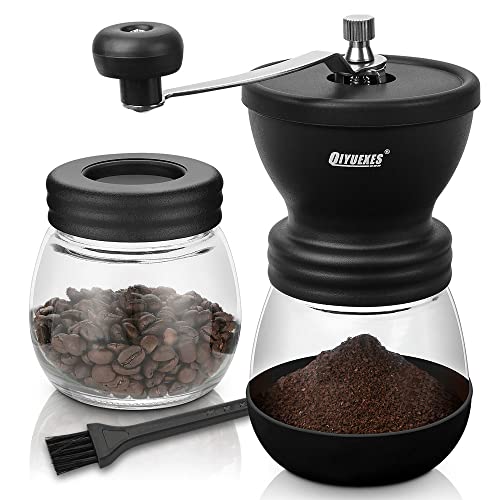
  2. CEVING Mini Manual Coffee Grinder With 40 Adjustable...
    Best three part teardown

    CEVING Mini Manual Coffee Grinder With 40 Adjustable...

    States three main parts including the lid, with an external 40 setting ring.

    • CEVING
    • Ceramic Burr
    • 0.84 lb
  3. BOMANSI BOMS Manual Coffee Grinder Hand Coffee Grind...
    Best capacity with a brush in the box

    BOMANSI BOMS Manual Coffee Grinder Hand Coffee Grind...

    States 80 g of capacity, tool free disassembly and no rinsing with water.

    • BOMANSI BOMS
    • Large
    • 1.27 lb
  4. Set of Three Turkish Manual Coffee Grinders
    Best brass mills with a stated wipe down

    Set of Three Turkish Manual Coffee Grinders

    Three brass mills cleaned with a dry or slightly moist cloth only.

    • Milih
    • Large
    • 2.7 lb
  5. Agilive Manual Coffee Grinder
    Best stated click counts per brew method

    Agilive Manual Coffee Grinder

    Gives click counts for espresso and moka, with a 38 mm stainless burr.

    • Agilive
    • Large
    • 1.2 lb

Side by side

Blank means the maker does not publish it.
ModelBrandSize (capacity)WeightBest for
Stainless Steel Coffee Grinder Lid Attachment for Re... ByteX Regular 0.4 lb Best cleaning method nobody else states
CEVING Mini Manual Coffee Grinder With 40 Adjustable... CEVING Ceramic Burr 0.84 lb Best three part teardown
BOMANSI BOMS Manual Coffee Grinder Hand Coffee Grind... BOMANSI BOMS Large 1.27 lb Best capacity with a brush in the box
Set of Three Turkish Manual Coffee Grinders Milih Large 2.7 lb Best brass mills with a stated wipe down
Agilive Manual Coffee Grinder Agilive Large 1.2 lb Best stated click counts per brew method

Each pick in detail

What the listing says for it, and against it.
1 Best cleaning method nobody else states

Stainless Steel Coffee Grinder Lid Attachment for Re...

States grinding uncooked white rice through the burr to clear grounds and odors.

  • For it
  • Publishes 0.4 pounds, the lightest of the five
  • States a cleaning method rather than a prohibition, grinding uncooked white rice
  • Turns any regular mouth mason jar into the grinding vessel, so the jar itself washes
  • States stainless steel and a ceramic burr, rust resistant
  • Against it
  • Publishes no bean capacity, since that depends on the jar you use
  • Gives no grind setting count, only instructions to move a gear on a threaded rod
  • No brush is stated as included
2 Best three part teardown

CEVING Mini Manual Coffee Grinder With 40 Adjustable...

States three main parts including the lid, with an external 40 setting ring.

  • For it
  • States three main parts including the lid, simple to assemble and disassemble
  • States 40 external adjustable settings on a ring rather than a hidden internal dial
  • States a conical ceramic burr that generates less heat than steel
  • States 6.7 by 2.3 by 7.4 inches and 325 g in its own bullet
  • Against it
  • States water is not recommended for cleaning
  • States 30 g of bean capacity, the smaller of the two published here
  • Names no body material anywhere in its bullets
3 Best capacity with a brush in the box

BOMANSI BOMS Manual Coffee Grinder Hand Coffee Grind...

States 80 g of capacity, tool free disassembly and no rinsing with water.

  • For it
  • States 80 g, or 2.8 oz, of bean capacity, the largest published here
  • States tool free disassembly and ships a brush for cleaning
  • States a conical ceramic burr with stainless steel and glass
  • States it eliminates 90 percent of electric grinder noise
  • Against it
  • States do not rinse with water
  • Offers 1 to 8 grades, fewer steps than the 40 setting rings here
  • Publishes 1.27 pounds, heavier than three of the other picks
4 Best brass mills with a stated wipe down

Set of Three Turkish Manual Coffee Grinders

Three brass mills cleaned with a dry or slightly moist cloth only.

  • For it
  • Three mills in one purchase, stated at 8.7, 7 and 3.3 inches tall
  • States a tuning screw for adjusting the ground texture
  • States the handle folds neatly inside for storage and travel
  • Brass, and stated to grind black pepper as well as coffee
  • Against it
  • Publishes 2.7 pounds, the heaviest of the five
  • States a dry or slightly moist cloth only, with no dishwasher or bleach
  • No brush, no burr material and no bean capacity is stated

Who should skip this: Skip this if weight matters: at 2.7 lb it is the heaviest of the five published weights.

5 Best stated click counts per brew method

Agilive Manual Coffee Grinder

Gives click counts for espresso and moka, with a 38 mm stainless burr.

  • For it
  • Gives click counts per brew method, about 7 to 20 clicks for an espresso machine
  • States a 38 mm burr, the only burr diameter published here
  • States a 420 stainless CNC machined core in an aluminum alloy body
  • Ships a brush and states easy disassembly for cleaning
  • Against it
  • Publishes no bean capacity
  • Warns against grinding within the 1 to 6 range before first use
  • Its cleaning instruction is a brush rather than washing

Who should skip this: Skip this if you want to put it straight in the dishwasher: the listing says it is not dishwasher safe.

Our verdict

Manual grinders are mostly dry clean objects and the listings say so. BOMANSI states do not rinse with water and ships a brush, at 80 g of capacity. CEVING comes apart into three parts and states water is not recommended. Milih states a dry or slightly moist cloth. Agilive ships a brush and gives click counts per brew method. ByteX proposes grinding uncooked white rice instead.

“A burr and a bearing make this a dry clean object.”

Lush Editorial Team

What separates these five

Four listings rule out water BOMANSI states do not rinse with water. CEVING states water is not recommended. Milih states a dry or slightly moist cloth. HAMILADUO, in the same pool, states both.
One listing proposes rice ByteX states that grinding uncooked white rice through the mechanism removes residual grounds and odors and keeps the ceramic burrs sharp.
Three ship a brush CEVING, BOMANSI and Agilive all state a brush. Given that water is ruled out, the brush is the cleaning kit rather than an accessory.
Two publish a bean capacity BOMANSI states 80 g, or 2.8 oz, and CEVING states 30 g. The other CEVING model in this pool states 60 g. Three picks publish nothing.
Settings run from a screw to forty CEVING states 40 external settings, BOMANSI 1 to 8 grades, Agilive a click dial with counts per method. ByteX and Milih give no count at all.

How we chose

Priorities, not a computed score. The inputs are published specifications, so we rank by what matters most and say how much.

  1. 30% Stated cleaning methodThis page is about cleaning, and four of these five listings tell you the one thing you must not do.
  2. 20% Brush included and teardownWith water ruled out, a brush and a tool free strip down are the whole maintenance routine.
  3. 20% Grind adjustmentA countable setting can be written down and repeated, and a tuning screw cannot.
  4. 15% Stated bean capacityIt decides whether a pot takes one grind or three, and only two of the five publish it.
  5. 15% Burr material and sizeCeramic runs cooler and steel cuts faster, and only one listing publishes a diameter.

How the Five Compare on the Numbers

Most kitchen categories bury the cleaning instructions. Manual coffee grinders do the opposite: nearly every listing in this pool leads with them, because the answer is usually that you must not wash the thing. Four separate listings here instruct you not to rinse with water, and one of them proposes uncooked rice instead.

Published weights run from 0.4 pounds for the ByteX mason jar lid to 2.7 pounds for the Milih set of three brass mills, the heaviest of the five. Two of the five publish a bean capacity, at 30 g and 80 g. Three ship a cleaning brush and two do not.

Specification ByteX Jar Lid CEVING Mini BOMANSI BOMS Milih Brass Agilive
Stated bean capacity not published 30 g 80 g, or 2.8 oz not published not published
Stated grind adjustment A gear moved along a threaded rod, no count given 40 external settings 1 to 8 grades A tuning screw, no count given A click dial, with counts given per brew method
Stated burr Ceramic Conical ceramic Conical ceramic not published 38 mm 420 stainless steel, CNC machined
Stated cleaning method Grind uncooked white rice through it Detachable into three parts, water not recommended Do not rinse with water, use the brush A dry or slightly moist cloth, no dishwasher or bleach Disassemble and clean with the included brush
Brush included not published Yes Yes not published Yes
Published dimension fields 2.95 by 3.74 by 4.13 inches 2.3 by 7.4 by 6.7 inches 3.35 by 5.9 by 8.4 inches 1.77 by 8.66 by 8.66 inches 4.6 by 9.8 by 3.0 inches
Size stated in a bullet not published 6.7 by 2.3 by 7.4 inches not published 8.7 inches tall by 1.8 inches wide for the largest mill not published
Published weight 0.4 pounds 0.84 pounds 1.27 pounds 2.7 pounds 1.2 pounds
Weight in the maker’s own words not published 325 g not published not published not published
Body material stated Stainless steel and ceramic not published as a body material Stainless steel and glass Brass Aluminum alloy with an ABS handle
Pieces stated One lid unit, for your own jar One grinder One grinder Three mills One grinder
Other stated feature Fits all regular mouth mason jars An external adjustment ring Eliminates 90 percent of electric grinder noise The handle folds inside for storage Click counts for espresso, moka and other methods

The table cannot tell you how much coffee residue a brush actually removes, because nobody publishes anything measurable about it. It cannot give a bean capacity for three of the five. And it cannot tell you the burr diameter on four of the five, since only Agilive publishes one, at 38 mm.

Four of These Tell You Not to Use Water

The water instruction

BOMANSI states it plainly: do not rinse with water, use the brush to complete the cleaning. CEVING states that water is not recommended, having first described the grinder as three main parts that come apart. Elsewhere in this pool HAMILADUO states tool free disassembly and then, in the same bullet, do not rinse with water.

Milih takes the same position by a different route, stating that its brass mills are cleaned with a dry or slightly moist cloth while avoiding a dishwasher or bleach. Between them these four amount to a category rule that no single listing states outright: a manual grinder with a burr and a bearing is a dry clean object.

One listing’s answer is uncooked rice

ByteX is the only listing here that proposes a method rather than a prohibition. It states that maintenance is simple, that you grind uncooked white rice through the mechanism to remove residual coffee grounds and odors, and that doing so keeps the ceramic burrs sharp and clean.

That is a real technique and it is the only one in this pool that addresses what actually builds up, which is oil and fines inside the burr rather than dust on the outside. No other listing mentions it, and no listing including this one says how often to do it or how much rice to use.

Taking It Apart Is the Cleaning Plan

Pieces and tool free teardown

CEVING states the most specific teardown claim: three main parts including the lid, simple to assemble, disassemble and clean. BOMANSI states that the compact design makes it easy to disassemble without the need for any tools. Agilive states easy disassembly with the included brush and adds a warning about protecting the grinding core.

ByteX is different again, because it is not a grinder so much as a lid: it screws onto any regular mouth mason jar, so the vessel you grind into is one you already own and can wash freely. The mechanism stays dry and the jar goes in the sink, which is a neat division of the problem.

Brushes in the box

Three of the five ship a brush: CEVING, BOMANSI and Agilive all state one. Given that four of the five also rule out water, the brush is not an accessory, it is the cleaning kit. HZBSGZR, elsewhere in the pool, states a brush as well.

ByteX and Milih ship none. For ByteX that is consistent, since its method is rice through the burr. For Milih it is less so: brass mills with a dry cloth and no brush leave the interior of the mechanism unaddressed, and brass is the material most likely to show what has been left in it.

Capacity and Settings, Where They Exist

Thirty grams or eighty

BOMANSI states a maximum capacity of 80 g, or 2.8 oz, so a whole pot is ground in one go. CEVING states 30 g and frames it as enough for one preparation, adding that a larger capacity model exists. That other CEVING model in this pool states 60 g and calls itself the world’s first manual grinder at that capacity.

ByteX, Milih and Agilive publish no capacity at all. For ByteX the capacity is whatever jar you attach it to, which is a reasonable non answer. For a brass mill and a full size aluminum grinder it is simply missing, and it is the figure that decides whether you grind once or three times for a family pot.

Forty settings, eight grades or a screw

CEVING states 40 external settings on an adjustment ring, and its larger sibling states that each click moves 0.05 mm. BOMANSI states 1 to 8 grades adjusted by turning the grinding bottle. Agilive states a click dial and then does something more useful: it gives click counts per brew method, about 7 to 20 clicks for an espresso machine.

ByteX and Milih offer the oldest arrangement. ByteX states you remove the gold nut, the handle and the round piece beneath it, then rotate a gear shaped piece up or down a threaded rod. Milih states a tuning screw. Neither gives a count, so dialing in a grind is trial and error rather than a number you can write down.

Which One Fits Your Kitchen

Grind dry, wash the jar. ByteX publishes 2.95 by 3.74 by 4.13 inches and 0.4 pounds, the lightest of the five, for a stainless and ceramic lid that fits regular mouth mason jars, cleaned by grinding uncooked white rice through it.

Three parts, one brush. CEVING states 6.7 by 2.3 by 7.4 inches and 325 g, with 40 external settings, a conical ceramic burr, 30 g of bean capacity, three main parts for disassembly and a note that water is not recommended.

A whole pot in one grind. BOMANSI states 80 g, or 2.8 oz, of capacity, 1 to 8 grades, a conical ceramic burr in stainless and glass, tool free disassembly, a brush, and an instruction not to rinse with water. It publishes 1.27 pounds.

A brass mill on the shelf. Milih ships three mills, stated at 8.7, 7 and 3.3 inches tall, with a tuning screw and a handle that folds inside. It publishes 2.7 pounds, the heaviest of the five, and states a dry or slightly moist cloth only.

Dialing in by the numbers. Agilive publishes 4.6 by 9.8 by 3.0 inches and 1.2 pounds, states a 38 mm 420 stainless burr in an aluminum body, gives click counts per brew method, and ships a brush with disassembly instructions.

What We Could Not Verify

These are the figures a clean coffee setup would want, and that these listings do not give.

  • A bean capacity for the ByteX, Milih and Agilive grinders.
  • A burr diameter for four of the five, published only by Agilive at 38 mm.
  • How often to run the rice cleaning method, or how much rice, on the one listing that proposes it.
  • Whether the Milih brass mills may be brushed internally, since no brush is supplied.
  • A grind setting count for the ByteX and Milih adjustment mechanisms.
  • Whether any part of any of these five may be washed, as opposed to the whole grinder.

Frequently asked questions

Can I wash a manual coffee grinder?+

Four of these five say no, in different words. BOMANSI states do not rinse with water and to use the brush instead. CEVING states water is not recommended. Milih states cleaning with a dry or slightly moist cloth while avoiding a dishwasher or bleach. HAMILADUO, in the same pool, states tool free disassembly and then do not rinse with water. Assume a manual grinder is a dry clean object.

What is the rice cleaning method?+

ByteX is the only listing here that describes it. It states that maintenance is simple: grind uncooked white rice through the mechanism to remove residual coffee grounds and odors, which it says also keeps the ceramic burrs sharp. That addresses the oil and fines inside the burr rather than dust on the outside. The listing does not say how often to do it or how much rice to use.

Which of these five publishes the lightest weight?+

ByteX publishes 0.4 pounds, the lightest of the five, because it is a lid mechanism rather than a whole grinder. CEVING publishes 0.84 pounds and states 325 g in its own bullet. Agilive publishes 1.2 pounds and BOMANSI 1.27 pounds. Milih publishes 2.7 pounds, the heaviest of the five, for three brass mills in one purchase.

How much coffee can these grind at once?+

Only two say. BOMANSI states a maximum capacity of 80 g, or 2.8 oz. CEVING states 30 g and notes that a larger capacity model exists, which in this pool states 60 g. ByteX publishes no figure because the capacity is whatever mason jar you attach it to. Milih and Agilive publish nothing at all, which on a full size grinder is a real omission.

Which grinder can I dial in reliably?+

Agilive, because it publishes click counts per brew method rather than only a setting range, giving about 7 to 20 clicks for an espresso machine. CEVING states 40 external settings on a visible ring, and its larger sibling states each click moves 0.05 mm. BOMANSI states 1 to 8 grades. ByteX and Milih adjust by moving a gear on a threaded rod or by a tuning screw, with no count.

Does a brush come with these?+

Three of the five state one: CEVING, BOMANSI and Agilive. HZBSGZR, elsewhere in this pool, states a brush as well. ByteX and Milih state none. Since four listings in this pool rule out water, the brush is the cleaning kit rather than an accessory, which makes its absence on the brass mills the more awkward of the two omissions.

Specifications come from the manufacturers' own published listings. Lush Food & Drink may earn a commission if you buy through a link on this page, at no extra cost to you. How we research.