How the Five Compare on the Numbers
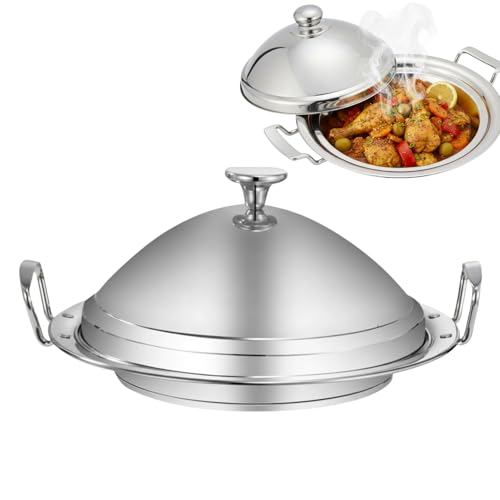
A tagine is defined by its conical lid, and what changes between these five is the material underneath it. KooK and JODEVI publish enameled cast iron bases, Kamsah publishes handmade clay, and Cooks Standard and bangminda publish stainless steel. That single choice decides the weight, the hob it works on, and whether the pot can be left to heat empty.
The weights make the point plainly. bangminda publishes 2.4 pounds and Kamsah 4.0 pounds. Cooks Standard publishes 7.0 pounds for its clad steel pot. The two cast iron pots are in another class: KooK publishes 12.15 pounds and JODEVI 13.01 pounds, and both need two hands and a trivet.
Two of the five publish no capacity at all. Kamsah states only Medium, and bangminda states 11 inches, which is a diameter rather than a volume. On a pot whose whole purpose is holding a stew under a tall lid, that is the figure a buyer most needs, and neither listing gives it.
Clay, Cast Iron or Steel
What the traditional pot asks of you
Kamsah publishes a handmade clay tagine, made by women artisans in Tunisia and sold as fair trade. Clay is the original material and it does something the others do not: it holds moisture in the walls and releases it slowly, which is the whole mechanism the conical lid was designed around. At 4.0 pounds it is also light for its size.
What the listing does not say is what clay demands. Unglazed clay is usually seasoned before first use and usually cannot go on a bare flame without a diffuser, and it cracks with sudden temperature change. None of that appears on the listing, so anyone buying the clay pot is buying the material’s requirements along with it, unstated.
Why two makers moved to cast iron
KooK and JODEVI both publish enameled cast iron bases and both say directly why: clay is fragile. KooK adds that its pot works on induction and gas, which a clay tagine cannot. The enamel means no seasoning and no reaction with tomatoes or lemon, which is most of what goes into a tagine.
The cost is weight. KooK publishes 12.15 pounds and JODEVI 13.01 pounds, three times the Kamsah and five times the bangminda. A cast iron tagine is lifted onto the hob once and left there. It also holds heat long after the flame is off, which is either the point or a nuisance depending on the dish.
The Lid Is the Appliance
Four materials, four behaviors
Every one of these five publishes a cone shaped lid, and each is made of something different. KooK uses enameled cast iron, Kamsah clay, bangminda stainless steel, JODEVI ceramic, and Cooks Standard die cast aluminum. The cone exists to let steam rise, condense on the cool upper wall and run back down into the food.
A heavy lid stays cooler at the tip and condenses more. A light aluminum or steel cone heats through faster and condenses less. None of these makers publishes a lid weight, so the one figure that would separate them on the mechanism they all advertise is missing from every listing here.
The two that say something specific
JODEVI states its cone lid is hole free, which means no steam vent and the maximum return of liquid to the pot. That is the only lid detail any maker here commits to in a way that changes the cooking. It pairs a ceramic lid with an enamel cast iron base, so the lid stays cooler than the pot.
Cooks Standard ships two lids, an aluminum cone for the slow simmer and a second lid for ordinary use. That makes it the only pot here that works as a normal casserole when the tagine shape is not wanted, which is a real argument for a kitchen with one cupboard shelf to spare.
Where These Pots Can Actually Go
Hobs and heat sources
Only two makers state hob compatibility. KooK publishes induction, gas and other tops. bangminda publishes electric, halogen, induction and gas. Cooks Standard, Kamsah and JODEVI publish nothing about which hob they suit, which on a clay pot is the most consequential silence of the three.
No maker here publishes an oven temperature. Enameled cast iron and clad steel are both normally oven safe and a tagine is often finished in the oven, but on these five listings that is an assumption rather than a stated fact. A ceramic or clay lid in particular has a limit nobody names.
Cleaning and what survives it
bangminda and JODEVI both state their surfaces wipe clean, bangminda because it is bare steel and JODEVI because the lid is glazed ceramic. Neither says dishwasher safe. Cooks Standard, KooK and Kamsah publish nothing about cleaning at all.
For the clay pot that silence matters most. Unglazed clay generally should not meet detergent, because the walls absorb it and give it back to the next meal. The listing sells the porous clay as a flavor benefit without mentioning that the same porosity governs how the pot must be washed.
Which One Fits Your Kitchen
The cook who wants the traditional pot. Kamsah Medium. Handmade clay from Tunisia, sold as fair trade, at 4.0 pounds. It is the material the conical lid was designed for, and the one that asks the most care in return.
The induction kitchen. KooK 3.3 Qt. Enameled cast iron with the maker stating induction and gas directly, 3.3 quarts and 12.15 pounds. No seasoning, no reaction with lemon or tomato, and it will outlast a clay pot.
The cupboard with one space for this. Cooks Standard 3.6 Qt. Three ply 18/10 clad steel, the largest published capacity here at 3.6 quarts, and the only one with two lids, so it works as an ordinary casserole too.
The cook who lifts the pot to the table. bangminda 11 Inch. Stainless steel at 2.4 pounds, the lightest here by a wide margin, with electric, halogen, induction and gas all stated.
The one who wants nothing to escape. JODEVI 2.4 Qt. A hole free ceramic cone over an enamel cast iron base, the only sealed lid on these listings, at 2.4 quarts for smaller portions.
What We Could Not Verify
Everything above is taken from the maker’s own listing. These are the things none of them answer.
- Capacity for the Kamsah and the bangminda. One states Medium, the other 11 inches.
- Lid weight on all five, which is what decides how much steam condenses and returns.
- Oven ratings. No maker here publishes a temperature for base or lid.
- Whether the Kamsah clay needs seasoning or a flame diffuser before first use.
- Hob compatibility for the Cooks Standard, the Kamsah and the JODEVI.
- Dishwasher safety for any of the five. Two say they wipe clean; none commits further.