How the Five Compare on the Numbers
Before the first tortilla, an iron press needs seasoning and a non-iron press does not. Three of these five arrive seasoned, two in flaxseed oil and one described simply as pre-seasoned. The other two publish the opposite claim: one states zero seasoning, no oiling and no rust worries, and one states that no special tools or maintenance are needed.
That divide runs through every other figure. The three iron presses publish 5.0 lb, 11.0 lb and 16.98 lb. The plastic one publishes 0.3 lb, given also as 5.4 oz, and the aluminum one 0.65 lb. Nearly seventeen pounds against five ounces is not a small difference in a tool that has to come out of somewhere every week.
What the table cannot tell you is how long a factory seasoning lasts. No listing publishes a number of uses before a re-season, or what happens if an iron press is washed the way the two lighter picks permit. The two non-iron listings sidestep it by design and neither publishes a figure for how much pressure their plates take.
Two Arrive Seasoned and Two Need No Seasoning
What Pre-Seasoned Actually Saves You
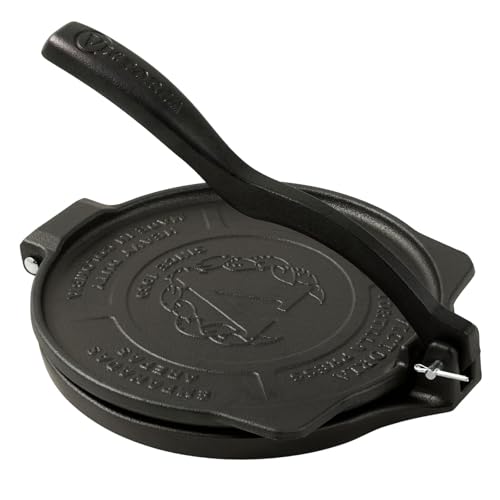
Uno Casa states its press arrives seasoned so dough releases cleanly from the first batch, which is the clearest version of the claim here. Victoria and VEVOR both name the oil: non-GMO flaxseed, with Victoria adding that the press is free of PTFE and PFOA. Naming the oil is more than the other listings manage and still not a durability figure.
What none of the three says is how long it lasts. Uno Casa comes closest in the other direction, stating that the comal’s seasoning keeps building every time you cook on it, which is a claim about the pan rather than the press. For the press itself, all three listings publish a starting condition and no maintenance interval.
The Two That Skip the Question Entirely
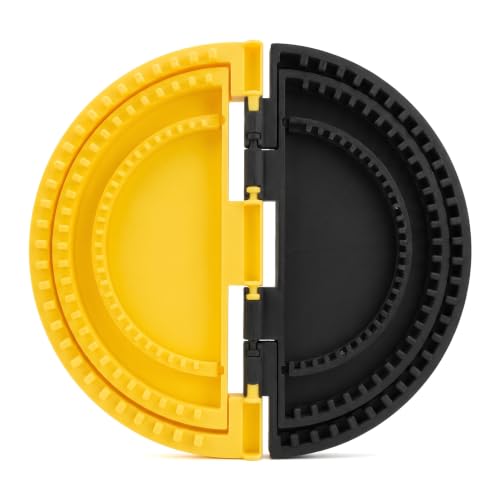
Auxillerron publishes the most direct answer in the pool: at 5.4 oz the press weighs a fraction of cast iron models and requires zero seasoning, with no oiling and no rust worries. It is food grade plastic with a hinge clamp, and its claim is that the whole maintenance question does not apply to it.
BABY VALE reaches the same place through aluminum with a non-stick surface, stating that dough will not tear or stick and that a wipe with a damp cloth is all it needs, with no special tools or maintenance. Both listings are trading durability arguments for the removal of a chore, and both say so plainly.
The Papers Are the Other Daily Step
A Hundred Sheets, Fifty Sheets, or None
A tortilla press needs something between the plate and the dough, and two listings supply it. Uno Casa includes 100 parchment sheets and frames them as something to use while you learn. VEVOR includes 50 parchment papers and says they are easy to remove, which is the part that goes wrong with a home-cut sheet.
The other three publish nothing. Victoria, Auxillerron and BABY VALE all rely on their surface instead: engineered plates in one case, a textured ring in another, a non-stick coating in the third. That is a reasonable answer and it is not the same answer, because a paper also carries the pressed round to the pan.
What Comes in the Same Purchase
Uno Casa is the only listing here that supplies the next tool as well as the press: a 10.5 inch comal pan rated to 450 F on gas, electric, grill or open flame, with a removable silicone handle sleeve. Press and cook arrive together, which removes a separate purchase rather than a step.
BABY VALE takes a different route and supplies three presses at 10, 8 and 6 inches in one purchase. Auxillerron does the same job with one tool and three nested rings, so small tacos, medium quesadillas and large burritos come off the same press. Victoria supplies an extra screw for the lever, which is the only spare part in the pool.
Weight Is the Cost of Everything Above
Nearly Seventeen Pounds Against Five Ounces
VEVOR publishes 16.98 lb, the heaviest figure on this page, for a 12 inch press it measures at 14.76 by 12.01 by 4.33 inches. Uno Casa publishes 11.0 lb for a press and a comal together. Victoria publishes 5.0 lb for an 8 inch press. Those figures buy the mass that flattens a dough ball in one squeeze.
Auxillerron publishes 0.3 lb, the lightest figure here, and states the same figure as 5.4 oz in its own bullet, which is the kind of internal agreement this pool does not always manage. BABY VALE publishes 0.65 lb. Neither of the two lighter picks publishes anything about how much force its plates will take.
What the Light Ones Give Up
Mass does the work in a tortilla press, so a five ounce plastic tool and a seventeen pound iron one are not doing the same job the same way. Auxillerron is honest about the trade, leading with the weight comparison and offering the hinge clamp as the mechanism that holds the dough while you press.
BABY VALE describes an even pressure plate and a solid handle, and stakes its case on the non-stick surface rather than on force. Both listings also stake it on storage: Auxillerron publishes a 7.68 inch footprint that stores anywhere, and BABY VALE calls its three presses compact and gift-ready in the same bullet.
Which One Fits Your Kitchen
The cook who wants press and pan in one order. Uno Casa supplies an 8 inch pre-seasoned press with a 10.5 inch comal rated to 450 F, 100 parchment sheets and a recipe e-book, at 11.0 lb for the pair.
The cook pressing flour tortillas. VEVOR publishes a 12 inch press, the largest pressing size here, seasoned in flaxseed oil with 50 parchment papers and a reinforced handle. At 16.98 lb it needs a permanent home.
The cook who wants a spare part in the box. Victoria publishes an 8 inch press in HD iron seasoned with flaxseed oil, engineered plates stated to avoid pinching, and an extra screw for the lever, at 5.0 lb on 8.07 by 8.66 by 3.19 inches.
The cook with no interest in seasoning. Auxillerron publishes 0.3 lb, given also as 5.4 oz, with three nested rings, a hinge clamp and a stated 7.68 inch footprint, in food grade plastic that rinses or wipes clean.
The cook pressing three sizes. BABY VALE supplies presses of 10, 8 and 6 inches in non-stick aluminum at 0.65 lb, with an even pressure plate and a wipe-clean surface, and states that no special tools or maintenance are needed.
What We Could Not Verify
Everything above is the makers’ own published text, and on how a press behaves after a hundred tortillas there is nothing to check.
- No listing publishes how long a factory seasoning lasts or when an iron press needs re-seasoning.
- Neither non-iron pick publishes a figure for how much pressure its plates will take.
- Only two of the five supply parchment, and neither says what to use once the sheets run out.
- No listing publishes a pressed thickness, so how thin any of these will take a dough ball is unstated.
- Victoria supplies an extra screw and never says what the screw is for or how often it is needed.
- VEVOR states that smaller presses suit corn tortillas and larger ones flour, and publishes no figure behind it.