How the Five Compare on the Numbers
Eight madeleine pans are on the fact sheet and three are left off. HONGBAKE and Beasea both describe a nonstick surface that is very easy to clean and neither gives a single instruction for doing it, which on a page about cleaning leaves nothing to compare. BIGOWL is a four pack of six cavity silicone molds, so it is the same answer Vinino already gives here in a different pack size.
What decides this page is what the maker actually tells you to do with the pan afterwards. Three of these five publish a real instruction, one publishes a warning that none of the others mention, and one talks about easy release without naming a method at all. That split matters more on a madeleine pan than on most bakeware, because the shape is a row of fluted shells and the coating is the only thing keeping batter out of the ridges.
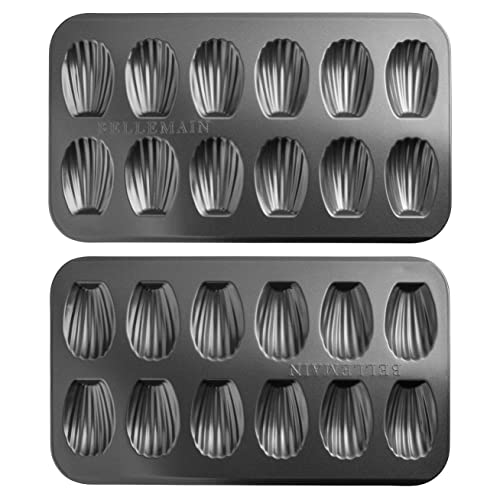
The rust row is the one to read twice. BreadTalk is the only listing here that admits the inside of its rolled edge is not coated, and it tells you to dry the pan thoroughly or stand it on edge to air dry. Bellemain and Myyaowl are also carbon steel and both invite you to put the pan in a dishwasher. Both positions can be defended and they cannot both be right about the same metal. What the table cannot tell you is how deep any cavity is, because not one of the eight listings publishes a depth.
What Each Maker Actually Tells You To Do
Two Say Dishwasher, One Says Dry It Carefully
Bellemain gives the instruction its own bullet: when the pan needs more than a wipe, skip the sink and put it straight in the dishwasher. Myyaowl covers both, stating the pan is dishwasher safe and easy to hand wash with warm water and mild soap. Both pans are carbon steel with a nonstick coating, and neither mentions drying, rust or an uncoated edge anywhere in its listing.
BreadTalk takes the opposite line about the same metal. Its final bullet says the pan has rolled edges, that the inside of the rolled edge is not coated, and that after washing you should dry it thoroughly or stand it vertically to air dry. That is a more demanding instruction and a considerably more honest one, because an uncoated fold in carbon steel is exactly where water sits.
Two Describe Easy Cleaning and Name No Method
USA Pan says its proprietary nonstick silicone coating allows superior baking, easy release and quick clean up, and stops there. There is no dishwasher claim, no hand wash instruction and no drying note across the whole listing. For a commercial grade aluminized steel pan that is a conspicuous silence, and it is the only pan here that publishes an oven limit instead, at 450 F.
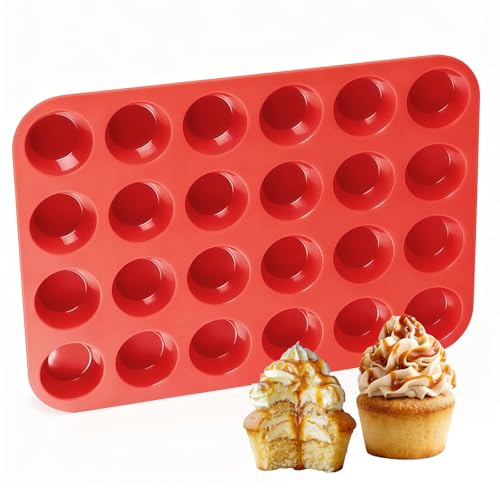
Vinino says cleanup is effortless because a gentle push from the bottom pops the madeleines out, which is a release claim rather than a cleaning one. Being silicone, it has no coating to lose and nothing to rust, so the question of drying does not arise in the same way. It is also the only pick with a published temperature range, from -104 F to 446 F, which covers going straight from a refrigerator to an oven.
Carbon Steel, Aluminized Steel and Silicone
Three Coatings on Three Different Metals
USA Pan publishes heavy gauge aluminized steel, described as a mix of steel for strength and aluminum for heat conductivity, finished with its own silicone based nonstick. Bellemain publishes heavy duty carbon steel with a food safe nonstick. Myyaowl publishes thickened carbon steel with strengthened rolled edges and a coating it describes only as releasing at high temperatures.
BreadTalk publishes thick carbon steel with reinforced rolled edges, a PFOA free coating and a champagne gold finish. Between them these four give three different accounts of what a madeleine pan is made of and four different descriptions of the coating, and only one of the four names a chemical it leaves out. Nobody publishes a coating thickness, a number of layers, or how many bakes it is expected to last.
Silicone Changes the Question
Vinino is a silicone pan on a metal reinforced frame, which is the one construction here where cleaning is not a coating problem. There is no layer to scratch off, and the published range of -104 F to 446 F tells you something the metal pans do not: what the material itself can take. The frame is there because unsupported silicone flexes when it is full, which is the usual complaint about these.
The trade is browning. A metal pan conducts heat into the batter and gives a madeleine the crisp edge and the hump that the shape exists for, and the three carbon steel pans and the aluminized steel one all describe even heat distribution as their reason for being. Vinino describes deep, well defined shell texture instead, which is about the pattern rather than the bake.
Cavities, Pack Size and What Is Actually Published
Sixteen Wells or Twelve
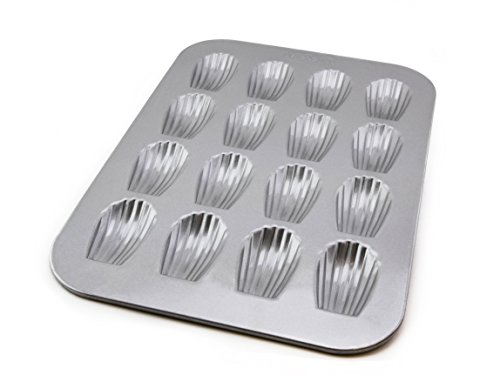
USA Pan publishes 16 wells in one pan measuring 11.13 by 15.75 by 0.56 inches. The other four all publish 12 cavities and all four come two pans to a pack, so the batch sizes are 16 on one tray or 24 across two. Myyaowl publishes the only well dimensions on the page, 3 by 2 inches each with a capacity of 1 oz, and BreadTalk publishes a finished cookie size of 2.6 by 2.6 inches.
Two pans of 12 is a better fit for the way madeleines are made, because the batter rests and then has to go into the oven quickly, and a second tray means the second dozen is not waiting. One tray of 16 is the professional answer and it is the only pick here that publishes its own dimensions rather than a package figure.
Where the Published Size Is the Box
Bellemain and BreadTalk are both two packs, so their dimension fields were treated as package sizes: 8.5 by 15.8 inches and 13.78 by 10.43 inches respectively, and neither listing writes a pan size in words anywhere. Those two figures are real published numbers and they describe cartons, not pans, which is worth knowing before measuring an oven shelf against them.
Myyaowl is the exception among the two packs, stating 15.76 by 8.87 inches for the pan in its own bullet, which is close to the 15.75 inch length USA Pan publishes for its 16 well tray. Vinino states 14.8 by 10 inches. So of the four two packs, two publish a pan size and two leave you with the box.
Which One Fits Your Kitchen
The clearest instruction on the page. BreadTalk, two carbon steel pans of 12 cavities for a published 0.95 lb, making a 2.6 by 2.6 inch cookie, with the only rust warning here: dry it thoroughly or stand it vertically after washing.
Putting the pan in the dishwasher. Bellemain, two heavy duty carbon steel pans of 12 cavities for a published 0.9 lb, with dishwasher use given its own bullet. It publishes no pan size, only a package figure of 8.5 by 15.8 inches.
Being told both ways. Myyaowl, two carbon steel pans stated at 15.76 by 8.87 inches with 12 wells of 3 by 2 inches holding 1 oz each, dishwasher safe and also fine in warm water with mild soap.
The most batch in one tray. USA Pan, a single aluminized steel pan of 16 wells at 11.13 by 15.75 by 0.56 inches and 1.8 lb, oven safe to 450 F. It names no cleaning method at all, only quick clean up.
Skipping the coating question. Vinino, two silicone pans on a metal reinforced frame at 14.8 by 10 inches and a published 1.41 lb, rated from -104 F to 446 F, with nothing to scratch and nothing to rust.
What We Could Not Verify
Every figure above comes from the maker’s own listing text. These are the things we went looking for and could not source in any of them.
- Not one of the eight listings publishes a cavity depth, which on a fluted shell decides how much batter each well takes.
- Only BreadTalk mentions the uncoated inside of a rolled edge, and the other two carbon steel pans invite a dishwasher without addressing it.
- No listing publishes a coating thickness, a layer count or an expected life, so how long a nonstick madeleine pan stays nonstick is unanswered.
- USA Pan publishes an oven limit of 450 F and no cleaning method. Bellemain, Myyaowl and BreadTalk publish a cleaning method and no oven limit.
- Bellemain and BreadTalk publish no pan size at all, leaving package figures of 8.5 by 15.8 inches and 13.78 by 10.43 inches.
- Only Myyaowl publishes a well capacity, at 1 oz, so batter quantities cannot be compared across the other four.