How the Five Compare on the Numbers
Seven live pages on this pool already rank by cavity count, coating, footprint, weight, temperature and cleaning. What none of them says is that most of these purchases are two pans rather than one, so the figure a cabinet actually needs is the pan size multiplied by the pack. Four of these five are two-packs and only one is a single pan.
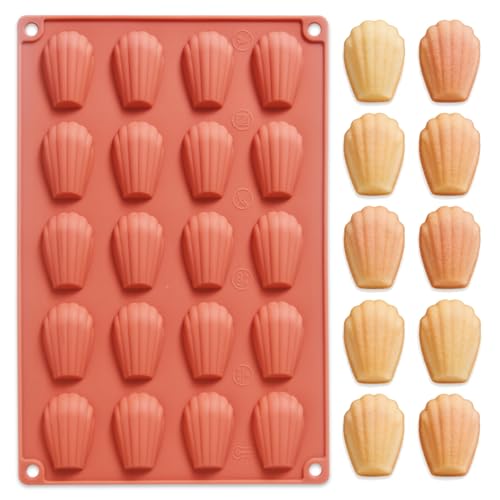
The pans also come in two shapes. Waylenbo and CHENZORVAX both state 13.8 by 10.4 inches, a broad rectangle. Shinsin states 15 and two thirds by 7 by two thirds inches and Chicago Metallic 15.75 by 7.75, which are long strips. ZEENEEK publishes 26.5 by 18.5 by 2.2 cm, which is the smallest footprint here.
What the table cannot tell you is what a pair of these measures stacked. Not one listing publishes a stacked height, and only two publish a pan height at all, so a buyer with a 2 inch gap between shelves cannot check whether two pans will slide in. On a product sold in pairs, that is the figure the whole category omits.
Two Pans, One Shelf
One Footprint and Two Weights
Waylenbo and CHENZORVAX describe what looks like the same object. Both are two-packs of 12-cavity nonstick carbon steel shell pans, both state 13.8 by 10.4 inches, both claim reinforced or strengthened edges against warping, and both state dishwasher safety. Waylenbo publishes 0.74 pounds for the purchase and CHENZORVAX publishes 1.49.
A third listing in this pool, LORGVEXN, publishes the same 13.8 by 10.4 inch figure and the same 1.49 pounds, which puts Waylenbo alone. Either Waylenbo’s figure is one pan rather than two, or one of the three is wrong. Nothing on any of the three listings resolves it, so no comparison on this page is made by weight.
Two Pans Shaped Like a Strip
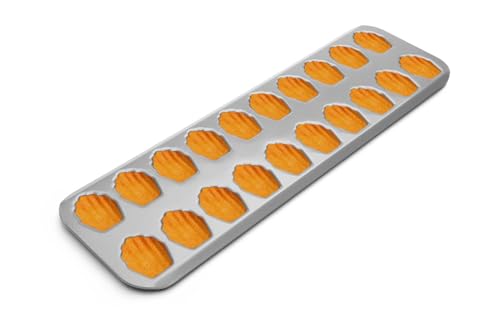
The other shape in this pool is long and narrow, and it fits a different shelf entirely. Shinsin states dimensions of 15 and two thirds by 7 by two thirds inches with a well of 3 by 2 inches, in a two-pack. Chicago Metallic states 15.75 inches by 7.75 for a single pan and puts that figure in its own title.
Twelve cavities laid out in a strip need more length and much less depth than twelve laid out in a rectangle, which is the practical difference between these two groups. A shelf 8 inches deep will take either strip and will not take a 10.4 inch rectangle, and neither group publishes anything about how two of them sit together.
Cavity Sizes and Gauges
Two and a Half Inches, or 2.6
Three of the five publish a cavity figure and the two that share a pan size do not share a cavity size. Waylenbo states that the full size of each cavity is 2.5 inches. CHENZORVAX states 2.6 inch cavities, and adds the instruction that matters more than either figure: measure your oven before purchase.
Shinsin publishes a well of 3 by 2 inches, which is a different way of describing the same shell: a length and a width rather than a single dimension. ZEENEEK and Chicago Metallic publish no cavity size at all, which on a pan whose entire purpose is a specific shell shape is the most useful figure to omit.
Two Listings Publish a Steel Thickness
Waylenbo and ZEENEEK both state thickened 0.8 mm carbon steel to accelerate even heat, with a strengthened edge for convenient use and to avoid warping, in wording so close that they read as the same factory. It is the only numeric material figure in this group and it lets those two be compared with each other directly.
The other three claim thickness without measuring it. CHENZORVAX states thick-gauge carbon steel with reinforced edges ensuring structural rigidity. Shinsin states a superior carbon steel core with high resistance to warping and bending. Chicago Metallic states heavy-weight aluminized steel for superior heat conduction. Three adjectives and no millimeters.
Where the Fields and the Words Part Company
A Package That Cannot Hold Its Pan
Shinsin states a pan of 15 and two thirds inches in length and publishes package fields of 5 by 9.5 by 1 inches. A 9.5 inch box does not contain a pan over fifteen inches long, so the package triple does not describe this purchase and this page uses the maker’s own dimensions instead.
Chicago Metallic has the same problem in a different form. Its title and its own text both give 15.75 inches by 7.75, and its published dimension fields read 7.8 by 0.5 by 0.5 inches, with two figures at 0.5 that are plainly placeholders. The 7.8 matches the stated 7.75 closely enough to be real; the rest is not a measurement.
One Listing That Names Three Metals
Chicago Metallic describes the same pan three ways across three consecutive bullets: made from heavy-weight aluminized steel for superior heat conduction and even baking; silicone based with a non-stick coating; and crafted from durable carbon steel for superior heat conduction. Those are not obviously the same sentence twice.
Two of them can be reconciled, since aluminized steel is carbon steel with an aluminum layer on it, and the silicone reference belongs to the coating rather than the body. The listing never says so, and it is the only one in this group that leaves a buyer to work out what the pan is made of from three competing claims.
Which One Fits Your Kitchen
You want a figure for the steel. Waylenbo publishes two 12-cavity pans at 13.8 by 10.4 by 1 inch with 2.5 inch cavities, in thickened 0.8 mm carbon steel with a strengthened edge, dishwasher safe, at 0.74 pounds for the pair.
You want every madeleine the same size. CHENZORVAX publishes two pans at 13.8 by 10.4 inches with 2.6 inch cavities and clear measurement markers inside each one, PFOA and PTFE free, dishwasher safe, at 1.49 pounds.
Your shelf is shallow. Shinsin publishes two pans in the strip shape at 15 and two thirds by 7 by two thirds inches with 3 by 2 inch wells, hand wash only in warm soapy water and dried before storage, at 2.03 pounds.
You only want one pan. Chicago Metallic publishes a single 12-cup pan at 15.75 inches by 7.75, dishwasher safe with hand washing recommended. It publishes no weight and names three different metals across its bullets.
You want the smallest pair. ZEENEEK publishes two 12-cavity pans at 26.5 by 18.5 by 2.2 cm, in thickened 0.8 mm carbon steel, non-Teflon and free of PTFE and PFOA, at 1.45 pounds. It publishes no cavity size and no cleaning method.
What We Could Not Verify
These are the figures the five listings do not publish, or publish twice in ways that disagree, and nothing above has been supplied in their place.
- No listing publishes the height of two pans stacked, on a category sold in pairs.
- Waylenbo and CHENZORVAX publish the same pan size and weights that differ by half.
- Waylenbo states a 2.5 inch cavity and CHENZORVAX 2.6 on the same stated pan size.
- Shinsin’s package fields of 5 by 9.5 by 1 inches cannot hold the pan it states.
- Chicago Metallic publishes no weight, and two of its three field figures are 0.5.
- Three of the five claim a thick or heavy steel without publishing a thickness.