Lush Food & Drink

Buying Guide ·Baking

Best Pizza Dough Scales for High Precision Baking

The deciding specification is the published readability, which ranges from 0.01 grams to 1 gram across the five picks.

By the Lush Editorial Team·Researched & Compared

  • Researched & ComparedSpecs pulled from the manufacturer listing
  • Like-for-LikeSame measures across every model
  • No Paid PlacementsNobody pays to appear here

I compared the five pizza dough scales on this fact sheet using only the manufacturer's published specifications, including capacity, readability, platform size and dimensions.

Our shortlist

Five products, one set of published numbers.
  1. BOMATA Large Kitchen Scale 0.1g/0.001oz High Precisi...
    Best for 0.1 g readability

    BOMATA Large Kitchen Scale 0.1g/0.001oz High Precisi...

    Publishes a 0.1 gram readability and a 7.2 by 7.2 inch platform.

    • BOMATA
    • 7.3 x 9.8 x 1.5 inches
    • 0.22 lb
  2. Ooni Dual Platform Digital Scales - Digital Baking C...
    Best dual platform design

    Ooni Dual Platform Digital Scales - Digital Baking C...

    Publishes two stainless steel platforms with a dual LCD display.

    • ooni
    • 31 x 18 x 3 cm
    • 1.76 lb
  3. Bonvoisin Baking Scale with Percentage Weighing Func...
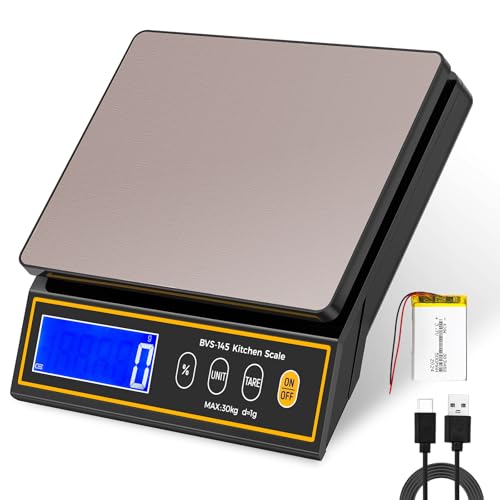
    Best for 66 lb capacity

    Bonvoisin Baking Scale with Percentage Weighing Func...

    Publishes a 66 pound capacity with a 1 gram readability.

    • Bonvoisin
    • 1.4 lb
  4. Dual Platform Food Kitchen Scale with 0.01g/0.001oz ...
    Best for 33 lb capacity

    Dual Platform Food Kitchen Scale with 0.01g/0.001oz ...

    Publishes a 33 pound capacity with 0.1 ounce accuracy on the large platform.

    • ApeWeghr
    • 10.8 in. x 7 in.
    • 0.8 lb
  5. Yamato PB-200 Digital Hands Free 12 Lb. Pizza Scale
    Best for a 1 inch character size

    Yamato PB-200 Digital Hands Free 12 Lb. Pizza Scale

    Publishes a 1 inch by 1/2 inch character size and a 12 pound 8 ounce capacity.

    • Yamato
    • 11-3/4" x 12-1/4"
    • 10 lb

Side by side

Blank means the maker does not publish it.
ModelBrandSize (capacity)WeightBest for
BOMATA Large Kitchen Scale 0.1g/0.001oz High Precisi... BOMATA 7.3 x 9.8 x 1.5 inches 0.22 lb Best for 0.1 g readability
Ooni Dual Platform Digital Scales - Digital Baking C... ooni 31 x 18 x 3 cm 1.76 lb Best dual platform design
Bonvoisin Baking Scale with Percentage Weighing Func... Bonvoisin not published 1.4 lb Best for 66 lb capacity
Dual Platform Food Kitchen Scale with 0.01g/0.001oz ... ApeWeghr 10.8 in. x 7 in. 0.8 lb Best for 33 lb capacity
Yamato PB-200 Digital Hands Free 12 Lb. Pizza Scale Yamato 11-3/4" x 12-1/4" 10 lb Best for a 1 inch character size

Each pick in detail

What the listing says for it, and against it.
1 Best for 0.1 g readability

BOMATA Large Kitchen Scale 0.1g/0.001oz High Precisi...

Publishes a 0.1 gram readability and a 7.2 by 7.2 inch platform.

  • For it
  • Publishes a 0.1 gram readability.
  • Publishes a 7.2 by 7.2 inch weighing platform.
  • Publishes a HOLD function for items that exceed the pan.
  • Publishes a percentage function for baker's ratios.
  • Against it
  • The manufacturer does not publish the dimensions in inches for the overall unit beyond the size string.
  • The manufacturer does not publish a maximum time for the auto-off feature.
2 Best dual platform design

Ooni Dual Platform Digital Scales - Digital Baking C...

Publishes two stainless steel platforms with a dual LCD display.

  • For it
  • Publishes two platforms with a dual LCD display.
  • Publishes a 0.1 gram readability.
  • Publishes a custom-fit measuring dish for yeast or herbs.
  • Publishes a brushed stainless steel platform surface.
  • Against it
  • The manufacturer does not publish the capacity in pounds or kilograms.
  • The manufacturer does not publish the platform dimensions.
3 Best for 66 lb capacity

Bonvoisin Baking Scale with Percentage Weighing Func...

Publishes a 66 pound capacity with a 1 gram readability.

  • For it
  • Publishes a 66 pound or 30 kilogram capacity.
  • Publishes a 1 gram readability.
  • Publishes a 5 gram minimum weighing capacity.
  • Publishes up to 60 hours of continuous use on a charge.
  • Against it
  • The manufacturer does not publish the width, depth or height.
  • The manufacturer does not publish the platform dimensions.
4 Best for 33 lb capacity

Dual Platform Food Kitchen Scale with 0.01g/0.001oz ...

Publishes a 33 pound capacity with 0.1 ounce accuracy on the large platform.

  • For it
  • Publishes a 33 pound capacity on the large platform.
  • Publishes 0.1 ounce accuracy on the large platform.
  • Publishes a small platform for precision weighing.
  • Publishes 7 weighing units.
  • Against it
  • The manufacturer does not publish the small platform's capacity or readability.
  • The manufacturer does not publish the width, depth or height as separate figures.
5 Best for a 1 inch character size

Yamato PB-200 Digital Hands Free 12 Lb. Pizza Scale

Publishes a 1 inch by 1/2 inch character size and a 12 pound 8 ounce capacity.

  • For it
  • Publishes a 12 pound 8 ounce capacity.
  • Publishes a 1 inch by 1/2 inch character size.
  • Publishes an 11-3/4 inch by 12-1/4 inch platform size.
  • Publishes a low-profile design.
  • Against it
  • The manufacturer does not publish the readability in grams or ounces.
  • The manufacturer does not publish the height as a separate figure beyond the 4.0 inch listing.

Who should skip this: Skip this if weight matters: at 10 lb it is the heaviest of the five published weights.

Our verdict

For most home pizza makers, the BOMATA Large Kitchen Scale is the pick because it publishes a 0.1 gram readability and a 7.2 by 7.2 inch platform. The ooni Dual Platform Digital Scales publishes two platforms and a 0.1 gram readability. The Bonvoisin Baking Scale publishes a 66 pound capacity with 1 gram readability. The ApeWeghr Dual Platform Scale publishes a 33 pound capacity with 0.1 ounce accuracy on the large platform. The Yamato PB-200 publishes a 12 pound 8 ounce capacity and a 1 inch character size.

“Readability, not capacity, decides yeast and salt.”

Lush Editorial Team

What separates these five

Readability The BOMATA publishes 0.1 gram readability, the ooni publishes 0.1 gram, the Bonvoisin publishes 1 gram, the ApeWeghr publishes 0.1 ounce on the large platform, and the Yamato does not publish a readability.
Platform size The BOMATA publishes a 7.2 by 7.2 inch platform, the Yamato publishes an 11-3/4 inch by 12-1/4 inch platform, and the ooni, Bonvoisin and ApeWeghr do not publish platform dimensions.
Capacity The Bonvoisin publishes 66 pounds, the ApeWeghr publishes 33 pounds, the Yamato publishes 12 pounds 8 ounces, and the ooni and BOMATA do not publish a capacity in pounds.
Power The Bonvoisin publishes up to 60 hours of continuous use on a charge, the BOMATA publishes USB-C charging plus AAA batteries, and the ooni, Yamato and ApeWeghr do not publish battery life.
Functions The BOMATA and Bonvoisin publish a percentage function, the ApeWeghr publishes tare and totalize, the ooni publishes a dual display, and the Yamato publishes a remote display.

How we chose

Priorities, not a computed score. The inputs are published specifications, so we rank by what matters most and say how much.

  1. 30% Published readabilityYeast and salt are weighed in fractions of a gram, so the stated readability decides whether a scale can do the job.
  2. 25% Published capacityA dough batch for several pizzas can exceed a small scale's stated maximum, so the published capacity sets the batch size.
  3. 20% Published platform sizeA bowl or dough ball must rest on the platform, so the stated platform dimensions decide what fits.
  4. 15% Published functionsPercentage, tare and hold functions change how a baker works, and each maker states which ones are included.
  5. 10% Published dimensions and weightCounter and cabinet space are finite, so the stated width, depth, height and weight matter for storage.

How the Five Compare on the Numbers

The five pizza dough scales on this page differ most in what their makers publish. The BOMATA states a 0.1 gram readability and a 7.2 by 7.2 inch platform. The ooni states a 0.1 gram readability and two platforms with a dual LCD display. The Bonvoisin states a 66 pound capacity with a 1 gram readability. The ApeWeghr states a 33 pound capacity with 0.1 ounce accuracy on the large platform. The Yamato states a 12 pound 8 ounce capacity and a 1 inch by 1/2 inch character size.

Where a maker states nothing, that absence is part of the comparison. The ooni and BOMATA do not publish a capacity in pounds. The Yamato does not publish a readability. The Bonvoisin does not publish width, depth or height. The ApeWeghr does not publish the small platform’s capacity or readability. The Edlund, which is not among the five picks, does not publish a weight. These gaps mean a buyer must weigh which published figure matters most for their dough.

Specification ooni Dual Platform Yamato PB-200 BOMATA Large Bonvoisin Baking ApeWeghr Dual
Published readability 0.1 g not published 0.1 g 1 g 0.1 oz large platform
Published capacity not published 12 lb 8 oz not published 66 lb / 30 kg 33 lb
Published width 7.09 in 21.0 in 7.3 in not published not published
Published depth 12.2 in 15.5 in 9.8 in not published not published
Published height 1.18 in 4.0 in 1.5 in not published not published
Published weight 1.76 lb 10.0 lb 0.22 lb 1.4 lb 0.8 lb
Published platform size not published 11-3/4 x 12-1/4 in 7.2 x 7.2 in not published not published
Published functions dual display remote display percentage, hold percentage tare, totalize
Published power not published not published USB-C, AAA rechargeable not published

The table does not tell you how any scale behaves in a kitchen. It does not say whether a platform is stable under a heavy bowl, whether a display is readable at an angle, or whether a button responds cleanly. It also does not resolve the gaps: where a maker states nothing, the table says so rather than guessing. Use the published figures as a shortlist, then decide which stated feature your dough routine actually needs.

Readability and Capacity in Practice

Why the stated readability decides yeast and salt

A pizza dough recipe often calls for a fraction of a gram of yeast and a few grams of salt. The BOMATA publishes a 0.1 gram readability, and the ooni publishes the same. The Bonvoisin publishes a 1 gram readability. That stated difference is tenfold, and it matters when a recipe asks for 0.5 grams of yeast. A scale that publishes 0.1 gram readability can show that increment; one that publishes 1 gram readability cannot, according to its own specification.

The ApeWeghr publishes 0.1 ounce accuracy on its large platform, which is a coarser stated increment than 0.1 gram. The Yamato does not publish a readability at all, so a buyer cannot compare it on this point. If yeast and salt precision is the deciding factor, the published figure is the only honest basis for a choice, and two of the five makers state a figure fine enough for small additions.

Why the stated capacity decides batch size

The Bonvoisin publishes a 66 pound or 30 kilogram capacity, the largest figure among the five. The ApeWeghr publishes 33 pounds. The Yamato publishes 12 pounds 8 ounces. The ooni and BOMATA do not publish a capacity in pounds, so a buyer cannot tell from the sheet how large a batch each will accept. A bakery making dough in large batches will care about the stated maximum, because exceeding it is not an option the maker documents.

For a home kitchen, a stated 12 pound 8 ounce capacity is far more than a single dough batch requires. The published capacity becomes the deciding figure mainly for people who mix several kilograms at once. The Bonvoisin also publishes a 5 gram minimum weighing capacity, which is a stated floor: below that, the maker does not claim accurate measurement. That floor is worth noting alongside the maximum.

Platforms, Displays and Power

What the stated platform size allows

The BOMATA publishes a 7.2 by 7.2 inch weighing platform. The Yamato publishes an 11-3/4 inch by 12-1/4 inch platform. The ooni, Bonvoisin and ApeWeghr do not publish platform dimensions. A larger stated platform gives more room for a bowl or a shaped dough ball, while a smaller stated platform suits a compact container. The BOMATA also publishes a HOLD function for items that exceed the pan, which addresses the case where the item is larger than the stated platform.

The ooni publishes two platforms with a dual LCD display, so both readings appear at once. The maker states that a custom-fit measuring dish is included for yeast or herbs. The Yamato publishes a remote display, which places the readout away from the platform. The ApeWeghr publishes a tilted display so readings stay visible with large bowls. Each of these is a stated design choice, not a measured outcome.

What the stated power source means for the counter

The BOMATA publishes USB-C charging for a built-in lithium battery and also accepts two external AAA batteries. The Bonvoisin publishes up to 60 hours of continuous use on a single charge and a replaceable battery. The ooni, Yamato and ApeWeghr do not publish a power source or battery life. A stated rechargeable battery reduces the need for disposable cells, while a stated AAA option gives a fallback when the charge runs out.

The Bonvoisin notes that an adapter is not included and that a 3-5V adapter is required. That is a published requirement, not an assumption. The ooni listing mentions batteries included, but the sheet does not state a battery life. Where a maker states nothing about power, a buyer should treat that as unknown rather than assume a figure. The published details are the only ones that can be relied on before purchase.

Which One Fits Your Kitchen

Home pizza makers who weigh yeast and salt. The BOMATA publishes a 0.1 gram readability and a 7.2 by 7.2 inch platform, with USB-C charging and a percentage function. It suits a counter where small additions and baker’s ratios both matter.

Bakers who want two platforms at once. The ooni publishes two stainless steel platforms and a dual LCD display, plus a 0.1 gram readability and a custom-fit measuring dish. It suits a routine that moves between a large bowl and a small pinch of yeast.

Large batch and bakery users. The Bonvoisin publishes a 66 pound or 30 kilogram capacity, a 1 gram readability and up to 60 hours of use per charge. It suits mixing several kilograms of dough in one weigh.

Bakers who want a mid range capacity. The ApeWeghr publishes a 33 pound capacity with 0.1 ounce accuracy on the large platform, a small platform for precision, and a 10.8 inch by 7 inch size. It suits a kitchen that mixes medium batches.

Users who need a large readout. The Yamato publishes a 1 inch by 1/2 inch character size, a 12 pound 8 ounce capacity and an 11-3/4 inch by 12-1/4 inch platform. It suits a station where the display sits away from the weighing position.

What We Could Not Verify

Several figures a buyer might want are not published by the makers, so they cannot be compared here.

  • The ooni does not publish a capacity in pounds or kilograms.
  • The Yamato does not publish a readability in grams or ounces.
  • The Bonvoisin does not publish width, depth or height.
  • The ApeWeghr does not publish the small platform’s capacity or readability.
  • The ooni, Yamato and ApeWeghr do not publish a power source or battery life.
  • The BOMATA, ooni, Bonvoisin and ApeWeghr do not publish a character size.

Frequently asked questions

What readability do these pizza dough scales publish?+

The BOMATA publishes 0.1 gram, the ooni publishes 0.1 gram, the Bonvoisin publishes 1 gram, and the ApeWeghr publishes 0.1 ounce accuracy on its large platform. The Yamato does not publish a readability figure. For yeast and salt, a stated 0.1 gram readability is finer than a stated 1 gram readability, and the difference matters when a recipe calls for a fraction of a gram.

Which of these scales publishes the largest capacity?+

The Bonvoisin publishes a 66 pound or 30 kilogram capacity, which is the largest figure among the five. The ApeWeghr publishes 33 pounds, the Yamato publishes 12 pounds 8 ounces, and the ooni and BOMATA do not publish a capacity in pounds. A larger stated capacity allows a larger single batch of dough without splitting the weigh.

Do any of these scales publish a percentage function?+

The BOMATA and the Bonvoisin both publish a percentage function. This lets a baker work from a ratio rather than calculating each ingredient's gram weight. The ApeWeghr publishes tare and totalize functions, the ooni publishes a dual display, and the Yamato publishes a remote display. Each maker states its own function list, and no two lists are identical.

What platform sizes are published?+

The BOMATA publishes a 7.2 by 7.2 inch weighing platform. The Yamato publishes an 11-3/4 inch by 12-1/4 inch platform. The ooni, Bonvoisin and ApeWeghr do not publish platform dimensions. A larger stated platform gives more room for a bowl or a dough ball, while a smaller stated platform suits small containers and precise additions.

How are these scales powered?+

The BOMATA publishes USB-C charging with a built-in lithium battery plus two external AAA batteries. The Bonvoisin publishes up to 60 hours of continuous use on a charge with a replaceable battery. The ooni, Yamato and ApeWeghr do not publish a power source or battery life. A stated rechargeable battery reduces the need for disposable cells.

Which scale publishes the largest character size?+

The Yamato publishes a character size of 1 inch by 1/2 inch, which is the only character size stated among the five. The ooni, BOMATA, Bonvoisin and ApeWeghr do not publish a character size. A larger stated character size can be easier to read from a distance, which matters when the display sits away from the weighing position.

Specifications come from the manufacturers' own published listings. Lush Food & Drink may earn a commission if you buy through a link on this page, at no extra cost to you. How we research.