Juicer Machine
1200 watts from a full copper motor, three speed positions, a 65 oz pulp container and a 22 oz jug with a foam separator built in.
- Extra Large
- (not listed)
The deciding specification is published motor wattage, which runs from 370 watts to 1200 watts across these five.
By the Lush Editorial Team·Researched & Compared
I compared published motor wattage, spindle speed, speed settings, feed chute, pulp bin volume and cleaning wording across five centrifugal juicers, using each maker's own listing text and nothing else.
1200 watts from a full copper motor, three speed positions, a 65 oz pulp container and a 22 oz jug with a foam separator built in.

An 80 oz pulp bin behind 800 watts, with the pulp bin, juice bowl, lid and pusher all stated dishwasher safe and a strainer brush included.
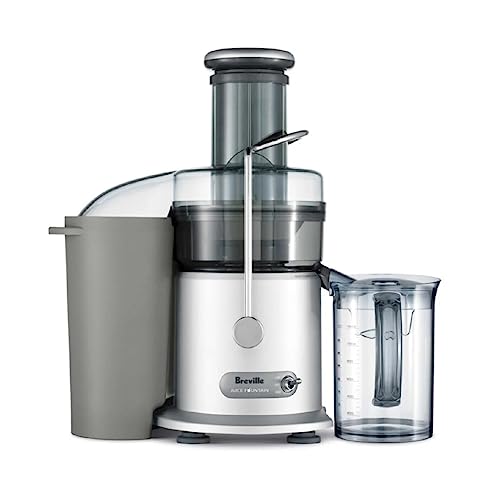
850 watts behind a titanium reinforced disc and an Italian made micro mesh stainless basket, two speeds, and a froth separator built into the jug.
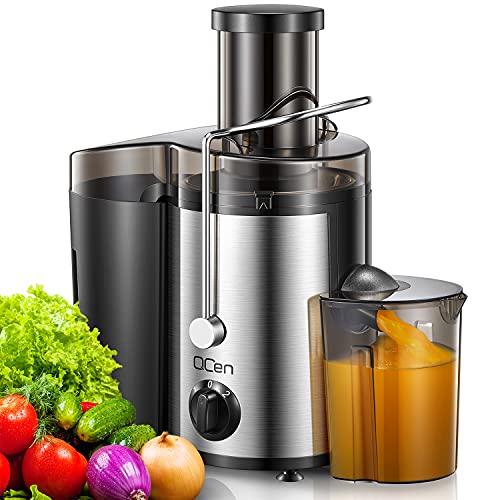
A locking arm that will not run with the cover open, an overload cutout on overheating, and a published range of 12000 to 18000 RPM.

The only pick that publishes a noise figure, 30 to 40 dB, running 370 watts at 2800 RPM with blades, filter and cask stated dishwasher safe.
| Model | Brand | Size (Capacity) | Weight | Best For |
|---|---|---|---|---|
| Juicer Machine | Bestome | Extra Large | Not listed | Best for dense carrots and beets |
| Hamilton Beach Centrifugal Juicer Machine With Big M... | Hamilton Beach | 800W Motor | 8.38 lb | Best for juicing without emptying the bin |
| Breville JE98XL Juice Fountain Plus | Breville | One Size | 10.1 lb | Best for leafy greens on a low setting |
| QCen Juicer Machine 500W Centrifugal Juicer with Ext... | QCen | 500W | 0.88 lb | Best for a lid that stops the motor |
| HIFMGHE Commercial Juice Extractor | HIFMGHE | 14.37x11.41x14.37in | Not listed | Best for an early start in a quiet flat |
1200 watts from a full copper motor, three speed positions, a 65 oz pulp container and a 22 oz jug with a foam separator built in.
An 80 oz pulp bin behind 800 watts, with the pulp bin, juice bowl, lid and pusher all stated dishwasher safe and a strainer brush included.
850 watts behind a titanium reinforced disc and an Italian made micro mesh stainless basket, two speeds, and a froth separator built into the jug.
A locking arm that will not run with the cover open, an overload cutout on overheating, and a published range of 12000 to 18000 RPM.
The only pick that publishes a noise figure, 30 to 40 dB, running 370 watts at 2800 RPM with blades, filter and cask stated dishwasher safe.
Bestome publishes the fullest power rating here, 1200 watts across three speed positions with a 65 oz pulp container and a 22 oz jug. Hamilton Beach publishes 800 watts and an 80 oz pulp bin. QCen publishes 500 watts and the only spindle range on the page, 12000 to 18000 RPM. HIFMGHE publishes 370 watts at 2800 RPM and the only noise figure, 30 to 40 dB. Breville publishes 850 watts, a 2.6 qt pulp container and a 35.2 fl oz jug with a froth separator built in.
“Watts are cheap to print and hard to check.”
Lush Food & Drink
All five listings here publish a wattage and they span 370 watts to 1200 watts, which tells you the category has no settled answer. Bestome states 1200 watts, Breville 850 watts, Hamilton Beach 800 watts, QCen 500 watts and HIFMGHE 370 watts. Watts describe what the motor draws, not how much juice comes out, and no listing here publishes a yield in ounces to connect the two.
At the end of its listing, in a specification line giving a 1 year limited warranty, 850 watts of power and 110 to 120 volts. Everything before that is materials and geometry: a titanium reinforced cutting disc and an Italian made micro mesh filter basket, both stainless steel, two speeds, a 3 in feed chute, a froth separator in the jug, a 35.2 fl oz jug and a 2.6 qt pulp container. It is the only one of the five that does not put its wattage in a headline.
Four of these five publish a 3 in chute and three of them say so in those words. Hamilton Beach states the chute fits a whole apple, a bunch of celery or a handful of carrots. Breville states whole fruits and vegetables go in without precutting. Bestome and QCen both state the same 3 in opening. HIFMGHE publishes no chute measurement at all, which is the one real gap in an otherwise uniform row of the comparison table.
Enough that the bin is the figure worth checking, and only three of these listings publish it. Hamilton Beach states an 80 oz pulp bin and Bestome states a 65 oz pulp container. Breville publishes a 2.6 qt pulp container, and QCen and HIFMGHE describe removable residue containers with no volume at all. Whole fruit through a 3 in chute produces dry pulp at roughly the rate it produces juice, so the bin fills faster than most people expect.
Three of the five state it and two do not. Hamilton Beach names the pulp bin, juice bowl, lid and pusher as dishwasher safe and includes a strainer cleaning brush. HIFMGHE names the internal blades, filter and cask. QCen says detachable parts make it easy to clean without naming a method. Breville and Bestome mention cleaning in general terms without stating that anything goes in a dishwasher, so both are worth confirming with the seller.
Almost never. HIFMGHE is the only listing on this page that publishes a level, 30 to 40 dB, alongside a 370 watt motor at 2800 RPM. The other four publish nothing about noise at all, including the 1200 watt machine and the one publishing a spindle range up to 18000 RPM. A spinning disc cutting fruit is the loudest thing in this category, so the silence across four of five listings is a real gap rather than an editorial one.
Specifications come from the manufacturers' own published listings. Lush Food & Drink may earn a commission if you buy through a link on this page, at no extra cost to you. How we research.
Eight listings came back for this keyword and all eight are powered centrifugal machines, so nothing had to be thrown out for being the wrong tool. Three were left off the page instead. One publishes no wattage, no weight and no chute figure, and its description is too vague to compare with anything. Another repeats a second listing’s wording almost sentence for sentence, which adds a column and no information. The third is a smaller machine from a brand already picked here.
The figure that separates the five that remain is published motor wattage. Bestome states 1200 watts, Breville 850 watts, Hamilton Beach 800 watts, QCen 500 watts and HIFMGHE 370 watts. Breville is the only one of the five that keeps its figure in a specification line at the foot of the listing rather than in a headline, and three of the other four attach a yield claim to the number.
| Specification | Breville | Hamilton Beach | QCen | Bestome | HIFMGHE |
|---|---|---|---|---|---|
| Motor wattage published | 850 watts | 800 watts | 500 watts | 1200 watts | 370 watts |
| Spindle speed published | not published | not published | 12000 to 18000 RPM | not published | 2800 RPM |
| Speed settings | Two, low and high | not published | Two, low and high | Three, low, high and off | not published |
| Feed chute | 3 in | 3 in | 3 in | 3 in | not published |
| Pulp container volume | 2.6 qt | 80 oz | not published | 65 oz | not published |
| Juice jug volume | 35.2 fl oz | not published | not published | 22 oz | not published |
| Froth or foam handling | Separator built into the jug | not published | not published | Foam separator in the jug | Residue separated automatically |
| Width published | 12.6 in | 11.5 in | 12.01 in | 13 in | 11.41 in |
| Height published | 16.42 in | 14.4 in | 7.76 in | 10 in | 14.37 in |
| Front to back published | 14.09 in | 7.8 in | 13.7 in | 7 in | 14.37 in |
| Weight published | 10.1 lb | 8.38 lb | 0.88 lb, discarded below | not published | not published |
| Cutting disc and filter | Titanium reinforced disc, stainless micro mesh basket | not published | not published | 304 stainless steel high density filter | Food grade stainless steel in contact areas |
| Noise stated | not published | not published | not published | not published | 30 to 40 dB |
| Safety features named | not published | not published | Locking arm, overload cutout | not published | Lock buckle, overheating cutout |
| Dishwasher safe parts | not published | Pulp bin, juice bowl, lid, pusher | Detachable parts, method not stated | not published | Blades, filter and cask |
| Warranty stated | 1 year limited | 3 year limited | not published | not published | not published |
One figure in that table is in the table only because leaving it out would have been quieter than it deserves. QCen publishes 0.88 lb as the weight of a 500 watt machine with a motor, a steel filter basket and a locking lid. No juicer of that description weighs less than a pound, so the figure is not used anywhere else on this page and no comparison is built on it. The table also cannot tell you how much juice any of these five actually returns from a pound of carrots, because not one listing publishes a yield in ounces.
Four of these five lead with a wattage. Bestome opens with 1200 watts from a full copper motor, Hamilton Beach with 800 watts, QCen with 500 watts and HIFMGHE with 370 watts from a pure copper motor. Breville publishes 850 watts as well, but in a specification line at the foot of the listing, after the titanium reinforced cutting disc and the Italian made micro mesh filter basket, both stainless steel, that it leads with instead.
That ordering is worth noticing, because wattage is the figure most buyers use to sort this category. What it is not is a yield figure. A juicer draws power to spin a disc against fruit, and how much juice comes out depends on the disc, the mesh and how hard the pulp is pressed against it. Breville leads with the parts and lists the number last; the other four lead with the number and say less about the parts.
Breville and QCen both describe two speeds, a low setting for soft fruit and leafy vegetables and a high setting for dense produce such as carrots and apples. Bestome describes three positions, low, high and off, with the same soft and hard split. Hamilton Beach and HIFMGHE name no speed settings at all, which on an 800 watt machine and a 370 watt machine leaves a real question about how either handles spinach.
QCen is the only pick that turns its speeds into figures, publishing a range of 12000 to 18000 RPM across its two settings. HIFMGHE publishes a single 2800 RPM for its 370 watt motor, which is a different kind of machine spinning a different kind of basket. Those two numbers are the only spindle speeds anywhere in this pool, and neither can be lined up against the other three.
Hamilton Beach publishes an 80 oz pulp bin and puts it front and center of its own comparison pitch. Bestome publishes a 65 oz pulp container alongside a 22 oz juice cup. Breville publishes a 2.6 qt pulp container and a 35.2 fl oz juice jug in one specification line. QCen and HIFMGHE describe removable residue containers with no volume at all, so two of these five cannot be compared on the thing that stops a juicing session.
Pulp volume decides how often you walk to the bin, and on whole fruit it fills faster than most people expect. A machine that takes a whole apple through a 3 in chute is also producing a whole apple’s worth of dry pulp within a few seconds. If you are juicing for more than one glass, the published bin figure is worth more attention than the wattage above it.
Three of the five say something about foam. Breville states plainly that certain fruits and vegetables create froth when juiced, and puts an integrated froth separator in the jug so that more juice and less froth pours out. Bestome describes a BPA free juice cup with a built in foam separator and links it to reduced clogging. HIFMGHE describes an automatic mechanism that separates juice from pulp for a smoother, fiber free result.
Hamilton Beach and QCen publish nothing about froth. This matters more on a centrifugal machine than on a slow press, because spinning air into juice is exactly what a high speed disc does. None of the three listings that mention separators publishes how much froth is removed, so the feature can be confirmed as present and cannot be ranked. It is a yes or no fact on this page, not a measured one.
Breville is the most specific: a titanium reinforced disc and an Italian made micro mesh filter basket, both stated to be stainless steel, described as a single extraction system. Bestome states a 304 stainless steel high density filter with a corrosion resistant multi blade. HIFMGHE states food grade stainless steel in the contact areas over a light aluminum body. Hamilton Beach and QCen name no material for the disc or the basket anywhere.
That silence is worth weighing, because the basket is the part that decides both the yield and the life of the machine. A mesh that deforms lets pulp through and a disc that dulls stops cutting. Hamilton Beach backs its machine with a 3 year limited warranty, against the 1 year Breville publishes, which is a different sort of answer to the same worry and not a substitute for the material.
QCen and HIFMGHE are the two picks that publish a safety story. QCen describes a locking system arm that stops the machine running without the cover in place, plus an overload system that switches off on overheating. HIFMGHE describes a lock buckle design with overheating protection. Breville, Hamilton Beach and Bestome name no interlock at all, which does not mean they lack one, only that the listing does not say.
On cleaning, Hamilton Beach is the most specific: pulp bin, juice bowl, lid and pusher are stated dishwasher safe, and a strainer cleaning brush is included. HIFMGHE states that the blades, filter and cask are detachable and dishwasher safe. QCen says detachable parts make it easy to clean without naming a method. Breville describes a cord that wraps under the base and a detachable 2.6 qt pulp container, and never mentions a dishwasher.
Somebody juicing spinach and kale most mornings. Breville, for the low speed aimed at soft fruit and leafy vegetables and the titanium reinforced disc behind it. It publishes 10.1 lb and 16.42 in of height, so it needs a permanent spot rather than a cupboard.
A household juicing for several people at once. Hamilton Beach, for the 80 oz pulp bin and 800 watts, with the pulp bin, juice bowl, lid and pusher stated dishwasher safe. It publishes the longer of the two warranties here, 3 year limited.
A first juicer for a cautious cook. QCen, for the locking arm that will not run without the cover closed and the overload cutout behind it. It publishes a spindle range of 12000 to 18000 RPM, and its 0.88 lb weight figure should be ignored.
Dense carrots and beets in quantity. Bestome, for 1200 watts, three speed positions and a 65 oz pulp container with a 22 oz jug. It publishes 13 in by 7 in by 10 in and no weight, so measure the counter before ordering.
An early riser in a flat with thin walls. HIFMGHE, the only pick that publishes a noise figure at 30 to 40 dB, running 370 watts at 2800 RPM. Its blades, filter and cask are stated dishwasher safe, and it publishes no weight.
Every figure above comes from the maker’s own listing text. These are the things we went looking for and could not source in any of them.