How the Five Compare on the Numbers
The five picks divide by what the maker publishes. The Husfunov mold states a 0.6 inch depth and a finished bar of 4.5 by 1.7 by 0.6 inches. The Pniimoo mold states a 10 by 6.5 inch tray and a 0.6 inch thickness. The Lerykin set states 15 cavities per tray in a two pack. The Fimary mold states a 0.59 inch width. The O’CREME pan states 0.38 ounce per pan across a 25 pack.
Heat range separates them further. The Fimary, Lerykin and Husfunov listings each publish a range from -40°F to 446°F. The O’CREME pan publishes -10°F to 375°F. The Pniimoo listing does not publish a temperature range, so its heat tolerance is not stated. The Husfunov and Pniimoo molds each publish 0.2 pound, the Fimary mold 0.22 pound and the Lerykin set 0.35 pound for two trays. The O’CREME field says 0.1 pound while its bullet gives 0.38 ounce for each of 25 pans, so the two do not agree.
The table does not tell you how a mold releases, how a cavity fills, or how a tray feels in the hand. Those are performance questions, and nobody at Lush has used these molds. What the table does give you is the maker’s own figure for depth, tray size, cavity count, weight and heat range. Two listings carry two figures in one row because their dimension fields and their own bullets disagree, and where they do the bullet is the one to trust.
Depth and Tray Size Decide the Bar
What the depth figure means
The Husfunov listing publishes a 0.6 inch depth and a finished bar of 4.5 by 1.7 by 0.6 inches. That is the only pick that states both a mold depth and a finished piece size, which makes it the clearest choice when a pistachio or nut layer has to sit inside the bar. The Pniimoo listing publishes a 0.6 inch thickness on a 10 by 6.5 inch tray, so the depth is stated but the finished piece size is not.
The Fimary listing publishes 0.59 inches in its width field while its own bullet gives a 10 by 6.7 inch tray, so that 0.59 reads as the thickness. The Lerykin set publishes 15 cavities per tray without a cavity depth. The O’CREME pan publishes no length, width or height at all, so its cavity depth is not stated. If depth is the deciding figure, only two picks publish one.
What the tray size means
The Pniimoo listing publishes a 10 by 6.5 inch tray, and the Husfunov listing publishes a 10 by 6.7 inch tray. Those two figures are within 0.2 inch of each other, so the trays are close in footprint. The difference is that the Husfunov listing also states a 0.6 inch depth, while the Pniimoo listing states a 0.6 inch thickness. Both makers describe a shallow tray, not a deep one.
The Fimary fields read 0.59, 6.65 and 10.0 inches while its bullet gives 10 by 6.7 inches, which is the same tray with the axes in a different order. The Lerykin dimension fields describe its package at 11.4 by 6.7 by 0.99 inches rather than a tray, and the O’CREME fields give 4.0 by 4.0 by 2.0 inches for its box. A buyer who needs a specific footprint should read the published figures plainly and not assume which number is the long side.
Heat Range and Where the Mold Can Go
The 446°F group
The Fimary, Lerykin and Husfunov listings each publish a range from -40°F to 446°F. That figure is identical across the three, so heat range does not separate them. What separates them is cavity shape: the Fimary listing describes a square cavity, the Lerykin set describes 15 half sphere cavities per tray, and the Husfunov listing describes a rectangular bar cavity.
The Pniimoo listing does not publish a temperature range. The maker states the mold is safe for freezers, ovens, microwaves and dishwashers, but no figure accompanies that claim. A buyer who wants a stated number for the top of the range should look at the three molds that publish 446°F rather than the Pniimoo tray.
The 375°F pan
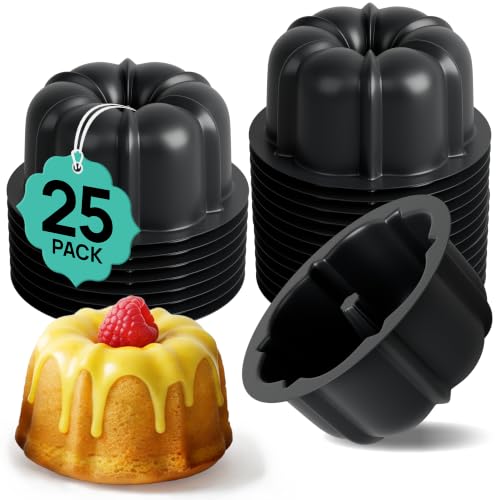
The O’CREME pan publishes a range from -10°F to 375°F, the lowest of the four top figures published here. It is also the only pick the maker describes as plastic rather than silicone, and the only one that publishes a per pan weight of 0.38 ounce. The listing states the pan is a substitute for aluminum foil pans, which is a different job from molding a bar.
The O’CREME listing gives 0.38 ounce per pan, which comes to about 0.59 lb for the 25 pack, so its 0.1 pound weight field cannot describe the whole pack. Either way it is a light pan, which is the reason to choose it if storage space is the constraint. It is not the pick for a deep filled bar, because the maker publishes no depth at all.
Cavity Count and Small Shapes
The one stated cavity count
The Lerykin set publishes 15 cavities per tray in a two pack, which is the only cavity count among the five picks. The Fimary, Pniimoo, Husfunov and O’CREME listings do not publish a cavity count. A buyer who needs a known number of pieces per pour has one pick with a stated figure and four without.
The Lerykin set also publishes a weight of 0.35 pound, the highest weight field among the five. That weight covers two trays. The maker describes the cavities as semi spheres, which suits truffle shells and filled bonbons rather than flat bars. The listing does not publish a cavity diameter, so the size of each sphere is not stated.
Shapes without a stated count
The Fimary listing describes a square cavity and publishes a 0.59 inch width. The Husfunov listing describes a rectangular bar and publishes a finished bar of 4.5 by 1.7 by 0.6 inches. The Pniimoo listing describes a universal size and publishes a 10 by 6.5 inch tray. None of the three publishes how many cavities the tray holds.
The O’CREME listing describes a mini flan cake pan and publishes no cavity count, no length, no width and no height. The maker states the pan can be washed and reused as many times as needed and weighs 0.38 ounce each. For a buyer who needs a known piece count, that listing leaves the question open.
Which One Fits Your Kitchen
You want a filled bar with a nut layer. The Husfunov mold publishes a 0.6 inch depth and a finished bar of 4.5 by 1.7 by 0.6 inches, the only pick that states both. That is the figure that decides whether a pistachio layer fits.
You want a large flat slab to break up. The Pniimoo mold publishes a 10 by 6.5 inch tray with a 0.6 inch thickness. The maker states the mold is stackable for storage. The listing does not publish a temperature range, so check that before an oven use.
You want half spheres for truffles. The Lerykin set publishes 15 cavities per tray in a two pack, the only stated cavity count among the five picks. The maker publishes a heat range from -40°F to 446°F and a weight of 0.35 pound for the set.
You want a square cavity and a stated heat range. The Fimary mold publishes a 10 by 6.7 inch tray, 0.59 inches in its width field and a range from -40°F to 446°F. The maker states the mold is dishwasher safe. The listing does not publish a cavity count or a cavity depth.
You want a small pan for flan or jelly. The O’CREME pan publishes 0.38 ounce per pan across a 25 pack and a range from -10°F to 375°F. It publishes no unit size: its dimension fields give a 4.0 by 4.0 by 2.0 inch box.
What We Could Not Verify
The makers publish some figures and leave others blank. These are the facts I went looking for and could not source from the listings.
- A cavity count for the Fimary, Pniimoo and Husfunov molds.
- A temperature range for the Pniimoo mold.
- A unit size for the O’CREME pan, whose dimension fields describe the package.
- A cavity diameter for the Lerykin half sphere trays.
- A weight the O’CREME listing agrees with: its field says 0.1 lb while its bullet says 0.38 ounce for each of 25 pans.
- A cavity depth for the Fimary and Lerykin molds.